The Stele Erection Process
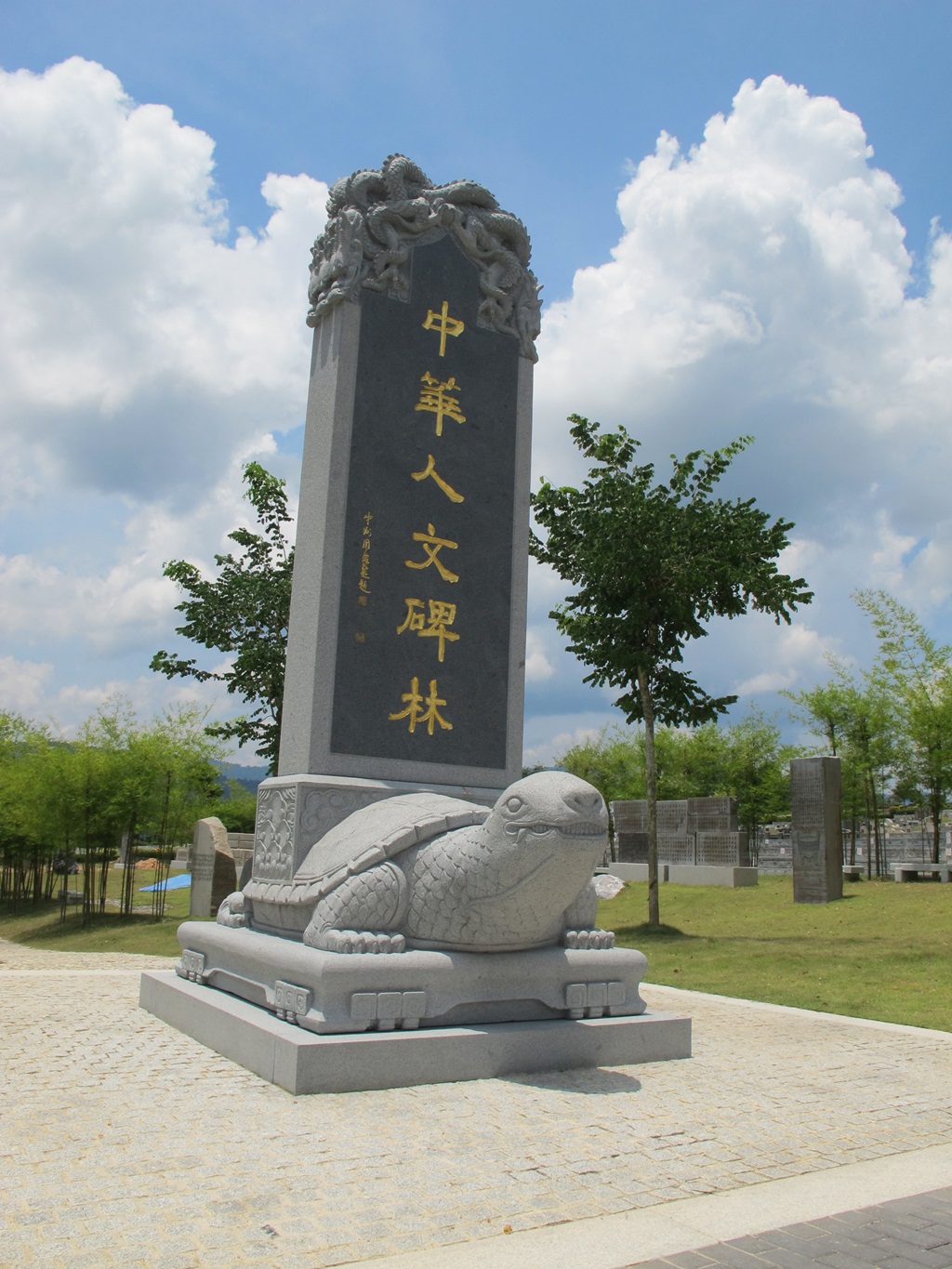
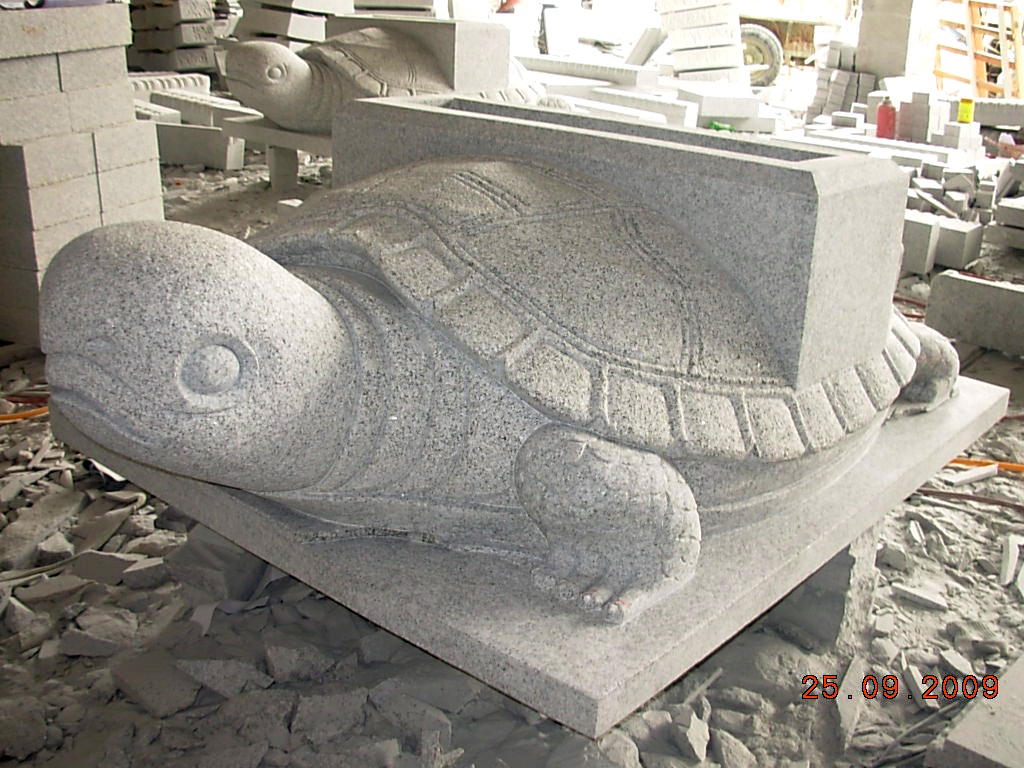
The entrance of the "Chinese Humanistic Stele Forest" is presented by a huge stone stele with a "chi head and a turtle's feet", which has a majestic appearance and grandeur as a whole. This follows the typical design of ancient Chinese architecture. The stele consists of three parts: the head of the stele, the body of the stele, and the foot of the stele. The head of the stele is round; the body of the stele is rectangular; the base of the stele is in the shape of a horn, also known as a turtle base. Legend has it that the dragon gave birth to nine sons, "Chishou" and "Guifu" are both sons of the dragon. There are six dragons coiled in relief at the head of the stele. The dragon's head hangs down on both sides, and it holds the two upper corners of the stele in its mouth. It is majestic and majestic. The body of the monument was inscribed by Zhou Junjie, a contemporary Chinese calligrapher who is good at official script. The shape of the tortoise has a solemn expression, with the head held high and forward, and the four feet are strongly supported. In temples, ancestral halls, forests of steles and historical sites, you can see that the bases of some prominent stone steles are carried on turtles.
"A dragon gives birth to nine sons": It is said that a dragon gives birth to nine sons. If the nine sons fail to become a dragon, each has his own interests. It is a metaphor for brothers who have different qualities and hobbies. The so-called "dragon begets nine sons" does not mean that the dragon happens to have nine sons. In traditional Chinese culture, nine represents many things and has the supreme status. Nine is an imaginary number and also a noble number, so it is used to describe the dragon son.
head
Also known as "Chiki" (chi1 wen3), Chiwei, Chiki, Lianki, it is a kind of ichthyosaur. Because of its good-natured nature, people often use it as decoration on buildings, especially as animal heads on roof ridges to suppress fires. Judging from the evolution of ancient totem worship, the fish turned into a dragon because the ancient clans with fish as totems merged into the people with dragon totems. The image of the totem as a symbol of the clan also changed accordingly, becoming an ichthyosaur with the head of a dragon and the body of a fish. There are many types of images of ichthyosaurs. Some dragons have more characteristics, and some have more fish characteristics. There is a saying in ancient times that "the carp leaps over the dragon gate" and "the one who climbs turns into a dragon", which originated from this.
turtle
Also known as: Bixi (Pinyin: bìxì), Shigui, Baxia. Tortoises and tortoises are very similar, but there are differences when you look closely. There is a row of teeth on the underside of the tortoise, but the tortoise does not. The number and shape of the carapace on the back of the tortoise are also different between the tortoise and the tortoise. Legend has it that Ba Xia is so strong and powerful that in ancient times he often carried three mountains and five mountains on his back, making waves in rivers, lakes and seas. When Dayu controlled the floods, he subdued it, and it obeyed his orders, pushing mountains and digging trenches, and dredging rivers to contribute to flood control and save people's livelihood. After the flood was cleared, Dayu was worried that Ba Xia would go wild again, so he moved a huge stone tablet standing high in the sky, on which was engraved the traces of Ba Xia's flood control, and asked Ba Xia to carry it on his back. The heavy stone tablet made it unable to walk casually.
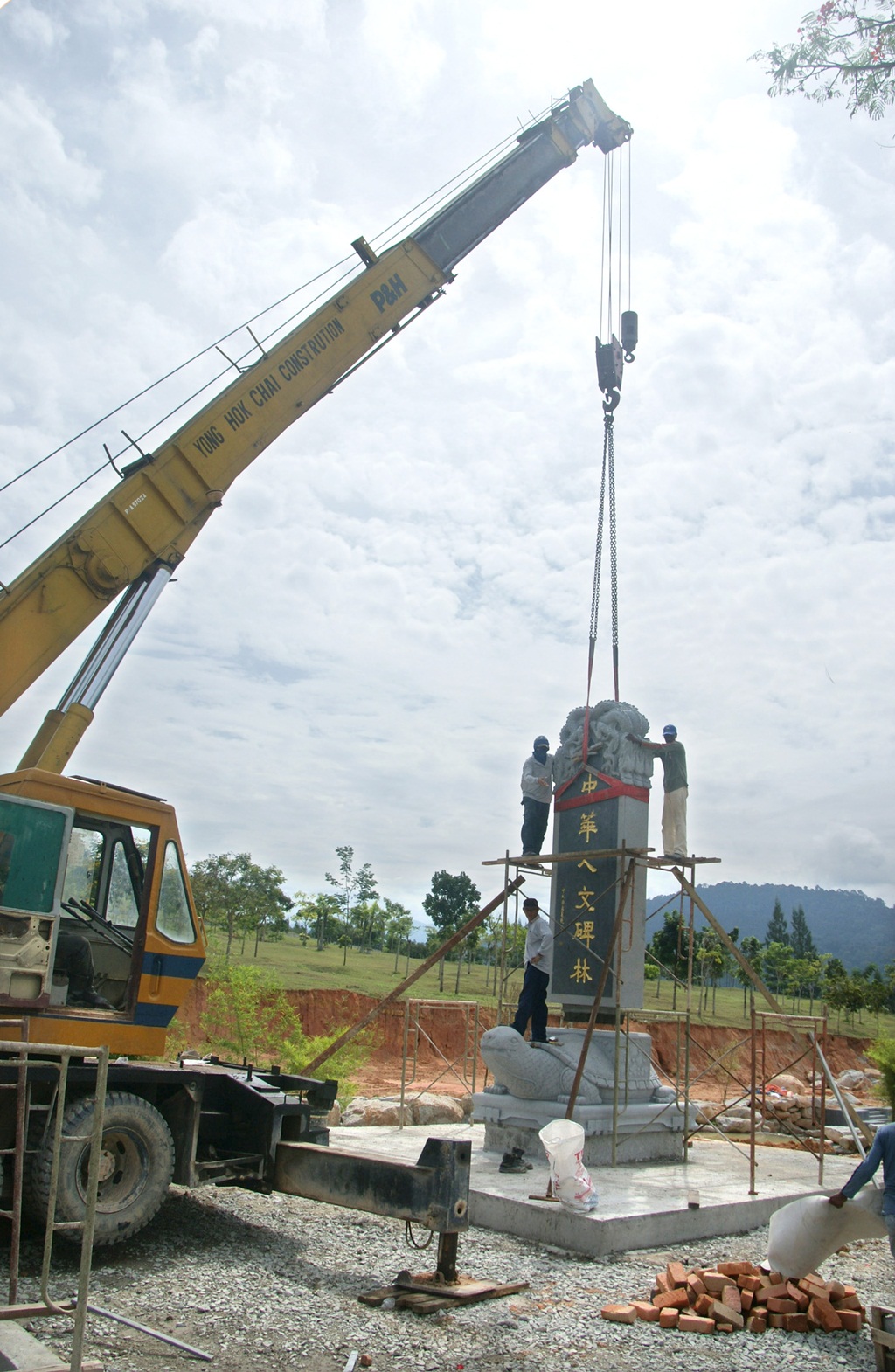
Erecting a monument is a success the first time! Such a large stone pillar needs to be lifted by a crane and stood flat. If it is tipped over, the stone pillar will collapse if you are not careful. It only takes a while to place the stone pillars on the stone foundation, and the process is very testing. It took a total of 2 days to complete the installation of the base, turtle base and body of the monument.



Other Activities
其他活动回顾
Selected recent activity records by theme.
Visitor Records
Ceremonies
Cultural Activities
Malaysia Chinese Calligraphy Stone Gallery