从碑刻到书法艺术鉴赏
Calligraphy Appreciation
Compiled by Chen Jiancheng.
Stele inscriptions and the written art of calligraphy are inseparable. Stele inscriptions not only carry the evolutionary process of Chinese writing, thereby enabling calligraphic art to shine brilliantly; with each stage of development, they also give rise to new script styles, continually advancing the development and progress of calligraphy.
Stele inscriptions record the aesthetic vision of each generation. They illuminate the ages and leave a lasting fragrance for posterity. Feng Zikai once said: “Many ancient stele inscriptions are damaged and unreadable, but even a fragment of text or a single character is important. This is because what we appreciate is the brushwork and composition of the characters, not the essay.”
In China, stele inscriptions have a history of three thousand years. Chinese stele inscriptions are vast and profound, varied in form, and wide-ranging in content, covering ancient history, Chinese writing, calligraphic art, religious sacrifice, social customs, engraving techniques, and many other fields. They have left later generations a large number of famous steles of great historical and calligraphic value.
“Stele inscription” broadly refers to characters or designs carved into stone. A stone erected on the ground as a permanent memorial or marker is called a stele. When characters are engraved on it, it is called a stele inscription. The earliest stele inscription writing is generally considered to be the Qin dynasty Stone Drum inscriptions.
Most stele inscriptions were based on brush-written manuscripts or characters written in cinnabar directly on stone. However, some cliff inscriptions and grotto carvings were often carved directly onto the stone surface with a knife, without first being written out. Stele inscriptions without an original model are difficult to use for grasping the brushwork. Even when they are engraved from authentic works, the brush intent is often distorted. Therefore, in learning calligraphy, one should begin as much as possible from authentic works or facsimiles.
Of course, some finely carved and finely rubbed stele rubbings contain relatively little distortion and more accurately convey the charm and spirit of the original works. They are praised as being “only one rank below the authentic work” and may also serve as models for study.
Lin Yutang once said: “Calligraphy has provided the Chinese people with a basic aesthetics. If one does not understand Chinese calligraphy and its artistic inspiration, one cannot discuss Chinese art. Through calligraphy, Chinese scholars trained themselves in the appreciation of various forms of beauty. Thus the art of calligraphy provided a set of terms for aesthetic appreciation, and the ideas represented by these terms may be regarded as the foundation of the Chinese nation’s aesthetic concepts. In calligraphy, perhaps only in calligraphy, can one see the utmost expression of the Chinese artistic spirit.”
The appreciation of calligraphic art is established according to the development and movement of calligraphic aesthetics. Zhong Yao said: “The traces of writing form the boundary; the flowing beauty lies in the person.”
A. Basic Literacy for Appreciating Calligraphy.
The Southern Dynasties calligrapher Wang Sengqian said in Praise of Brush Intent: “The wondrous way of calligraphy places spirit and expression first, and form and substance second. Only one who possesses both can continue the tradition of the ancients.”
This emphasizes conveying spirit through form, achieving both form and spirit. Generally speaking, “form” includes dots, strokes, lines, and the spatial structure of calligraphy produced by them; “spirit” mainly refers to the vitality, expression, and charm of calligraphy.
(I) The Dots, Strokes, and Lines of Calligraphy.
The dots, strokes, and lines of calligraphy possess infinite expressive power. This is the result of the calligrapher’s use of brush-holding and brush-moving techniques. In general, they are expected to convey a sense of strength, rhythm, and three-dimensionality.
(II) The Spatial Structure of Calligraphy.
The dots, strokes, and lines of calligraphy intersect and combine while following the form and stroke order principles of Chinese characters. They divide space and form the spatial structure of calligraphy. Spatial structure consists of three parts: the structure of individual characters, the flow of each line, and the overall composition.
(III) The Spirit, Expression, and Charm of Calligraphy.
In calligraphy, spirit and expression refer collectively to the vitality, style, temperament, feeling, and meaning revealed through dots, strokes, lines, and their structural combinations. The essence of the spirit and expression of calligraphic art lies in the overall harmony of dots, strokes, lines, and their spatial arrangement. The pursuit of spirit and expression, and the expression of one’s inner nature, has always been the highest realm tirelessly sought by calligraphers.
B. The Process and Methods of Appreciating Calligraphy.
Calligraphy appreciation is consistent with the appreciation of other arts, but it also has its own particular characteristics. Generally speaking, we may approach it from the following aspects:
- From the whole to the parts, and then from the parts back to the whole.
- Restore the static image to a process of movement, and allow associations to unfold.
- Move from the calligraphic image to concrete imagery, allowing associations to unfold, and correctly grasp the artistic conception of the work.
- Understand the creative background of the work, and correctly grasp its mood and tone.
In short, because the process of calligraphy appreciation is influenced by individual psychology, there is no fixed model for the method of appreciation. What has been described above is only one approach to appreciating calligraphy, and several methods may be used alternately during the process.
In addition, one must also make comprehensive use of various calligraphic skills, techniques, and theoretical knowledge, fully develop one’s capacity for aesthetic judgment, and strive to experience the artistic conception of the work according to the creator’s intention. One should aim to have evaluation within appreciation and appreciation within evaluation, while also examining the work within its specific historical context, so as to arrive at a correct appreciation and a fair, objective assessment.
Of course, after mastering proper methods of appreciation, engaging in frequent appreciation is an important way to improve one’s ability. Yang Xiong said: “Only after observing a thousand swords can one understand swords; only after reading a thousand rhapsodies can one compose rhapsodies.” This is precisely the meaning.
References:
- Fei Shengqian: Appreciation of Ancient Steles and Model Calligraphy.
- Feng Zikai: Appreciation of Art.
- Lin Yutang: My Country and My People.
- Zhang Guangbin: History of Chinese Calligraphy.
- Ma Guoquan: Collected Drafts of Shen Yinmo’s Discussions on Calligraphy.
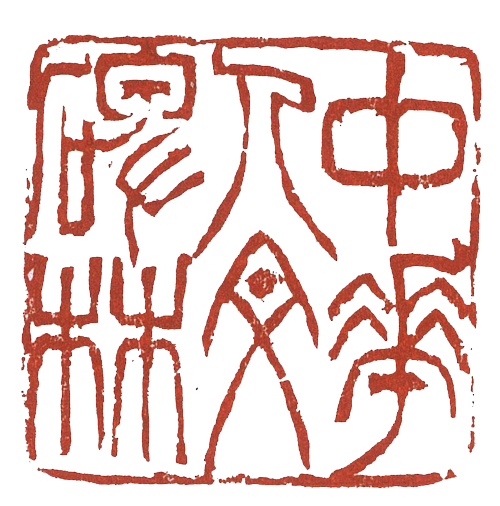
Malaysia Chinese Calligraphy Stone Gallery