Logo

Malaysia Chinese Calligraphy Stone Gallery

马来西亚
中华人文碑林

Home
About
ForewordCommitteeDiscover BeilinEvolution of Chinese CharactersCalligraphy AppreciationVisitor Feedback
GalleryDynastyEvents & DownloadsContact UsReservation
English
简体中文
English
繁體中文
日本語
Bahasa

Curated Collection

Curated Stillness

Let these collections be more than a display—let them be a wandering, a quiet gaze. Here, every stroke is a whisper of time, leading you into the boundless river of the written word.
Oracle Bone Script
Wei Stele Script
Regular Script with Semi-Cursive
Semi-Cursive Script
Li Shu, Kai Shu
Regular and cursive scripts
Cursive Script
Running script
Regular script
Big seal script
Xiaozhuan
Clerical script
Bronze Inscription
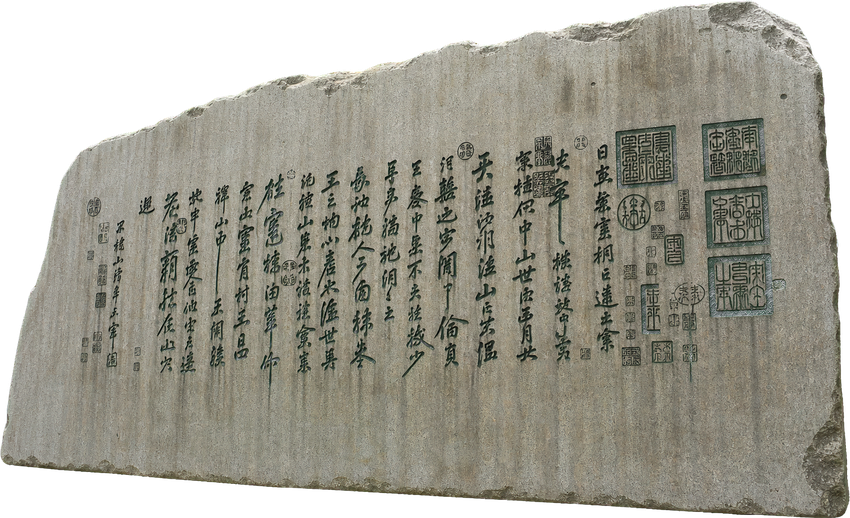
Liu Yong: Postscript to the Stele of Master Meng

Running script

Liu Yong: Postscript to the Stele of Master Meng

Liu Yong served as a grand councillor under both the Qianlong and Jiaqing emperors. Beginning from Yan Zhenqing and later absorbing many other masters, he developed a calligraphic manner known for heavy, rich ink and sturdy inner structure. He pursued the fullness of ?black? while also creating atmosphere through the subtle management of ?white,? producing a powerful balance of density and openness. Because of this distinctive style, he became widely known as the ?thick-ink premier.?

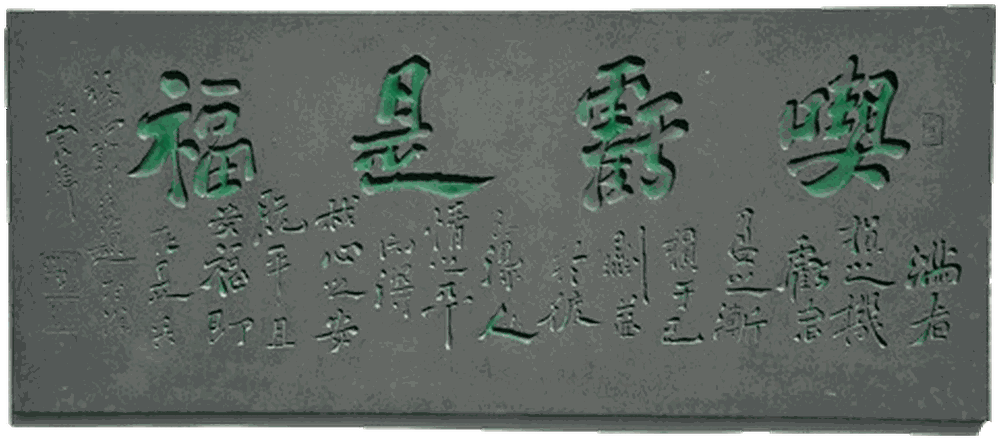
Zheng Banqiao: Accepting Loss Is a Blessing

Running script

Zheng Banqiao: Accepting Loss Is a Blessing

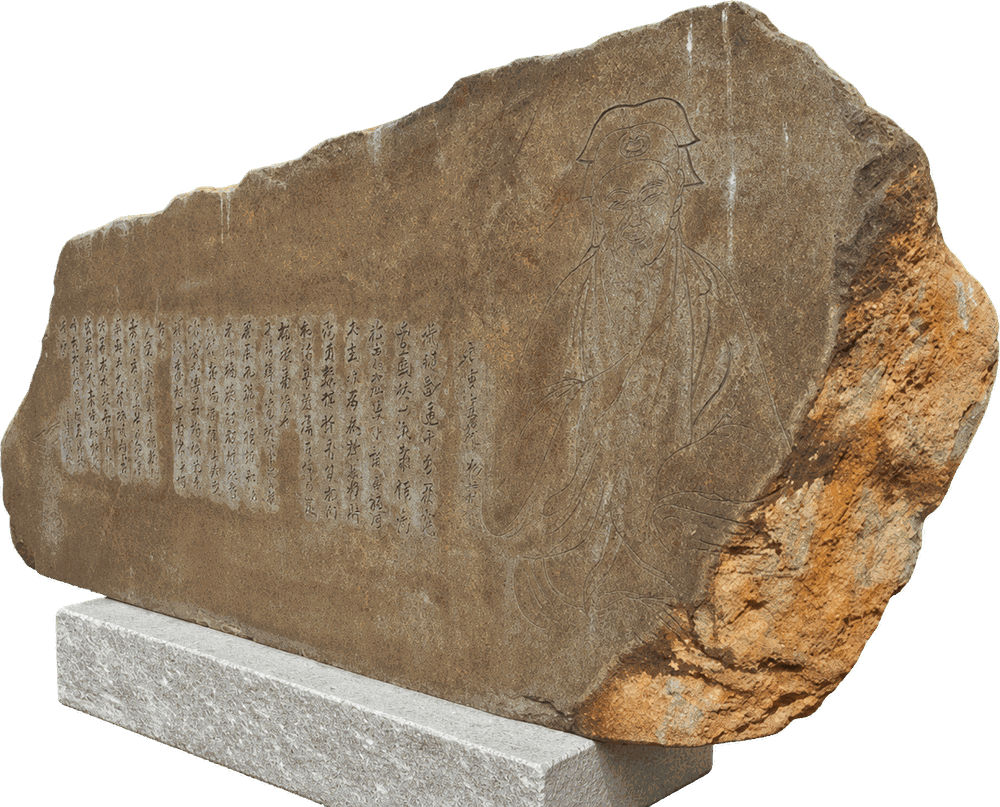
?Accepting Loss Is a Blessing? was written by Zheng Banqiao for a distant relative, Zheng Xuan. After Zheng Xuan suffered a devastating loss when timber prices collapsed, he poured out his distress to Zheng Banqiao, who wrote this encouraging inscription to calm him. Later, on a subsequent voyage, timber prices surged and Zheng Xuan unexpectedly made a fortune. Reflecting on Zheng Banqiao's words, he came to understand their deeper meaning and adopted the piece as a family maxim, carving it on the high wall of his house for future generations. Zheng Banqiao's handwriting here mixes clerical and regular script, combining spare, hard strength with painterly touches.

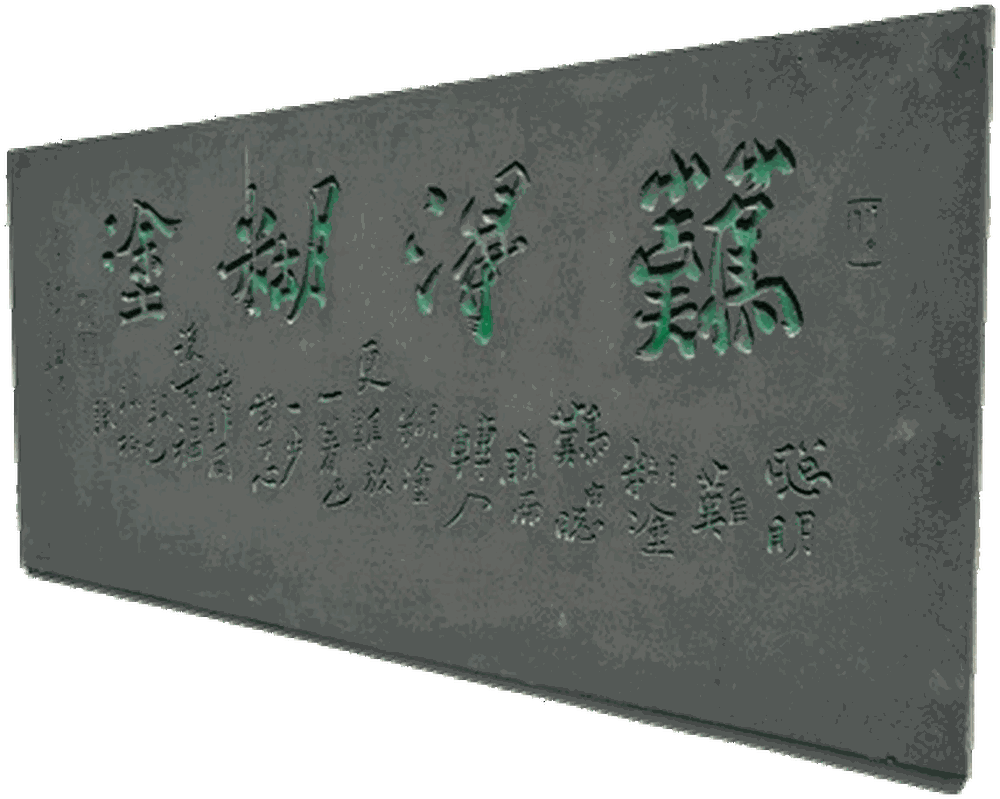
Zheng Banqiao: Hard to Be Truly Confused

Running script

Zheng Banqiao: Hard to Be Truly Confused

Zheng Banqiao's ?Hard to Be Truly Confused? is tied to a well-known anecdote. While visiting Yunfeng Mountain in Laizhou to see the Zheng Gong Stele, he stayed with an old man who called himself a ?confused old man.? The man owned an enormous treasured inkstone and asked Zheng to inscribe it. Zheng wrote the four characters ?Nan De Hu Tu? and sealed them with his famous signature line. The old man then added his own inscription, revealing himself to be no ordinary person but likely a cultivated retired official, which earned Zheng's deep admiration. Zheng responded with another reflection about the difficulty of moving from cleverness into a higher state of generous simplicity. The exchange later became famous. Zheng Banqiao's calligraphy blends regular, cursive, seal, and clerical elements into what he called ?six-and-a-half script,? a highly original style unlike anything seen before.

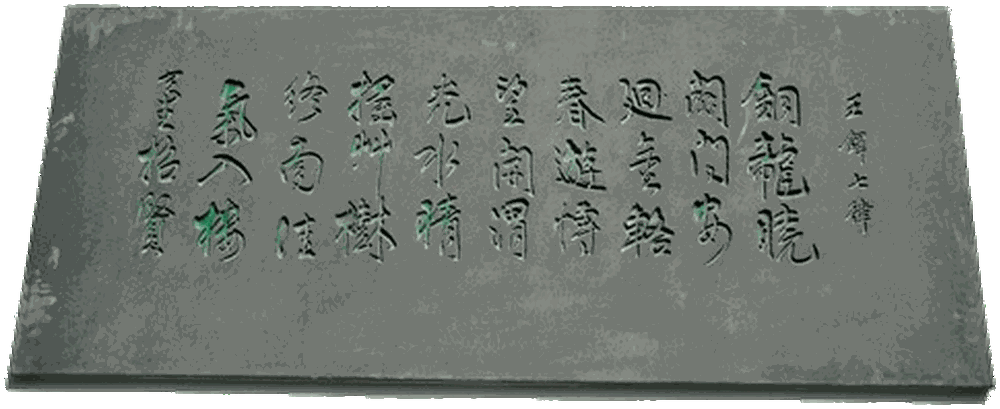
Wang Duo: Seven-Regulated-Verse in Running Script

Running script

Wang Duo: Seven-Regulated-Verse in Running Script

Wang Duo was a leading calligrapher of the late Ming and early Qing periods, celebrated for regular, running, and cursive script, with his greatest achievement in running-cursive writing. This running-script seven-regulated-verse piece comes from Gu Zeng's ?Feng He Chun Ri Chu Yuan Zhu Mu Ying Ling? and is regarded as one of Wang Duo's representative works. Rooted in the Wei and Jin tradition, drawing running-cursive strength from the Two Wangs, regular-script structure from Zhong Yao, and further nourishment from Yan Zhenqing and Mi Fu, the work shows the breadth of his study. Wang Duo famously argued that unless one truly penetrates ancient steles, one's method can never become genuinely classical.

Dong Qichang: Song of the Pipa

Running script

Dong Qichang: Song of the Pipa

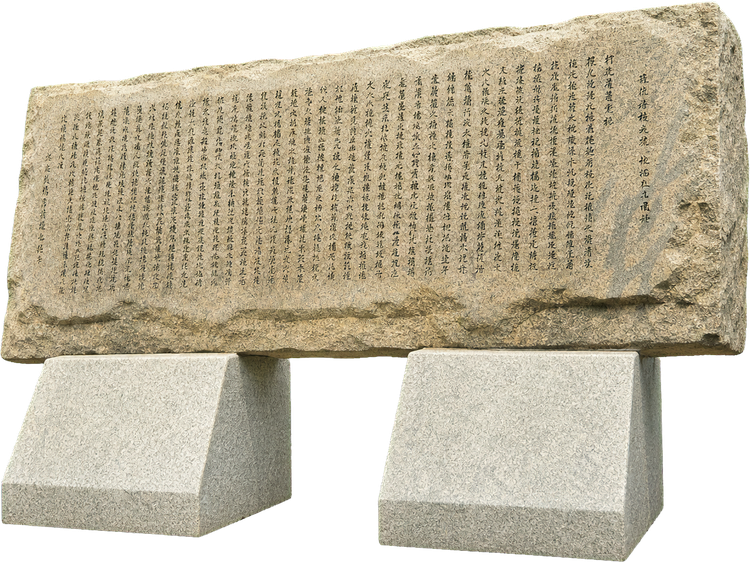
Song of the Pipa is a seven-character ancient-style poem written by Bai Juyi in 816 CE, during the Yuanhe reign of Emperor Xianzong of Tang. After being accused of exceeding his office in memorializing the throne, Bai was demoted to Jiangzhou, and later to the post of Sima there. The following year, while seeing off a guest at Penpu, he encountered a pipa player and, moved by her story and his own fate, composed this famous poem. Dong Qichang was also a master connoisseur of painting and calligraphy, and his theory of the Northern and Southern schools deeply influenced painting after the late Ming. His calligraphy sought the ancients without becoming rigidly antiquarian. This running-script Song of the Pipa, in sixty lines, is one of his representative works and is now in the collection of the Beijing Museum.

Wen Zhengming: Xiyuan Poems

Running script

Wen Zhengming: Xiyuan Poems

Xiyuan Poems was composed when Wen Zhengming was fifty-six and serving in the capital as an Academician Awaiting Edict at the Hanlin Academy. The poems describe the imperial garden west of the palace city, centered on Taiye Pond. Wen is thought to have written this scroll at the age of eighty-five, making it one of his fine late works. The calligraphy is warm, elegant, steady, mature, rigorous in method, and lively in expression. Rooted in Wang Xizhi, it draws on many masters, with refined turning strokes, balanced spacing, calm structure, graceful movement, and a polished, flowing elegance.

Tang Yin: Falling Flowers Poems

Running script

Tang Yin: Falling Flowers Poems

Tang Yin wrote Falling Flowers Poems several times in his life, and each version differs in the number of poems copied, the content, and the calligraphic style. Known examples are now held by the Princeton University Art Museum, the Liaoning Provincial Museum, and the National Art Museum of China. This piece is one of Tang Yin's representative surviving calligraphic works, probably written in his early years. The brushwork is rounded, graceful, elegant, free, refined, and gentle.

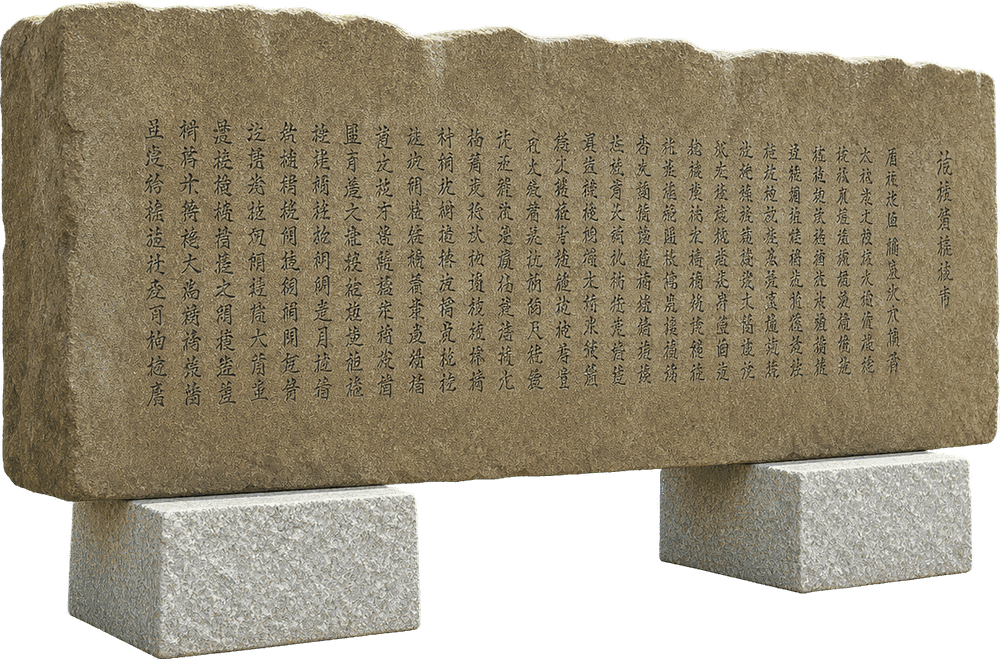
Zhang Jizhi: Record of the Wang Family Baoben Hermitage

Running script

Zhang Jizhi: Record of the Wang Family Baoben Hermitage

Zhang Jizhi?s Record of the Wang Family Baoben Hermitage is an ink-on-paper handscroll. Written in small characters across thirty-eight lines and totaling 688 characters, it is one of Zhang?s finest surviving works and is held by the Liaoning Provincial Museum. The brushwork is smooth yet strong, clear and vigorous without vulgarity. Its handling of the brush is exceptionally precise and refined, with dots and strokes responding to one another in a polished and carefully balanced manner.

Mi Fu: Yanshan Inscription

Running script

Mi Fu: Yanshan Inscription

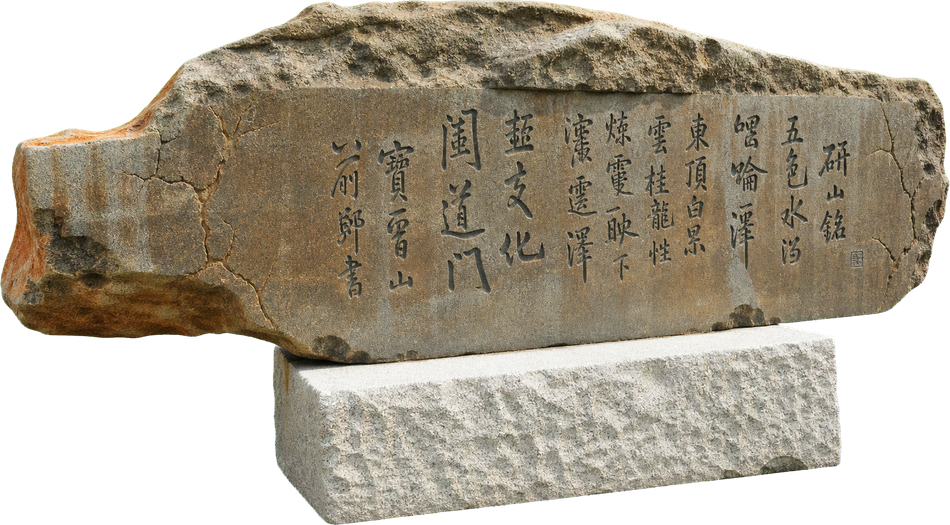
Yanshan Inscription is associated with Mi Fu, one of the Four Great Masters of Song calligraphy. Mi Fu?s writing is admired for its lively movement, shifting rhythm, and expressive individuality. This work displays a free and spirited brush manner, with characters that vary in size, density, and momentum. The result is a vivid example of Mi Fu?s calligraphic personality: elegant, unconventional, and full of motion.

Huang Tingjian: Seven-Character Regulated Verse

Running script

Huang Tingjian: Seven-Character Regulated Verse

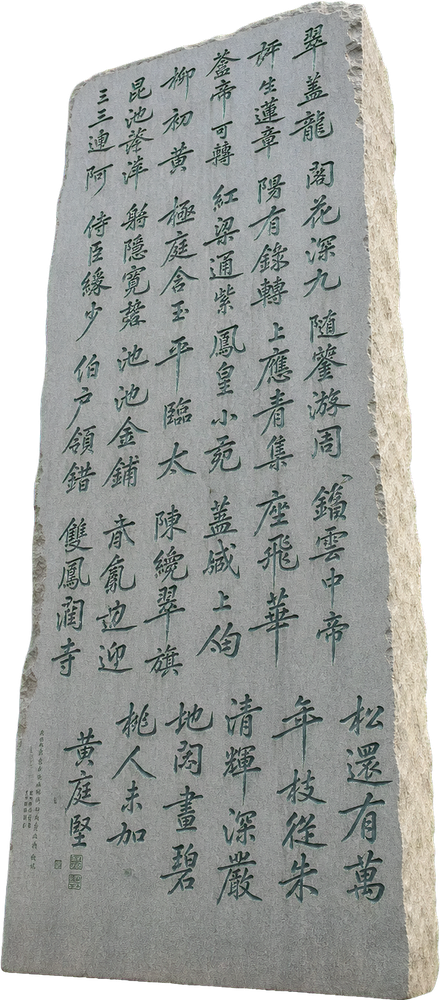
Seven-Character Regulated Verse shows Huang Tingjian?s distinctive calligraphic language in a poetic format. The brushwork is upright, expansive, and rhythmically varied, with characters that often extend vertically and turn with deliberate force. Huang?s style transforms the regular order of verse into a dynamic visual structure, balancing scholarly refinement with bold personal expression.

Su Shi: Cold Food Observance

Running script

Su Shi: Cold Food Observance

Cold Food Observance is one of Su Shi?s most admired calligraphic works. Written during his exile in Huangzhou, it records the emotions of hardship, reflection, and resilience. The brushwork shifts between restraint and release, with lines that are sometimes heavy and condensed, sometimes flowing and free. The composition has a strong emotional pulse, making it a landmark example of Song dynasty running script and one of the great masterpieces in the history of Chinese calligraphy.

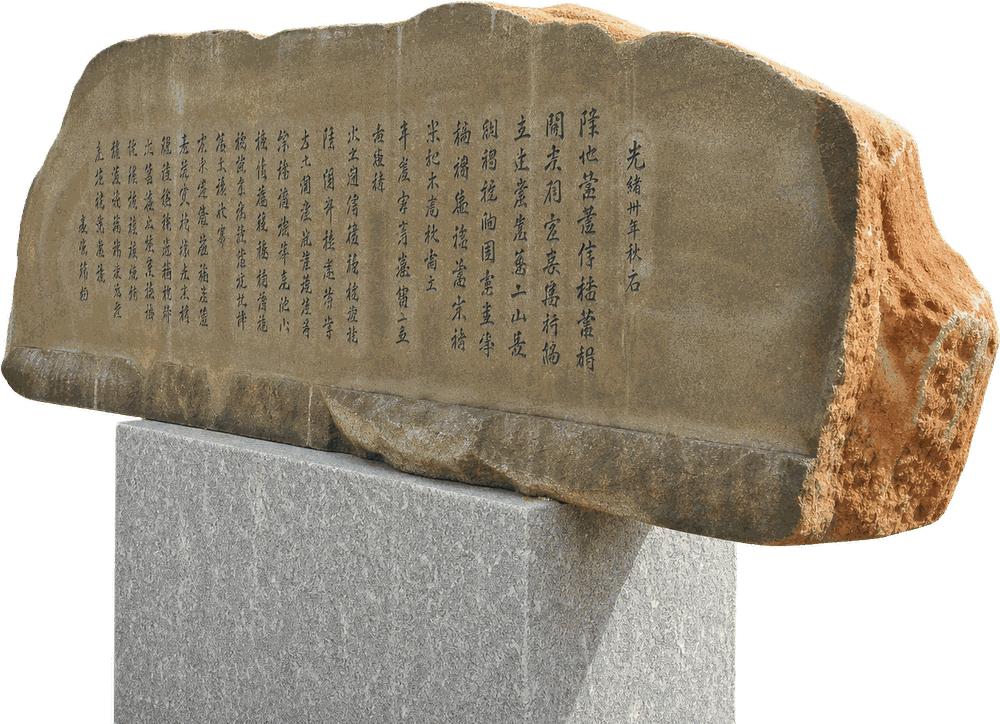
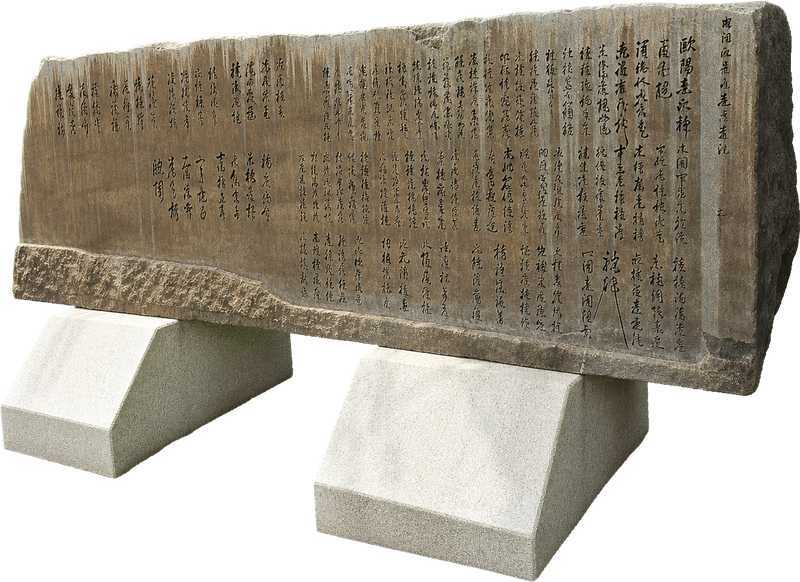
Su Shi: Record of the Old Drunkard Pavilion

Running script

Su Shi: Record of the Old Drunkard Pavilion

Record of the Old Drunkard Pavilion written by Su Shi presents the celebrated prose text of Ouyang Xiu in Su Shi?s calligraphic style. Su Shi was one of the Four Great Masters of Song calligraphy, and his writing is known for its broad structure, strong spirit, and natural ease. The brushwork in this stele is open and vigorous, moving with a relaxed but powerful rhythm. It conveys both literary elegance and the expansive personality of Su Shi?s running script.

Logo

Malaysia Chinese Calligraphy Stone Gallery

马来西亚
中华人文碑林

Find your peace within the words, and take its echo with you.

Copyright © 2025 中华人文碑林. All Rights Reserved.