Logo

Malaysia Chinese Calligraphy Stone Gallery

马来西亚
中华人文碑林

Home
About
ForewordCommitteeDiscover BeilinEvolution of Chinese CharactersCalligraphy AppreciationVisitor Feedback
GalleryDynastyEvents & DownloadsContact UsReservation
English
简体中文
English
繁體中文
日本語
Bahasa

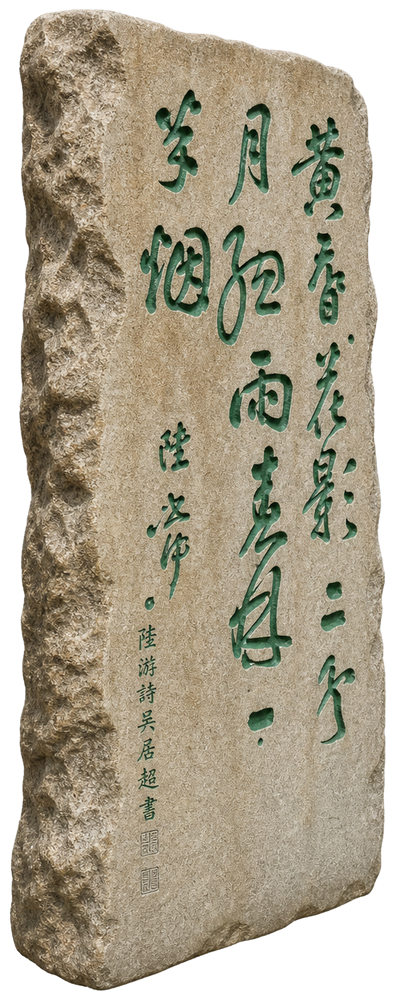
Curated Collection

Curated Stillness

Let these collections be more than a display—let them be a wandering, a quiet gaze. Here, every stroke is a whisper of time, leading you into the boundless river of the written word.
Oracle Bone Script
Wei Stele Script
Regular Script with Semi-Cursive
Semi-Cursive Script
Li Shu, Kai Shu
Regular and cursive scripts
Cursive Script
Running script
Regular script
Big seal script
Xiaozhuan
Clerical script
Bronze Inscription
Chen Guang Shi: Xing Shu Hall Scroll

Running script

Chen Guang Shi: Xing Shu Hall Scroll

Chen Guang Shi, originally from Yongchun, Fujian, worked in painting, calligraphy, and seal carving. He was a member of the Calligraphy Development Committee of the Malaysian Institute of Art and served as judge for national calligraphy competitions. He held dozens of solo exhibitions in Malaysia, Singapore, Bangkok, Indonesia, the Philippines, Vietnam, and Tahiti. His calligraphy emerges from the Tang style of Yan Zhenqing and also carries the charm of Pan Shou. This hall scroll was written in one breath; its composition is unified, the strokes are full, rounded, strong, elegant, and bony, expressing a quiet and refined mood.

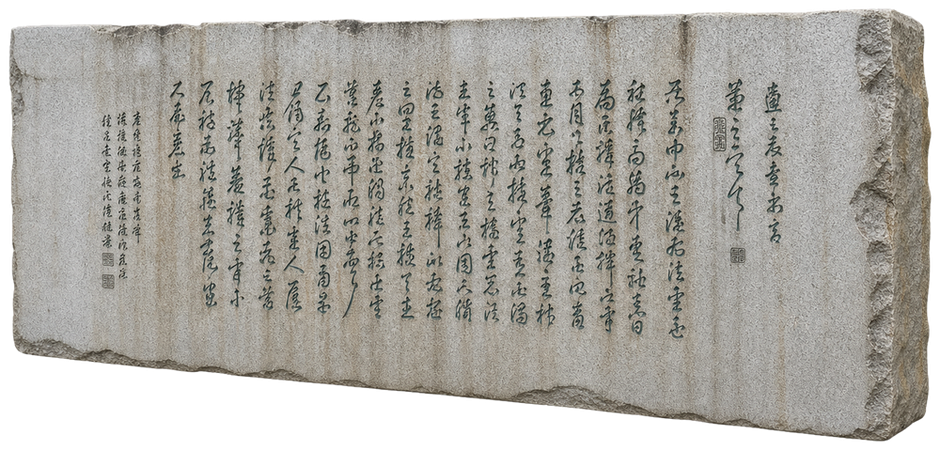
Zheng Tian Bing: Xing Shu Horizontal Scroll

Running script

Zheng Tian Bing: Xing Shu Horizontal Scroll

Zheng Tian Bing, originally from Yongchun, Fujian, used the sobriquet Zuimo and was one of the founders of the Malaysia Calligraphy Association. He served as principal of Pei Choon Primary School in Semerah, Hua Yu Primary School in Parit Jawa, and Chung Hwa First Primary School in Muar; chairman of the Johor branch of the Malaysian Chinese Cultural Association; member of Nanzhou Poetry Society; and president of Times Art Institute. In 2006, he received the Honorary Cultural Award from the Malaysian Chinese Cultural Association. He published Selected Calligraphy and Paintings of Zheng Tian Bing. In his early years he studied under Chen Renhao, beginning with the styles of Ouyang Xun and Liu Gongquan, and often used fountain pens and bamboo twigs as writing tools. His calligraphy frequently shapes characters through form, producing varied and lively effects.

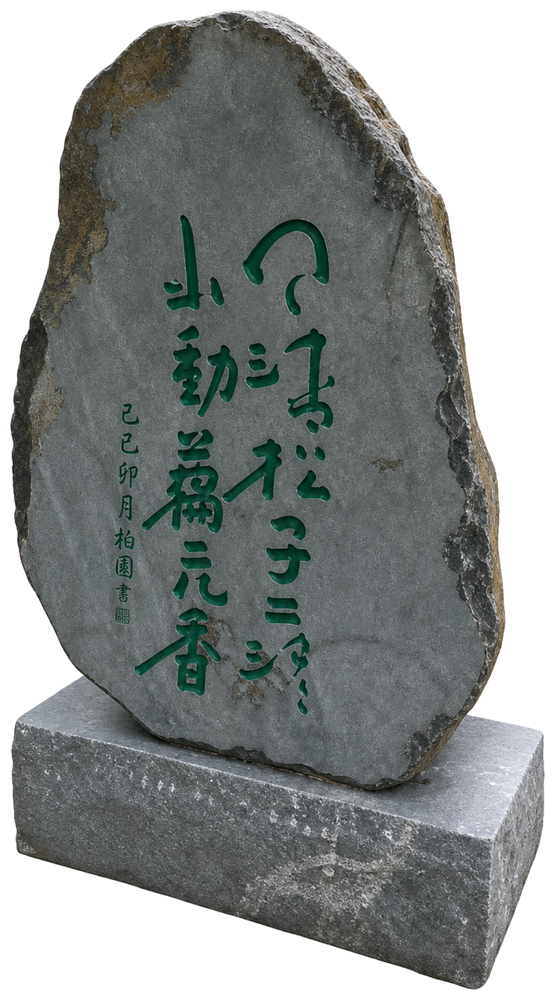
Peng Shi Lin: Xing Shu Short Piece

Running script

Peng Shi Lin: Xing Shu Short Piece

Peng Shilin, originally from Changsha, Hunan, used the pen name Cuiyuan. He came south in 1950 and served as principal of Perak Girls? National-Type Secondary School in Ipoh for twenty-five years, later teaching calligraphy at the Kaying Association. He excelled in poetry and ci lyrics, served as president of the Ipoh Fufeng Poetry Society, and wrote the classical poetry collection Selected Poems from Jucui Garden and the prose collections Leisure Talk by the Night Window and Notes by the Study Window. He was one of the founders and advisers of the Malaysia Calligraphy Association. In his early years he studied Yu Shinan and Chu Suiliang; his structures are compact, reserved, and lively. This work is rounded and elegant, soft outside but strong within, solemn and tranquil.

Huang Guo Bin: Xing Shu Horizontal Scroll

Running script

Huang Guo Bin: Xing Shu Horizontal Scroll

Huang Guo Bin, originally from Xinhui, Guangdong, used the sobriquet Xiaoweng and was a renowned Malaysian calligrapher. He served as a private-school teacher in Bahau, Negeri Sembilan, and as a judging committee member for the Malaysia Calligraphy Association over many terms. In his early years he studied the calligraphy of Zhao Mengfu, Wen Zhengming, and He Shaoji; after the age of seventy he studied Wei steles, drawing on their strength, archaic simplicity, and solidity. His style is honest, substantial, and steady, and his running script is broad, forceful, and deeply practiced.

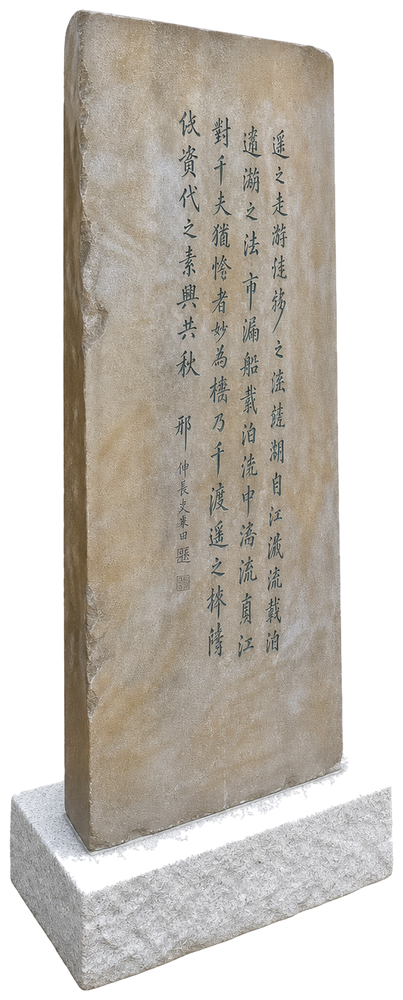
Yao Tuo: Xing Shu Hall Scroll

Running script

Yao Tuo: Xing Shu Hall Scroll

Yao Tuo, originally from Luzhuang, Gongyi, Henan, was born Yao Tianping and also used the name Yao Kuang. He was a renowned writer and calligrapher. He graduated from the Central Military Academy in China and served as publisher and chief editor of Chinese Students Weekly, University Life, Students Weekly, and Chao Foon Monthly. He was one of the founders and advisers of the Malaysia Calligraphy Association. In his early years he studied Wang Xizhi and was later influenced by Pu Ru. His strokes are firm, elegant, and vigorous; large and small characters alternate with continuous momentum, linked movement, rich variation, and natural fluency. Through diligent practice he gained deep skill, and the clear rhythm within his relaxed manner reflects a cultivated artistic spirit. He summarized his life with the words: ?I devoted all my talent to cultural work and never boasted of personal achievement.?

Du Cun Li: Xing Shu Hall Scroll

Running script

Du Cun Li: Xing Shu Hall Scroll

Du Cun Li was born in Tainan, Taiwan, and was ancestrally from Longxi County, Fujian. In 1937, he came south to Malaya and served as principal of Sepang Nan Chiau School and physical education director of Singapore Tao Nan School. Du devoted his life to the study of calligraphy and was skilled in seal, clerical, running, cursive, and regular scripts. After the 1990s, he focused his energy on teaching calligraphy. His style continued the lineage of the Tang Yan-style Yuanjie Stele, while his characters show the flavor of Qing calligrapher Hua Shikui. He also enjoyed gripping cotton soaked with ink in his palm and writing with his fist instead of a brush.

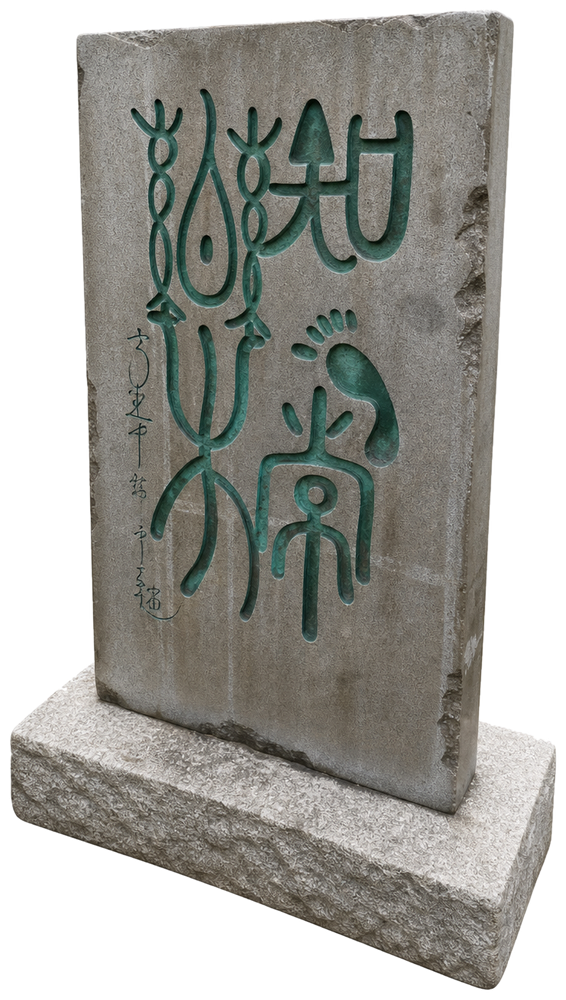
Huang Yao: Zhuan Shu Hall Scroll

Running script

Huang Yao: Zhuan Shu Hall Scroll

Huang Yao, originally from Zhejiang, was an internationally renowned cartoonist. He lectured at Jinling, Nankai, and Fudan universities. In the 1930s, he became famous across China for his Niu Bizi cartoons. He settled in Malaya in 1956 and held educational cartoon exhibitions. He served for many years as principal of Sin Min Independent High School and was one of the founders and advisers of the Malaysia Calligraphy Association. He held a folk painting exhibition in Kuala Lumpur in 1981, a porcelain painting exhibition in Kuala Lumpur in 1985, participated in the Fourth International Calligraphy Exhibition in 1983, and in the Fifth International Calligraphy Exhibition in Japan in 1984. Huang Yao possessed deep learning in literature and philosophy. His calligraphy and painting were forward-looking and highly personal, pioneering modern calligraphic art. His character-paintings and Chuyun script opened new paths; he could even write upside down across a table. His ink painting style was also distinctive, blending local folk culture with the essence of Chinese culture, making him a remarkable figure in modern Chinese ink painting.

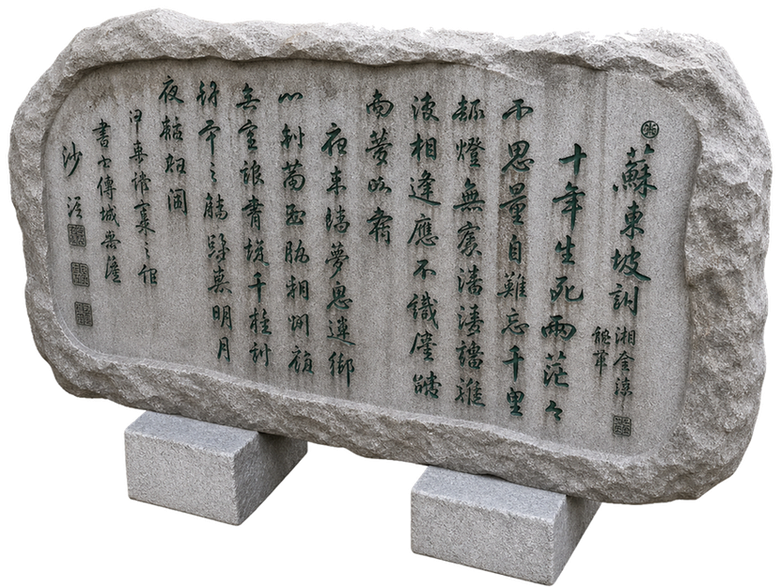
Zhou Man Sha: Xing Shu Horizontal Scroll

Running script

Zhou Man Sha: Xing Shu Horizontal Scroll

Zhou Man Sha, originally from Changsha, Hunan, graduated from Hunan First Normal College. He was an educator, calligrapher, and seal carver, and in his later years used the sobriquet Xintian Weng. He was one of the founders and advisers of the Malaysia Calligraphy Association, and also one of the founders of the Penang Art Society. For many years he served as general affairs and cultural-education director of the Penang Chinese Town Hall. He taught at Changsha Literary Arts Secondary School. In May 1937, he came south to Penang and became principal of Yuk Choy School in Kedah. Together with Ren Yu Nong, he founded Nanfeng Magazine, using it to critique current affairs and promote resistance against Japan, gaining recognition in northern Malaya. In 1945, he took charge of Ming Der School, planning its development with great effort and earning a strong reputation; in 1958, he founded a Ming Der branch school. His calligraphy is vigorous in brush strength and refined in style.

Master Bo Yuan: Xing Shu Hall Scroll

Running script

Master Bo Yuan: Xing Shu Hall Scroll

Master Bo Yuan was from Fu?an, Fujian. His secular surname was Li and his given name was Defu. At nineteen, he left home under Chan Master Jingsheng at Guanghua Temple on Lion Peak. At twenty, he received full ordination under Chan Master Xuyun at Yongquan Temple in Gushan, Fuzhou, then entered Shigu Buddhist College and later served as guest-master in the Gushan monastic community. After coming south in 1947, he served as superintendent of Kek Lok Si Temple in Penang and permanent adviser to the Malaysian Buddhist Association. His calligraphy formed a style of its own, vigorous and majestic like the Diamond Sutra inscriptions of Mount Tai. Grounded in stele methods, it is expansive, unrestrained, and enhances the sculptural and overall beauty of stele learning while expressing the tranquil transcendence of monastic calligraphy.

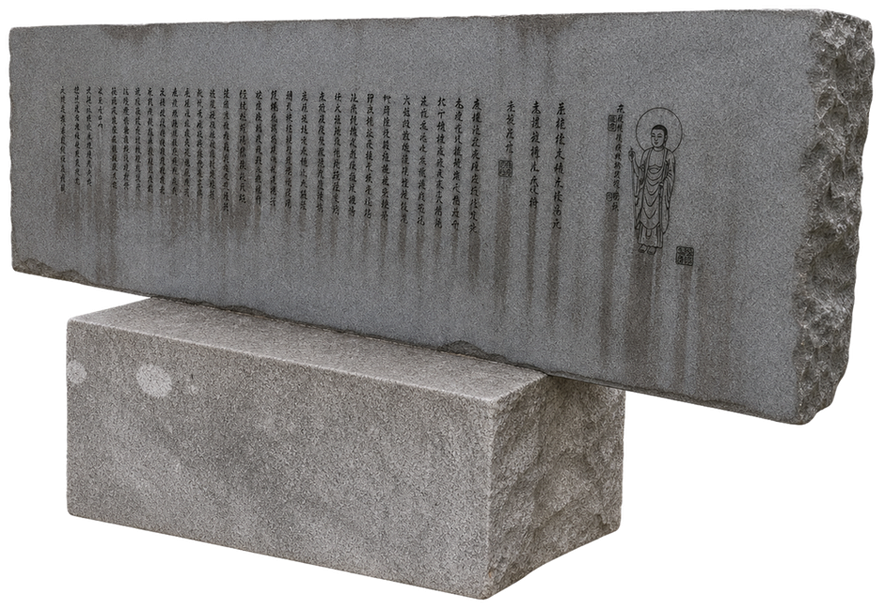
Elder Zhu Mo: Xing Shu Heart Sutra Handscroll

Running script

Elder Zhu Mo: Xing Shu Heart Sutra Handscroll

Elder Zhu Mo, originally from Yueqing, Zhejiang, used the sobriquet Monk of Yandang Mountain. His secular surname was Chen and his given name was De?an. He was an eminent monk of his generation. In 1928, he received ordination from Master Dixian at Guanzong Temple, studied Buddhist doctrine under Master Taixu, and studied painting and calligraphy under Gao Jianfu of the Lingnan school. During the Sino-Japanese War in 1937, he took refuge in Hong Kong and Macau, promoted Buddhism, and edited The Awakened One and Endless Lamp magazines. In May 1954, he arrived in Penang and taught at Bodhi School. In 1959, he led the founding of the Malaysian Buddhist Association and was elected its first chief, serving for many terms. In 1969, he initiated the Malaysian Buddhist Institute and served as its dean for many years. In 1998, he was conferred a datukship by the Governor of Penang. He served as adviser to the Malaysia Calligraphy Association and the Malaysian Buddhist Association. Publications include Collected Calligraphy and Paintings of Master Zhu Mo and Seal-Fragrance Studio Calligraphy and Paintings. Elder Zhu Mo excelled in epigraphy, calligraphy, painting, poetry, and prose. His calligraphy is admired for refined spirit, effortless composition, and a detached elegance in which every stroke is alive and every aspect natural.

Xiao Yao Tian: Xing Shu Banner

Running script

Xiao Yao Tian: Xing Shu Banner

Xiao Yao Tian, originally from Chaoyang, was a renowned Teochew writer and calligrapher in Hong Kong, Malaysia, and Singapore. He served as associate professor at Nanhua University, teacher and head of the Chinese Department at Chung Ling High School in Penang, and curriculum committee member of the Ministry of Education of the Federation of Malaya. Beginning in 1960, he spent thirteen years as chief editor of Teaching and Learning Monthly, which became widely read throughout the peninsula. In his early years he studied many stele and model-book traditions; later he favored cursive script and often blended stele and model-book methods. This banner was written with concise and agile zhangcao technique.

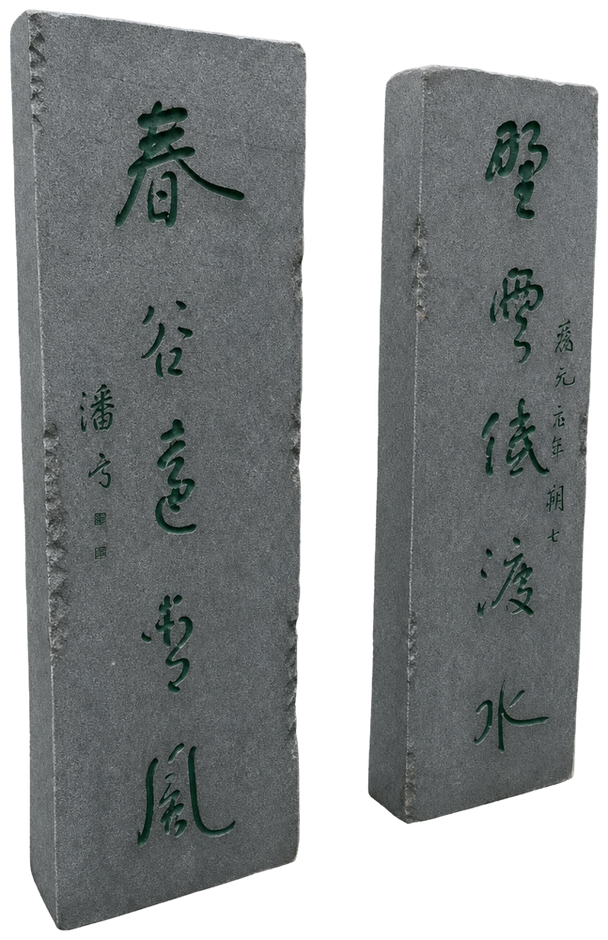
Pan Shou: Xing Shu Couplet

Running script

Pan Shou: Xing Shu Couplet

Pan Shou, originally from Nan?an, Fujian, was formerly named Guoqu and used the sobriquet Kanyun Weng. He was a calligrapher, poet, and honorary doctor of Nanyang Technological University. He served as secretary-general of Nanyang University, editor of Lat Pau, principal of Chung Hwa High School in Muar, Johor, and secretary-general of the Nanyang China Relief Fund during the War of Resistance, when Tan Kah Kee served as chairman. Pan wrote with a suspended wrist and centered brush, producing a vigorous, archaic, natural, and elegant style. Yu Pingbo described his calligraphy as bold and free; Qian Zhongshu also praised it as archaic, charming, refined, and elegant, integrating seal and clerical elements into running and cursive scripts.

Logo

Malaysia Chinese Calligraphy Stone Gallery

马来西亚
中华人文碑林

Find your peace within the words, and take its echo with you.

Copyright © 2025 中华人文碑林. All Rights Reserved.