Logo

Malaysia Chinese Calligraphy Stone Gallery

马来西亚
中华人文碑林

Home
About
ForewordCommitteeDiscover BeilinEvolution of Chinese CharactersCalligraphy AppreciationVisitor Feedback
GalleryDynastyEvents & DownloadsContact UsReservation
English
简体中文
English
繁體中文
日本語
Bahasa

Curated Collection

Curated Stillness

Let these collections be more than a display—let them be a wandering, a quiet gaze. Here, every stroke is a whisper of time, leading you into the boundless river of the written word.
Oracle Bone Script
Wei Stele Script
Regular Script with Semi-Cursive
Semi-Cursive Script
Li Shu, Kai Shu
Regular and cursive scripts
Cursive Script
Running script
Regular script
Big seal script
Xiaozhuan
Clerical script
Bronze Inscription
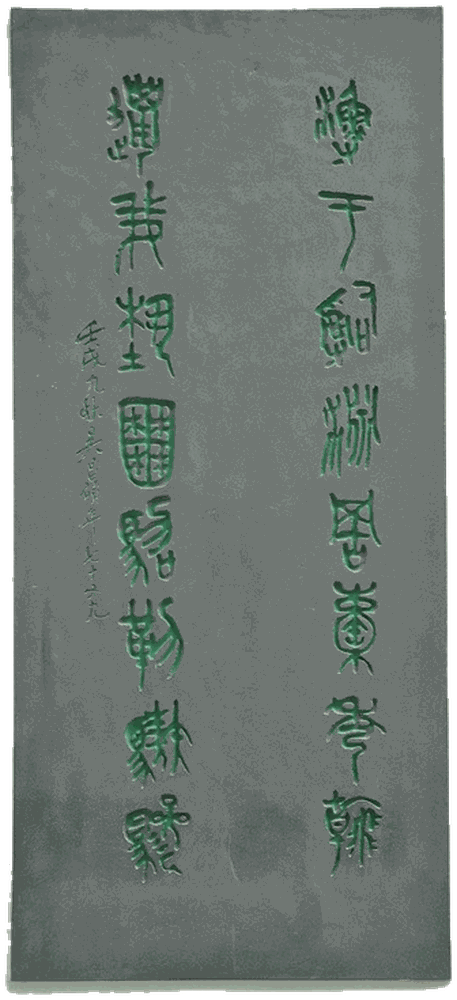
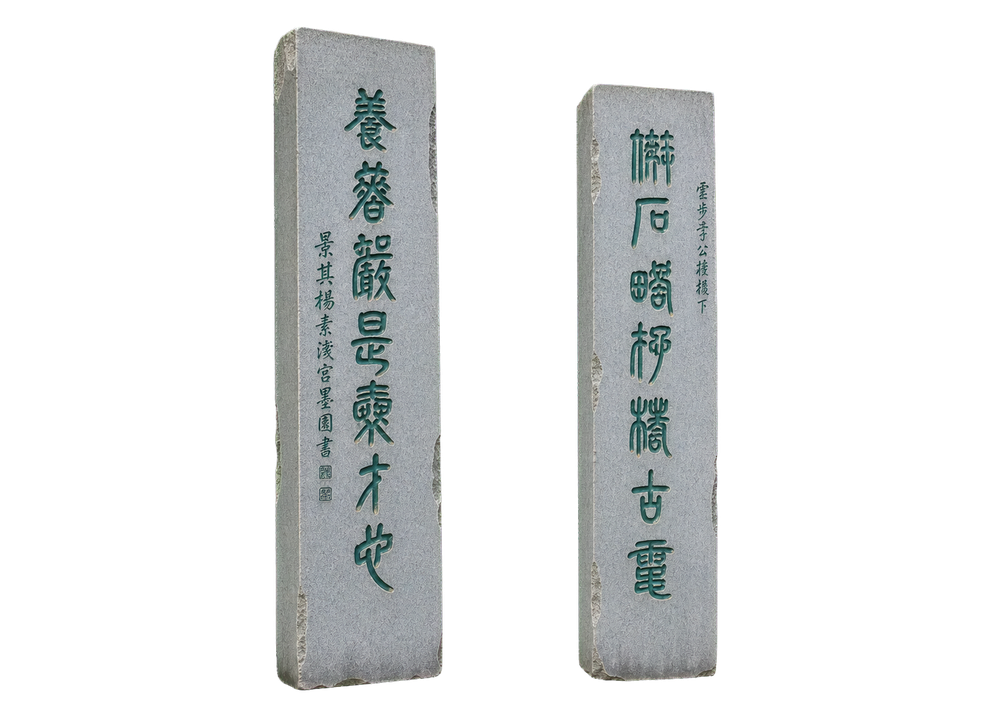
Shi Xiang Tuo: Zhuan Shu Couplet

Xiaozhuan

Shi Xiang Tuo: Zhuan Shu Couplet

Shi Xiang Tuo is also known by his other given name of ‘Shi Hong Ze”. Hailed from Zhang Zhou, Fu Jian and born into a scholarly driven family where his forefathers were adept at calligraphy and painting, Shi came to Singapore in 1938. He was appointed the principal of Nanyang Academy of Fine Arts in Singapore in 1941, a post he held for 39 years. Throughout his life, he dedicated himself to mastering the art of the ancient tablet-based calligraphy through endless diligent studies. Shi therefore specialized in ‘Zhuan Shu’ calligraphy, which is a form of ancient calligraphy. His ‘Zhuan Shu’ calligraphy is simply fascinating, not to mention his Zhuan-based, Han Dynasty-inspired seal carving. Shi’s works ooze vintage elements, cheerfulness, high-spiritedness and ingenuity. The multi-talented Shi left a long-lasting legacy of literary art through his marvelous calligraphy, painting and seal carving. His masterpieces are a fusion of his lifelong ideas delivered through his dexterity. What you see is a lifelong literary journey presented by his brushes and carving chisels and cutters. Shi was exceptionally good at producing calligraphy and painting pieces inspired by the raw beauty of ancient seal carving. His works appear to be in a very commanding and confident mood, earning him a place in the hall of fame for the grand masters. Shi himself was an erudite scholar who in his lifetime, blessed the literary fraternity with plenty of great works. He devoted his life to the teaching of art, sowing literary seeds across Singapore and Malaysia.

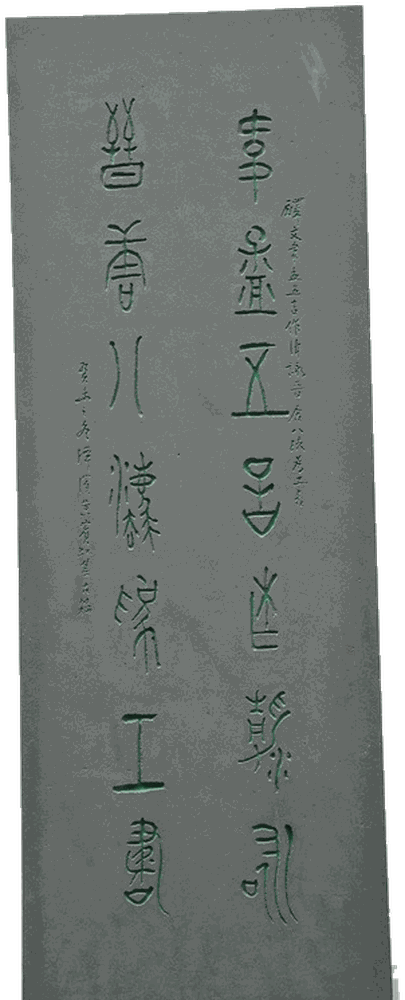
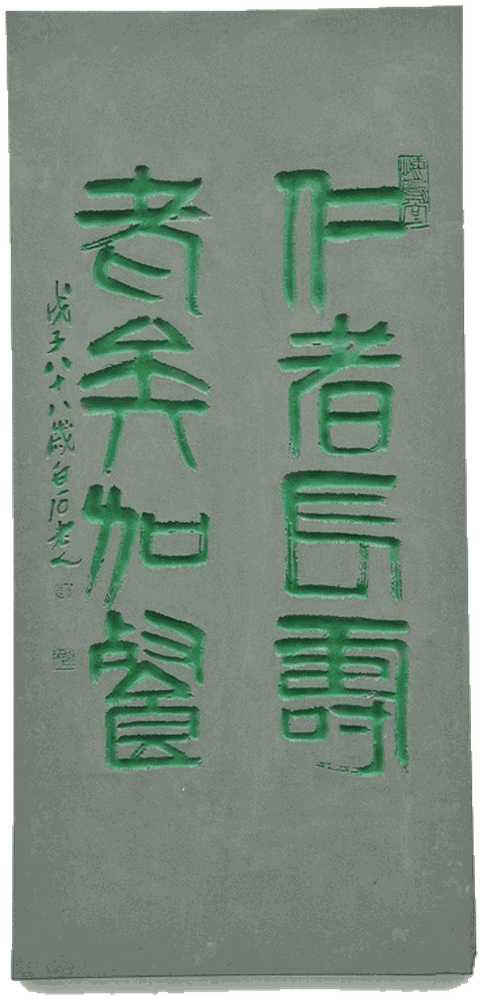
Qi Baishi: Seal Script Couplet

Xiaozhuan

Qi Baishi: Seal Script Couplet

History credited Qi Bai Shi as one of the most accomplished painters, calligraphers and seal carving experts in China of the 20th century. He was an eminent figure in paintings, seal-carvings, book and poetry writings. From his point of view, the unsurpassed beauty of a piece of art lies in its ‘reality’ and ‘surrealism’. Qi’s paintings drew inspirations from Xu Wei, Zhu Da, Shi Tao and Wu Chang Shuo. He cleverly weaved the quintessential features of his seniors into his works so that they would look even more distinguished, as seen in his ‘relaxing and enjoyable’ ink-wash paintings. One of his trademark distinctions is the painting of red flowers alongside black leaves. Qi seemed to be unstoppable even though in his 80s. He shocked the art fraternity with his unique yet brilliant concoction of paintings of prawns as the key subject. The ‘Xing Shu’ calligraphy added another feather to his cap.

Wu Changshuo: Seal Script Couplet

Xiaozhuan

Wu Changshuo: Seal Script Couplet

Wu Chang Shuo was a famous painter, calligrapher and seal engraving expert (or seal artist) of the late Qing Dynasty. He was an icon of Shanghai’s creative arena, being the inaugural principal of the Xiling Society of Seal Arts in Hangzhou. His derived his calligraphy aspirations from Yan Zhen Qing initially, followed by Zhong Yuan Chang. For calligraphy stone engraving, he preferred the ‘Li Shu’ school of thought of the ancient Han Dynasty. His ‘Zhuan Shu’ calligraphy was inspired by the script engraving on the stones of the ancient Qin Dynasty. Wu’s ‘Xing Shu’ calligraphy manifests the tilting strokes of Huang Ting Jian and Wang Duo’s. It oozes the art of composition of Huang Dao Zhou’s. Wu’s calligraphy also took in the essence of ‘Zhuan’ and ‘Zhou’ scripts of the Northern Dynasties. His stroke-work could be dramatic, bold and unrestrained, yet flamboyant at times. In his later life, Wu pushed his calligraphy mastery to the next level, breaking the boundaries of the ancient stone-based script engraving. He injected the ‘expressionist’ elements into his ‘Zhuan’ calligraphy works to amplify the artistic transformation by using added inking concentration and getting motivated by the art of stone engraving. His new perspective on ‘Zhuan Shu’ creation helped redefine and add a new value to the aesthetic aspect of calligraphy. The former principal of the Xiling Society of Seal Arts bolstered up his influential role in the creative arena with his ingenuity in fusing calligraphy, painting and stone engraving into a creative masterpiece.

Huang Binhong: Seal Script Couplet

Xiaozhuan

Huang Binhong: Seal Script Couplet

Huang Bin Hong was a pioneer in Chinese modern art. The art fraternity labelled him ‘the virtuoso of Chinese ink-wash painting’. Apart from landscape paintings, Huang’s paintings of flowers and birds were equally legendary. He thrived on his theory of marrying calligraphy and painting for added distinction. The prolific art contributor was resolute in promoting the clever use of ink and brush whenever possible. This is because both disciplines, calligraphy and painting, require a great amount of skills to produce a masterpiece.

Deng Shiru: Excerpts from "Disciple Duties" in Seal Script

Xiaozhuan

Deng Shiru: Excerpts from "Disciple Duties" in Seal Script

Deng Shiru was one of the great Qing masters of calligraphy, epigraphy, and classical learning. This seal-script rendering of excerpts from ?Disciple Duties? was written in the year before his death, when he was sixty-two. It is widely regarded as his most mature work, showing complete command in brush movement, character structure, and the seasoned unity of man and writing. It is also considered one of the works with which Deng himself was most satisfied.

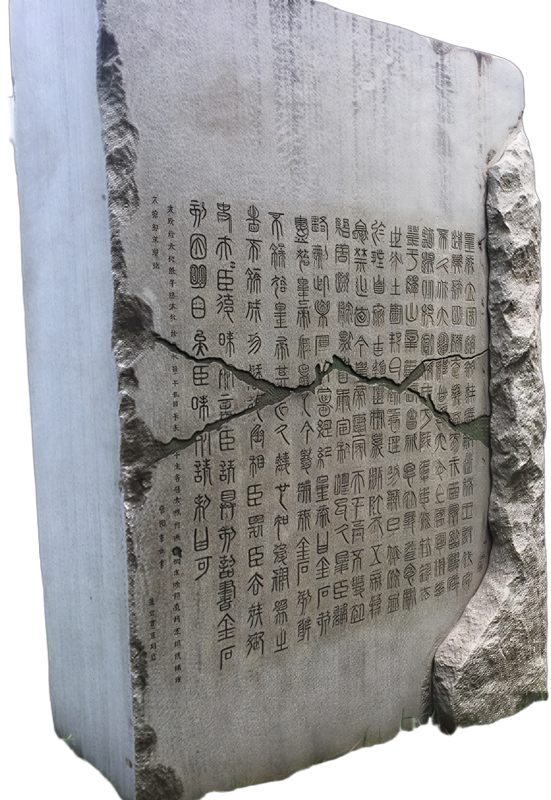
Mount Yi Stele

Xiaozhuan

Mount Yi Stele

It is believed that the characters on the stele are the handwriting of Li Si,who was then the premier of Qin Shi Huang. The text is an edict of Qin Shi Huang and Qin Er Shi, the second emperor of the Qin Dynasty.

Mount Langya Stele

Xiaozhuan

Mount Langya Stele

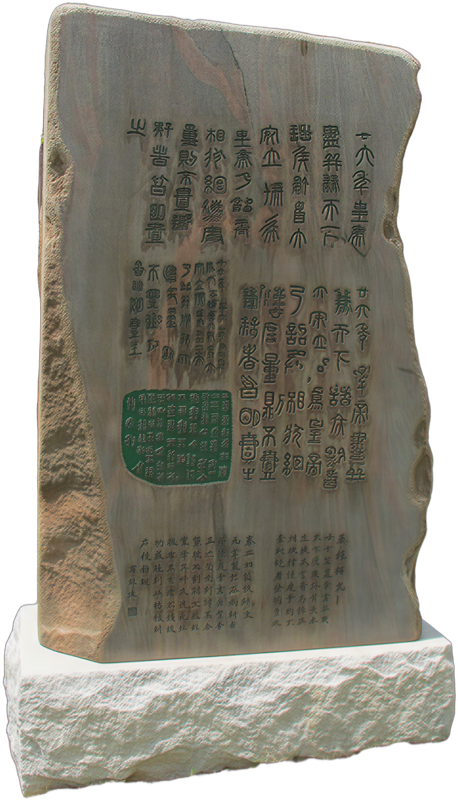
Qin Shi Huang made a trip to Mount Langya in the 28th year of his reign and the inscribed stone was erected to eulogize his achievements. It is said that the characters were Li Si’s handwriting. The stele was originally located at Langya Terrace in Zhucheng, Shandong. It is now kept at the National Museum of China.

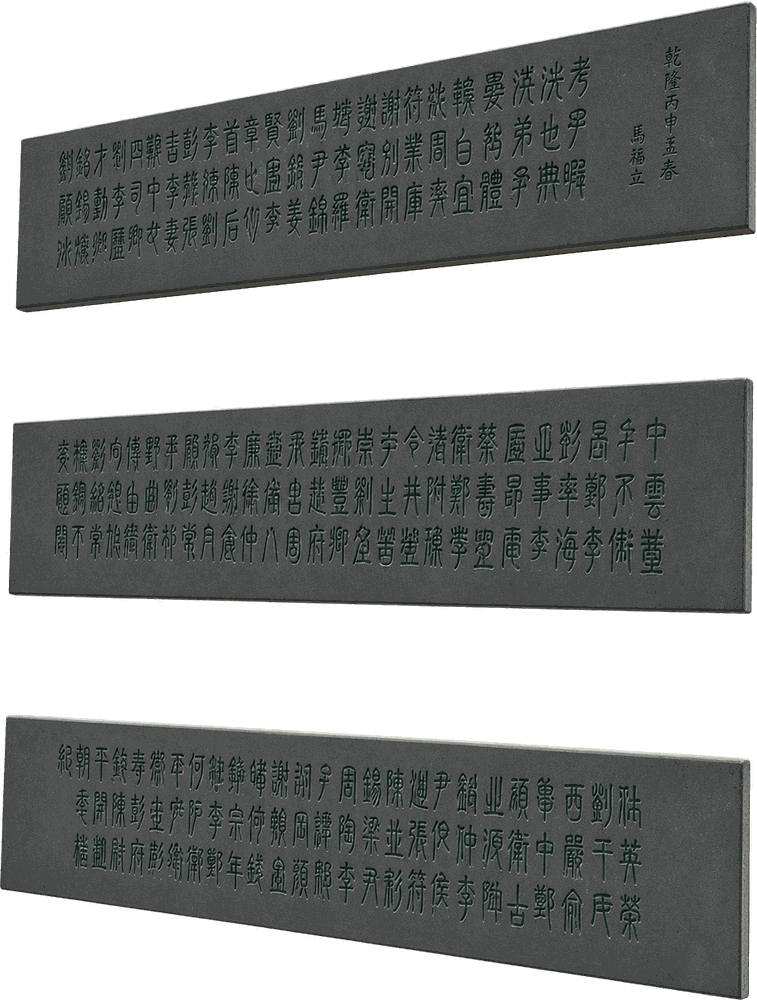
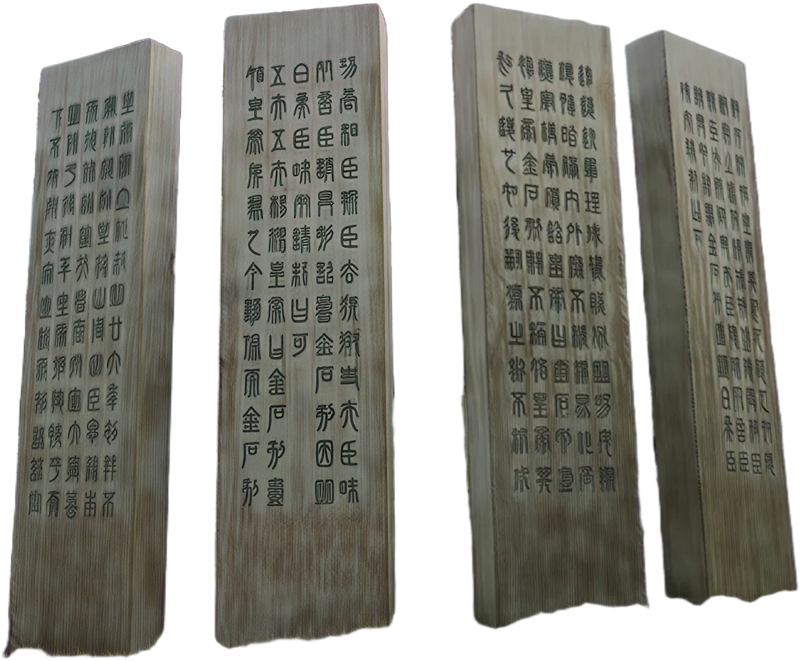
Standard Measurement Units

Xiaozhuan

Standard Measurement Units

In BC221, Qin Shi Huang became the first emperor of the unified China. In an effort to unite the country, he ordered his officials to make Edict Plates with standardised measurement units. The materials used to make these plates include bronze, wood and clay. It is believed that the earlier batches of plates were written by Li Si, the premier of the Qin.

Logo

Malaysia Chinese Calligraphy Stone Gallery

马来西亚
中华人文碑林

Find your peace within the words, and take its echo with you.

Copyright © 2025 中华人文碑林. All Rights Reserved.