Logo

Malaysia Chinese Calligraphy Stone Gallery

马来西亚
中华人文碑林

Home
About
ForewordCommitteeDiscover BeilinEvolution of Chinese CharactersCalligraphy AppreciationVisitor Feedback
GalleryDynastyEvents & DownloadsContact UsReservation
English
简体中文
English
繁體中文
日本語
Bahasa

Curated Collection

Curated Stillness

Let these collections be more than a display—let them be a wandering, a quiet gaze. Here, every stroke is a whisper of time, leading you into the boundless river of the written word.
Oracle Bone Script
Wei Stele Script
Regular Script with Semi-Cursive
Semi-Cursive Script
Li Shu, Kai Shu
Regular and cursive scripts
Cursive Script
Running script
Regular script
Big seal script
Xiaozhuan
Clerical script
Bronze Inscription
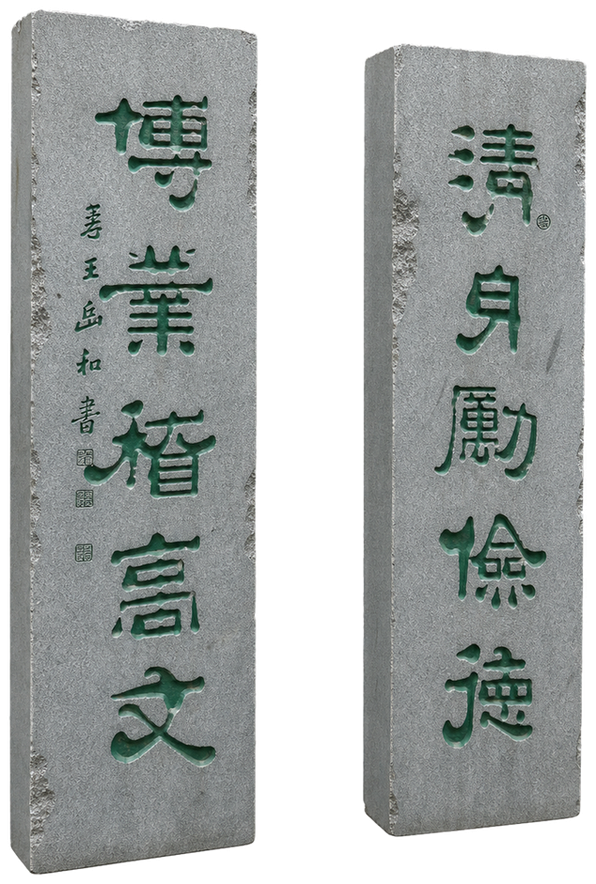
Yang Jin Rong: Li Shu Couplet

Clerical script

Yang Jin Rong: Li Shu Couplet

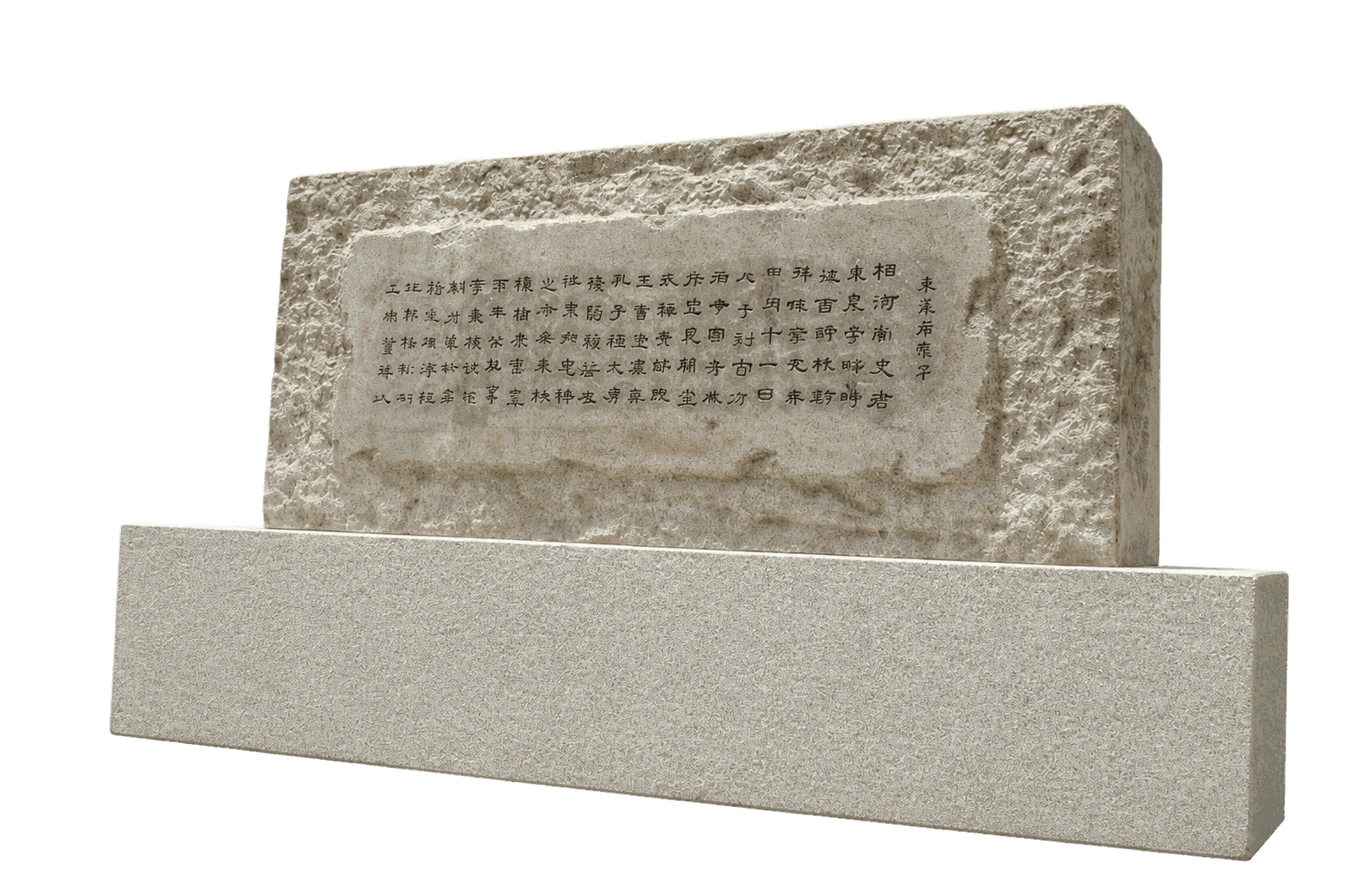
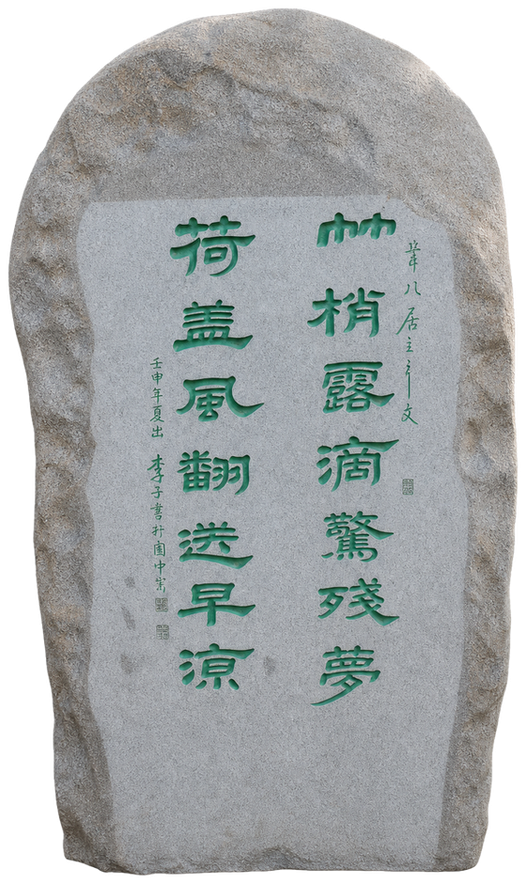
Yang Jin Rong, ancestrally from Dapu, Guangdong, began studying calligraphy when young under Xu Yuehan, Huang Guobin, and Pan Shou, and made calligraphy teaching his profession. He was principal of Metropolitan Art Institute, adjunct lecturer at Southern University College, and curator of the Johor Bahru Calligraphy Gallery. He also served as adviser to the Chinese Humanistic Stele Forest, former deputy president and judging committee member of the Malaysia Calligraphy Association, president of the Johor Calligraphy Association, chairman of the Johor Bahru liaison committee of the Malaysia Calligraphy Association, adviser to the Miri Calligraphy Association in Sarawak, and adviser to the Johor Poetry Society. His early works, such as Lanxi Boat Song, were strongly experimental, exploring different structural line qualities and variations in ink density. His mature works, such as his final piece Drunken Sleep at the Orchid Pavilion, placed greater emphasis on the spatial aesthetics of empty space, fully reflecting his open-minded view of a freely expressed life.

Huang Run Yue: Zhen Zhong Pavilion Inscription Stele

Clerical script

Huang Run Yue: Zhen Zhong Pavilion Inscription Stele

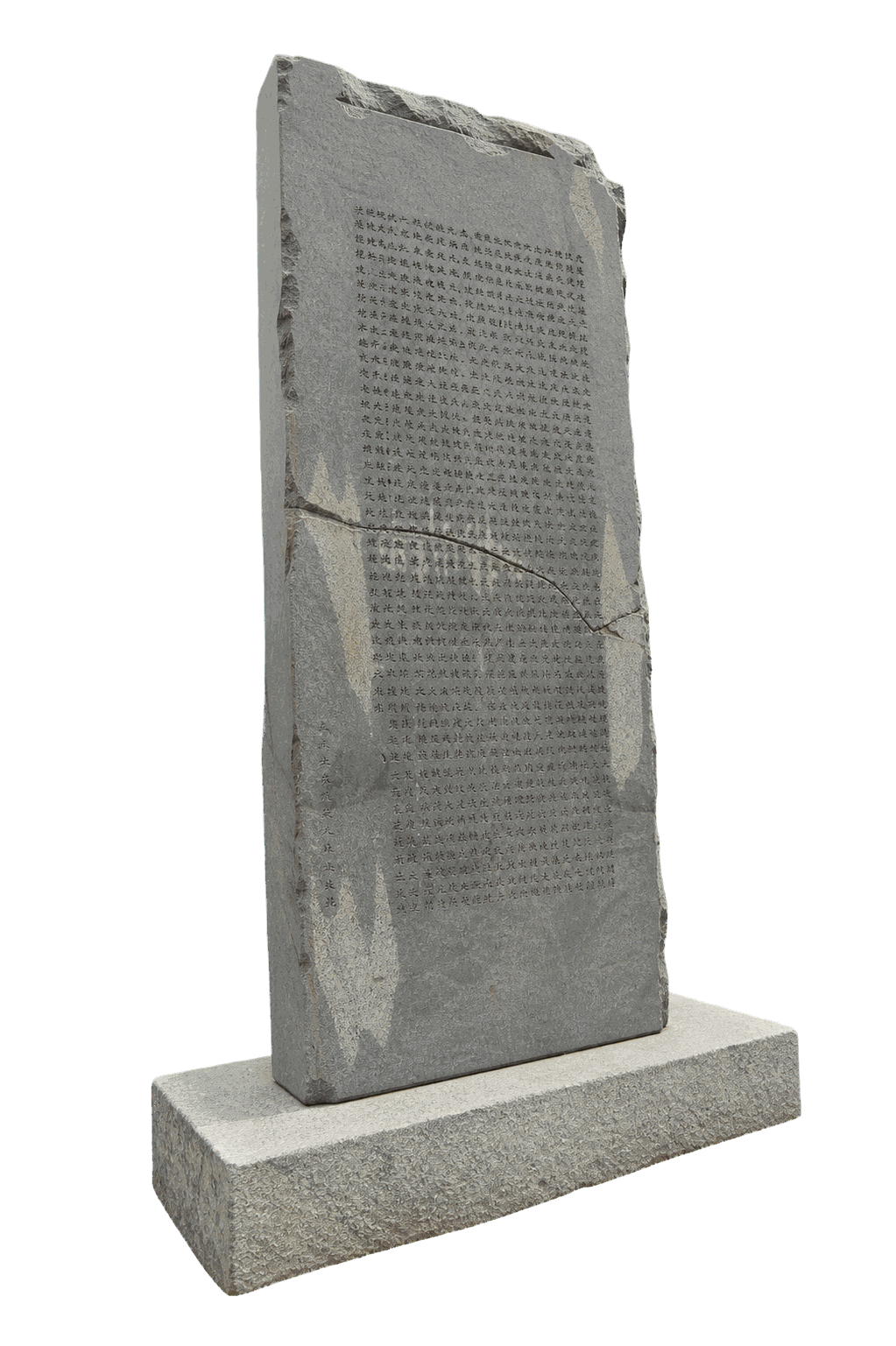
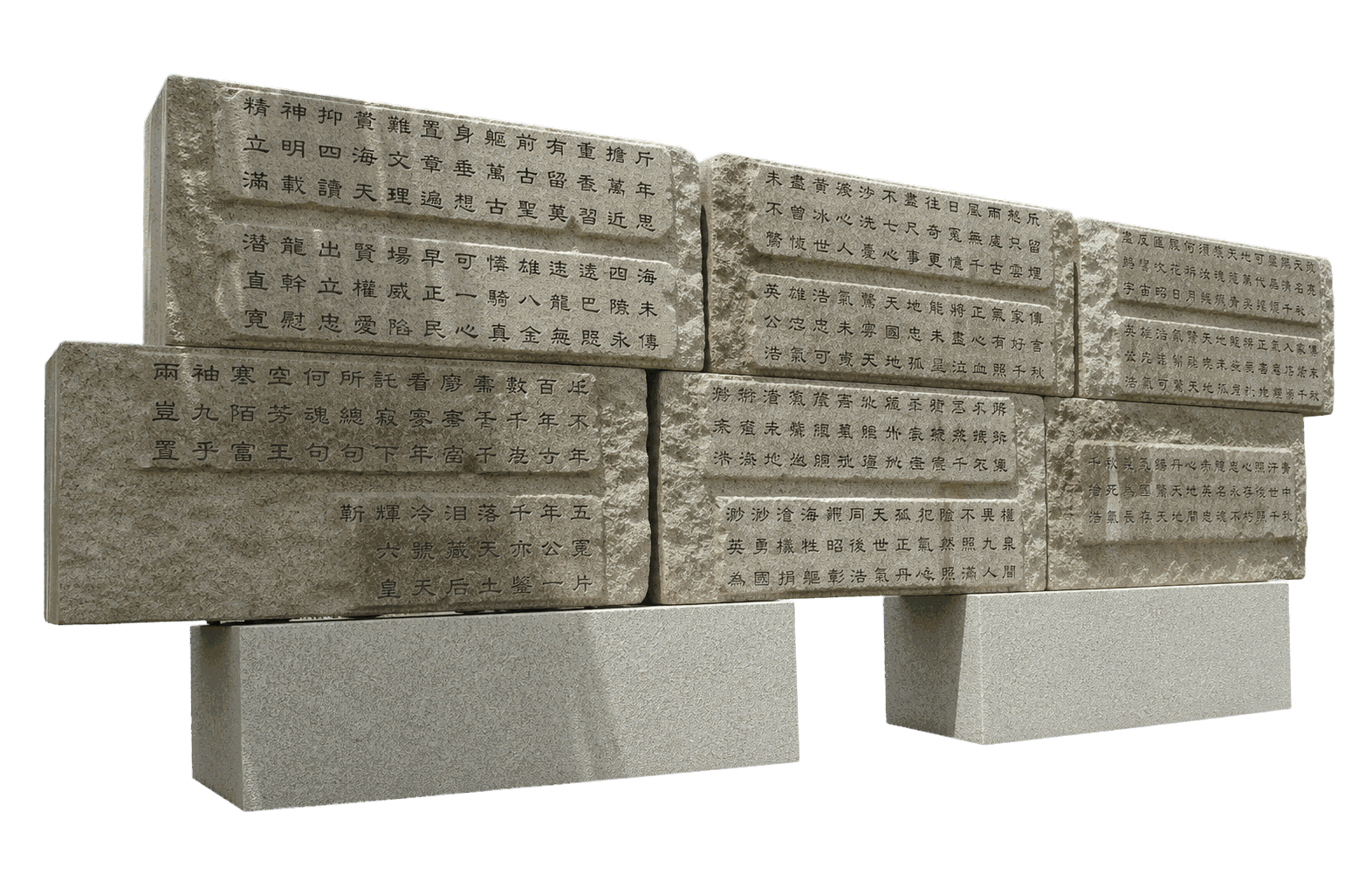
Huang Run Yue, originally from Changsha, Hunan, was an educator, writer, and poet. He served as principal of Xin Wen Long Chinese High School in Rengit, Johor, chairman of the United Chinese School Teachers? Association of Malaysia, and principal of Pay Fong High School in Malacca. In his later years he devoted himself to religious activities. His early calligraphy followed Qing calligrapher Qian Nanyuan, and later he studied the Han Zhang Qian Stele and Yi Ying Stele. Written in clerical script, the Zhen Zhong Pavilion Inscription for Xin Wen Long Chinese High School contains several hundred characters and is a grand work. The brushwork is like slanting rain in a crosswind; the lines respond fluidly to one another. Dense areas are not cramped, and open areas are not empty, giving the work a natural subtlety.

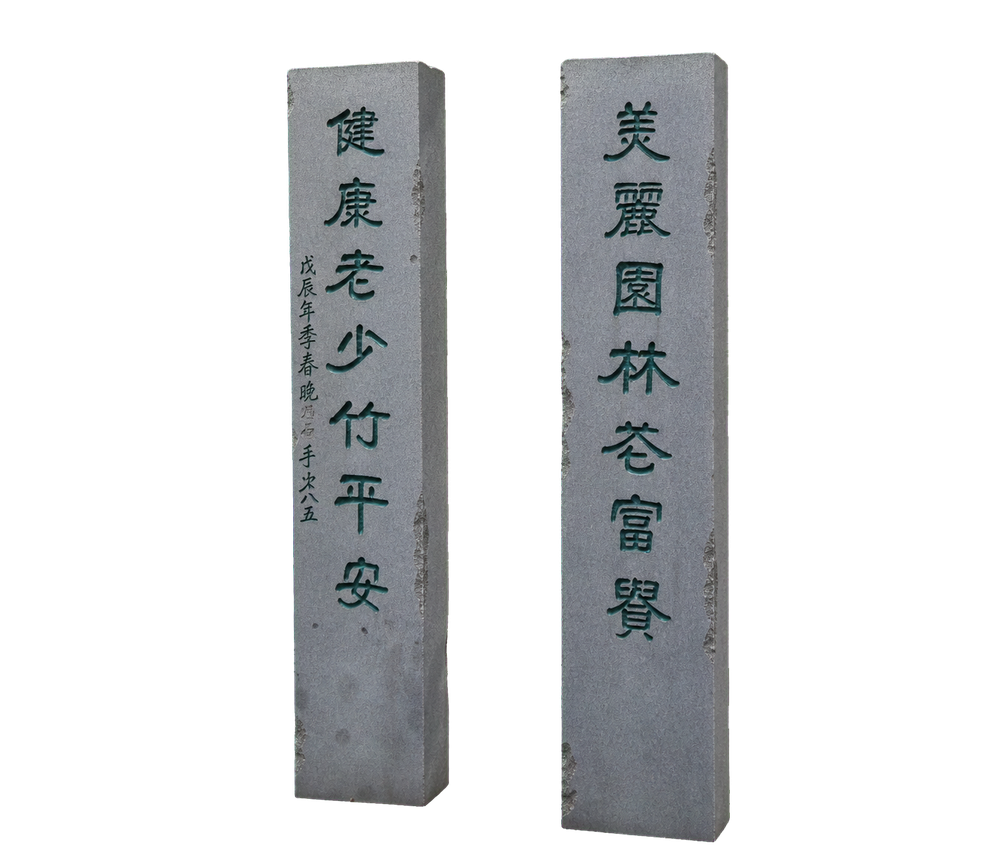
Chen Lei Shi: Li Shu Couplet

Clerical script

Chen Lei Shi: Li Shu Couplet

Chen Lei Shi, originally from Chao?an, courtesy name Botong, was an internationally renowned guqin master, writer, and calligrapher. He taught at Chung Ling High School in Penang and Chung Hwa High School in Muar, Johor, and later served as professor at Chinese Culture University in Taiwan and the Chinese University of Hong Kong, where he was also curator of the Chinese Music Archive. He wrote A Glimpse of Travels in Europe. His calligraphy began with Wei steles and later advanced into Han clerical script, especially the Zhang Qian Stele. It has a lingering charm and belongs to the literati style.

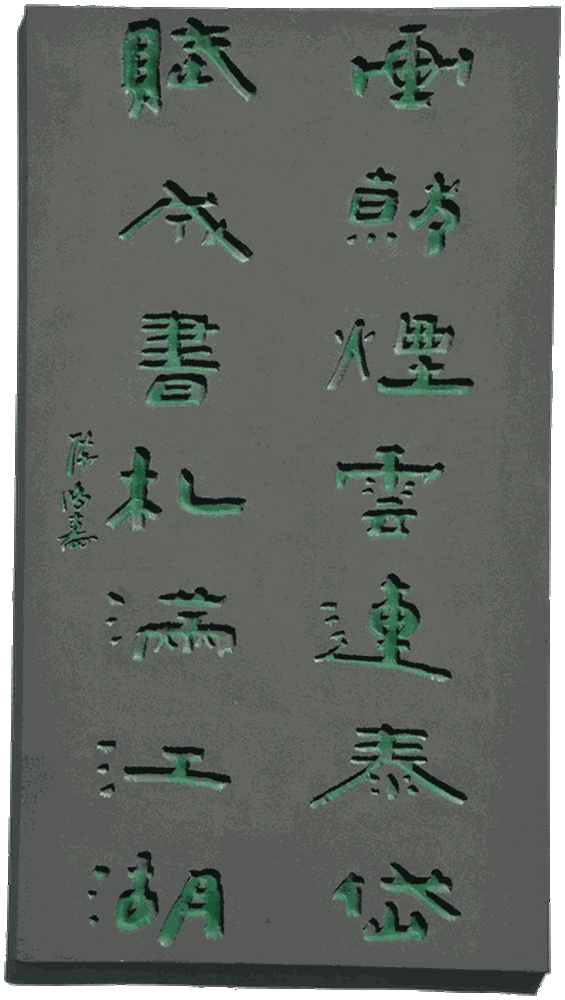
Li Xiu Tian: Li Shu Couplet

Clerical script

Li Xiu Tian: Li Shu Couplet

Li Xiu Tian was the principal of Chung Hua Middle School in Sarawak. He held other teaching roles at Seremban Chung Hua High School, Ipoh Yuk Choy High School and Chung Hwa Independent High School (Kuala Lumpur) for a duration of over two decades. He first established his calligraphy classes in 1955. Upon his retirement from teaching in the 80s, he focused on spreading his calligraphy knowledge for the rest of his life. He was conferred the highest cultural honour by the Malaysian Chinese Cultural Society in the inaugural award ceremony. Li’s calligraphy is well-constructed and steady; well-ordered and neat.

Zeng Xi: Xing Shu Couplet

Clerical script

Zeng Xi: Xing Shu Couplet

Zeng Xi was a multi-talented figure in poetry, calligraphy and painting. Inspired by Zhong Yao and Wang Xi Zhi’s calligraphy, Zeng also soaked up the essence of ‘Xia Chen Bei’ (an ancient stone inscription) and ‘Zhang Hei Rǚ’ (a tablet inscription) to perfect his calligraphy. His calligraphy demonstrates a mixture of conformities and nonconformities. Zeng loved to keep the composition and alignment of his calligraphy ‘spacious’, with slightly ‘extended’ strokes. His calligraphy style is very much epigraphy driven. He took on painting seriously in his later life and became an advocate of calligraphy-imbued paintings ever since, thus earning him an illustrious reputation across the calligraphy and painting fraternity. Zeng Xi and Li Rui Qing are historically known as the ‘Nan Zeng Bei Li’ combination (literally means Zeng ruled the South while Li had the North at their feet through their calligraphy and painting prowess). Along with Li Rui Qing, Shen Zeng Zhi, Wu Chang Shuo, they formed the ‘Four Greatest Calligraphers of the Early Republic Era’. The legendary Zhang Da Qian was one of the disciples of Zeng Xi.

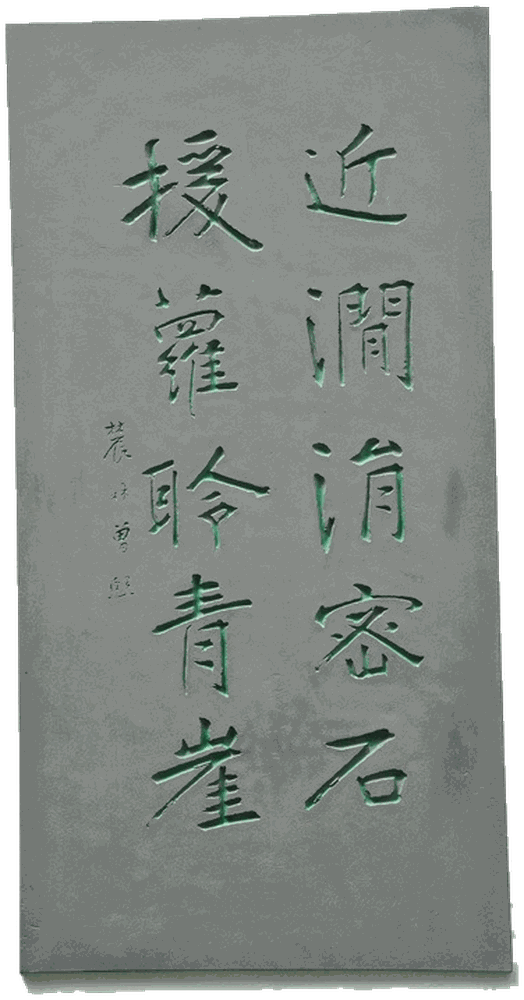
Chen Hongshou: Clerical Script Couplet

Clerical script

Chen Hongshou: Clerical Script Couplet

Chen Hongshou was a highly accomplished artist and one of the famous ?Eight Masters of Xiling.? His seal carving drew upon Qin and Han models, while his clerical script became especially celebrated for its lean vigor, free composition, and inventive interweaving of forms. This work shows clear, slender, ancient-looking brushwork, relaxed elegance, and a reclusive scholarly spirit. Though the structure may appear casual at first glance, it is in fact carefully and ingeniously arranged.

Li Longji's Classic of Filial Piety on Stone Terrace

Clerical script

Li Longji's Classic of Filial Piety on Stone Terrace

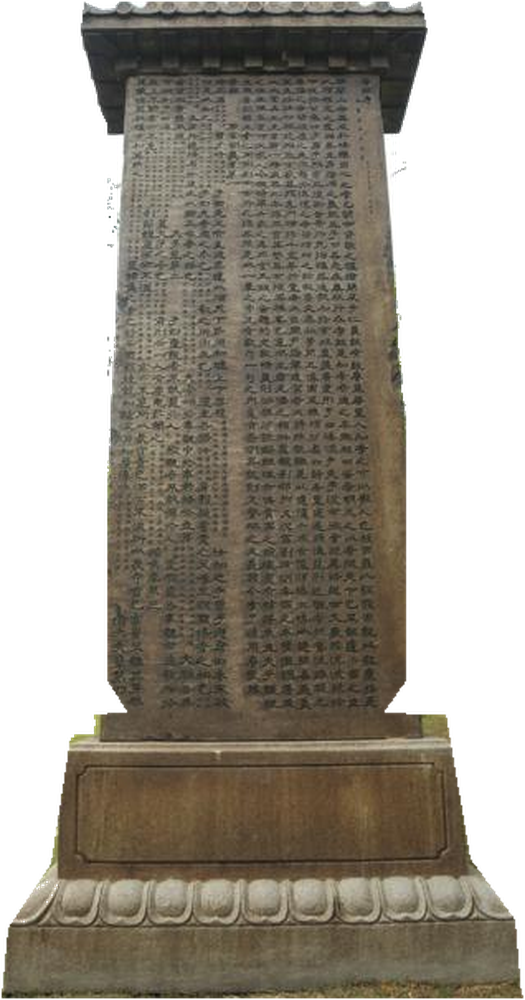
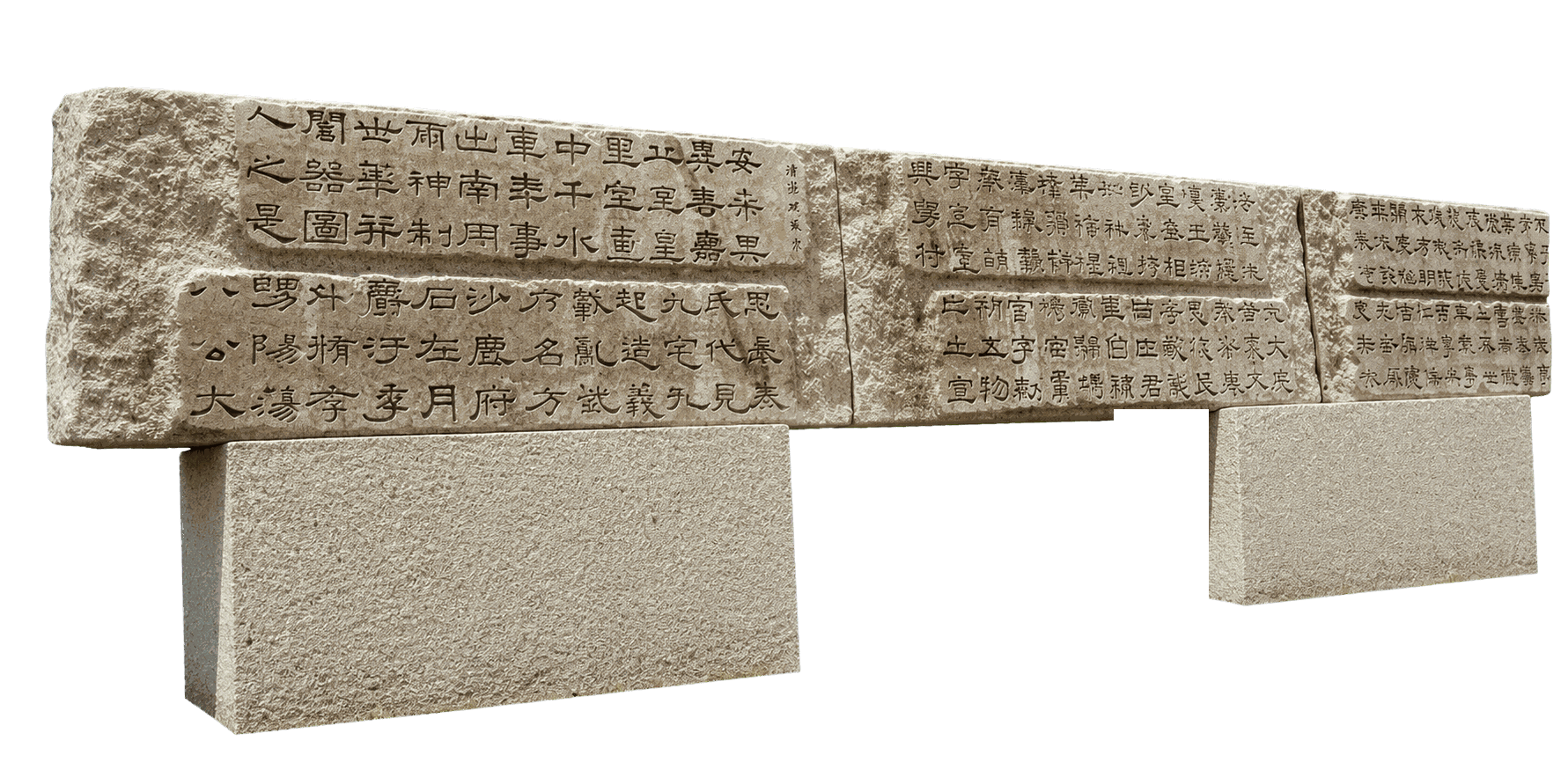
The inscription on this stele is the Classic of Filial Piety, a record of Confucius’ teachings on filial duty and fraternal respect as transmitted by his disciple Zeng Shen. Emperor Xuanzong of Tang, Li Longji, personally wrote the preface and annotations, and transcribed the text in clerical script. It was carved in the fourth year of the Tianbao era of Emperor Xuanzong, 745 CE. The text reflects the Tang dynasty ideal of “governing the realm through filial piety.” Few examples of Emperor Xuanzong’s handwriting survive. Besides its large scale and distinctive form, this stele is also influential in the history of Chinese calligraphy and is now one of the famous steles in the Xi’an Forest of Steles.

The Zhang Qian Stele

Clerical script

The Zhang Qian Stele

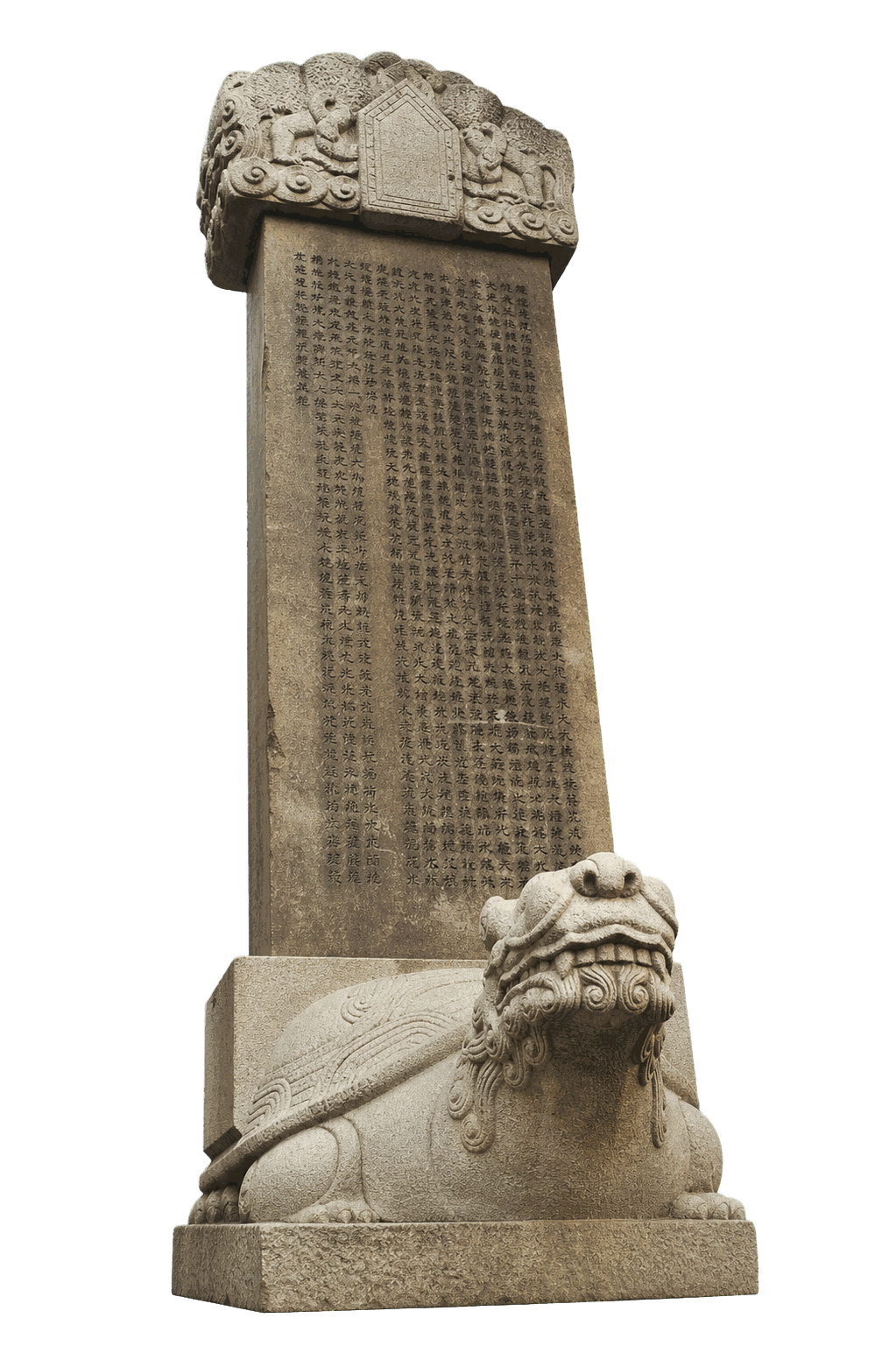
The Zhang Qian Stele, also known as the Zhang Qian Memorial, has a seal-script title reading "Memorial and Eulogy for Lord Zhang, former Gucheng Chief and Dangyin Magistrate of Han." It was carved in Wuyan, in present-day Dongping, Shandong, in the third year of the Zhongping period of Emperor Ling of the Eastern Han dynasty (AD 186), unearthed during the Ming dynasty, and is now preserved in Dai Temple in Tai'an, Shandong. The inscription records Zhang Qian's political achievements. Its characters are square and upright, with clearly defined angular brushwork and a style marked by order, straightness, squareness, and balance.

The Cao Quan Stele

Clerical script

The Cao Quan Stele

The Cao Quan Stele was erected in the tenth month of the second year of the Zhongping period of the Eastern Han dynasty (AD 185). It was unearthed in Heyang, Shaanxi during the Ming dynasty and is now preserved in the Xi’an Beilin Museum. The inscription records Cao Quan’s life, achievements, and lineage, and also mentions the Yellow Turban uprising led by Zhang Jiao. Its elegant, graceful style, balanced structure, complete body, and clear characters make it one of the finest works from the peak period of Eastern Han clerical script.

The Shi Chen Stele (excerpt)

Clerical script

The Shi Chen Stele (excerpt)

It is believed that the characters on the Shi Chen Stele were written by Cai Yong. The inscription records Shi Chen, prime minister of the State of Lu, honoring Confucius with ceremonial offerings. It was carved in the third month of the second year of the Jianning period of Emperor Ling of the Eastern Han dynasty (AD 166).

The Han Chi Stele (excerpt)

Clerical script

The Han Chi Stele (excerpt)

The stele was carved in the 2nd year of the Yongshou period during the Eastern Han dynasty (AD 156). The inscriptions record Han Chi, premier of the State of Lu, exhorting his people to refurbish the Confucius Temple and add ritual vessels and offerings. The stele is well preserved in the Confucius Temple in Qufu, Shandong, and is important for the study of clerical script calligraphy.

The Yi Ying Stele

Clerical script

The Yi Ying Stele

The stele was erected in the 1st year of Yongxing Period during the reign of Emperor Huan of the Eastern Han dynasty (AD 153). It is now kept in the Confucius Temple in Qufu, Shandong. The inscriptions are about Yi Ying’s request for official approval of ritual arrangements at the Confucius Temple. Yi Ying was the premier of the State of Lu.

Logo

Malaysia Chinese Calligraphy Stone Gallery

马来西亚
中华人文碑林

Find your peace within the words, and take its echo with you.

Copyright © 2025 中华人文碑林. All Rights Reserved.