Logo

Malaysia Chinese Calligraphy Stone Gallery

马来西亚
中华人文碑林

Home
About
ForewordCommitteeDiscover BeilinEvolution of Chinese CharactersCalligraphy AppreciationVisitor Feedback
GalleryDynastyEvents & DownloadsContact UsReservation
English
简体中文
English
繁體中文
日本語
Bahasa

Curated Collection

Curated Stillness

Let these collections be more than a display—let them be a wandering, a quiet gaze. Here, every stroke is a whisper of time, leading you into the boundless river of the written word.
Oracle Bone Script
Wei Stele Script
Regular Script with Semi-Cursive
Semi-Cursive Script
Li Shu, Kai Shu
Regular and cursive scripts
Cursive Script
Running script
Regular script
Big seal script
Xiaozhuan
Clerical script
Bronze Inscription
Liu Gongquan's Xuanmi Pagoda Stele

Regular script

Liu Gongquan's Xuanmi Pagoda Stele

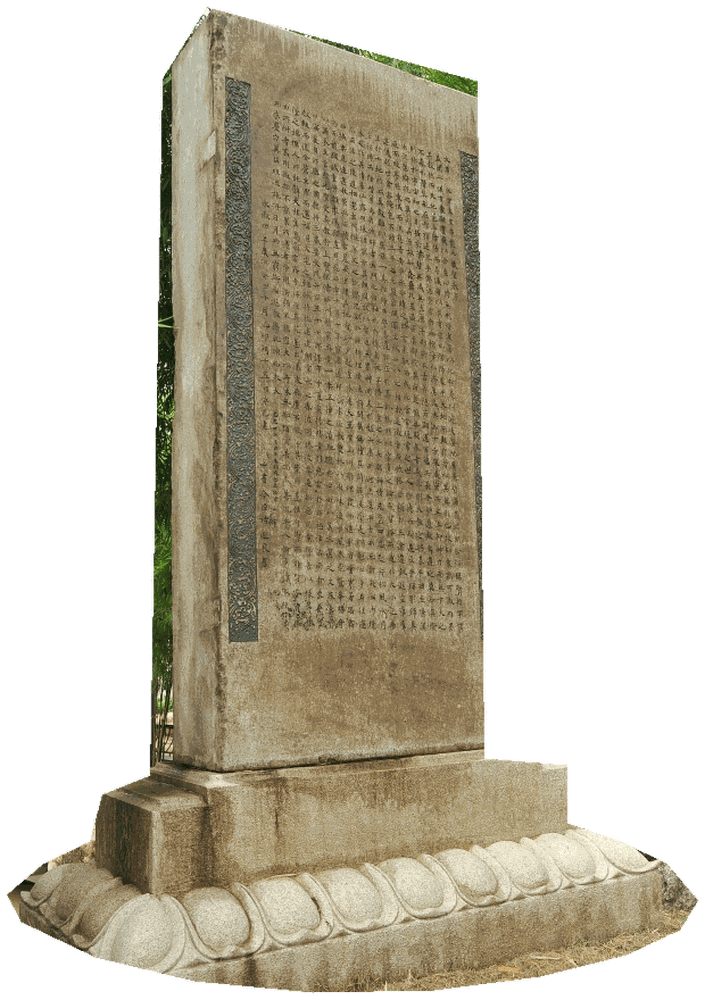
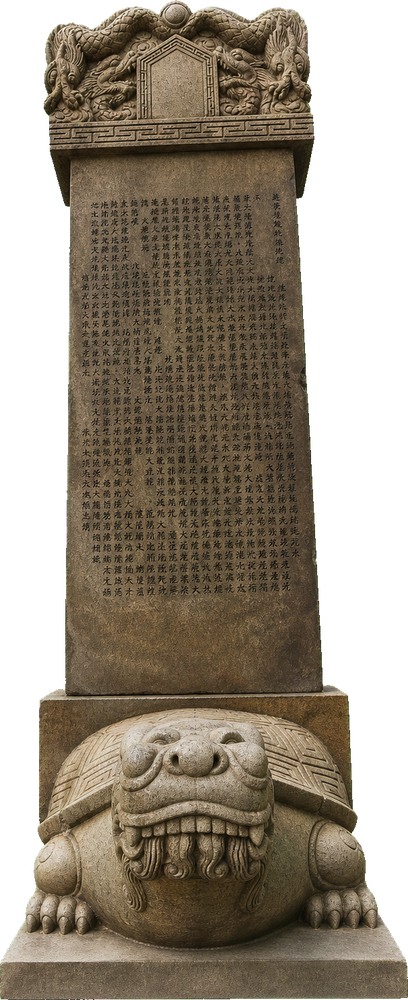
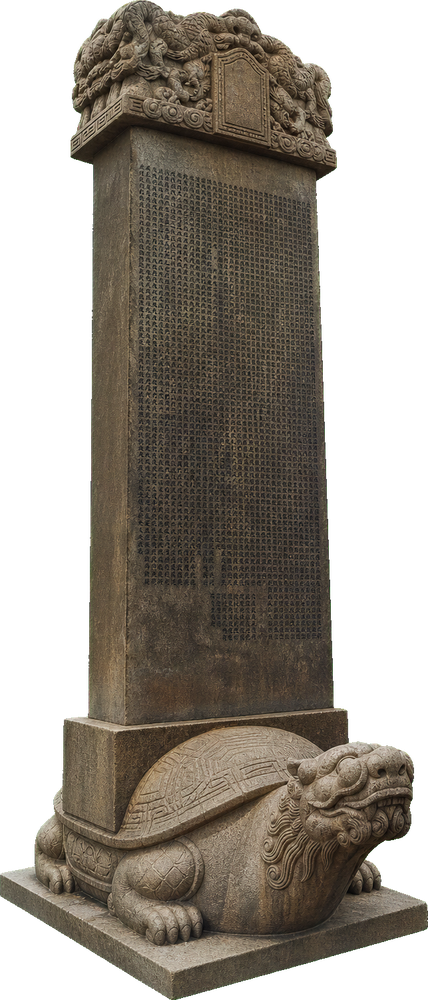
The Xuanmi Pagoda Stele was composed by Pei Xiu of the Tang dynasty, written and seal-script titled by Liu Gongquan, and erected in December of the first year of Emperor Wuzong’s Huichang era, 841 CE. It is now preserved in the Xi’an Forest of Steles. Written in regular script, it has twenty-eight lines with fifty-four characters per line. This stele commemorates the renowned Tang Buddhist monk Master Dada, recording his deeds for later generations and passing on his spirit. Liu Gongquan wrote it at the age of sixty-four. The brushwork is strong and vigorous; the script studies Yan Zhenqing while emerging from the tradition of Ouyang Xun, forming a fresh structure. Its character construction is mainly inwardly restrained and outwardly expansive, with firm, extended, clean, and decisive strokes. The writing is complete and well-considered on all sides, showing Liu Gongquan’s distinctive style. It is considered one of the peak works of his calligraphy.

Yan Zhenqing's Duobao Pagoda Stele

Regular script

Yan Zhenqing's Duobao Pagoda Stele

The opening title of this stele is Inscription on the Miraculous Response of the Duobao Buddha Pagoda at Qianfu Temple in the Western Capital of the Great Tang. It is written in regular script, with thirty-four lines and sixty-six characters per line. Originally located at Qianfu Temple in Anding Ward, Chang’an during the Tang dynasty, it was moved into the Xi’an Forest of Steles in the Song dynasty. The text was composed by Cen Xun, written by Yan Zhenqing, and carved by Shi Hua. It was created when Yan Zhenqing was forty-four years old. The writing is respectful and sincere, directly inheriting the legacy of the Two Wangs, Ouyang Xun, Yu Shinan, and Chu Suiliang. Construction at Qianfu Temple was selected and begun in the first year of the Tianbao era, and completed in the fourth year. Every stroke conceals and returns the brush tip; the structure is evenly balanced in density, and the overall style is rigorous and solemn.

Yan Zhenqing's Yan Qinli Stele

Regular script

Yan Zhenqing's Yan Qinli Stele

The Yan Qinli Stele, formally titled Spirit Path Stele of the Late Lord Yan, Senior Guardian, Chief Clerk of the Kuizhou Area Command, and Editorial Official of the Secretariat Library of the Tang, contains thirty-eight characters per line and forty-four lines in total. It was unearthed in Xi’an in 1922 and is now housed in the Xi’an Forest of Steles. Yan Zhenqing wrote and erected this stele for his grandfather Yan Qinli when he was seventy-one years old. The brushwork is vigorous and crisp, making it one of Yan’s representative works from his later years. The inner strokes of each character avoid one another and leave open space, giving the writing a clear and spacious feeling, while the outer strokes are more regular and stable. The character structures are often compact above and expansive below, creating a distinctive balance of inner looseness with outer tightness, and lower looseness with upper tightness. The brush strength is deep and reserved, with concealed tips; starting strokes are often rounded, and turns tend to be square within and round without. Yan transformed earlier methods and formed his own school, known as the Yan style, which had a profound influence on later generations.

Yu Shinan's Confucius Temple Stele

Regular script

Yu Shinan's Confucius Temple Stele

The Confucius Temple Stele was written by Yu Shinan. It records Emperor Gaozu of Tang’s conferment of the title Marquis Baosheng on Kong Delun, a descendant of Confucius, in the ninth year of the Wude era, 626 CE, as well as the restoration of the Confucius Temple. The calligraphy is warm, rounded, and refined, with strength held within the brushwork. Its structure is dignified, balanced, and upright, and its style is calm, elegant, and graceful. It is one of Yu Shinan’s representative regular-script works. Yu Shinan inherited the tradition of the Two Wangs while developing his own character; his strokes are subtle yet firm, and his discipline is strict without losing ease. This stele has long been regarded as a masterpiece of Tang dynasty regular script and an important model for studying Yu Shinan’s calligraphy.

Ouyang Xun's Huangfu Dan Stele

Regular script

Ouyang Xun's Huangfu Dan Stele

The Huangfu Dan Stele, formally titled Stele of Lord Huangfu, Duke Hongyi Ming, Left Guanglu Grand Master and Pillar of State of the Sui, is also known as the Huangfu Jun Stele. Written by Ouyang Xun, it records the life and deeds of the Sui dynasty official Huangfu Dan. Huangfu Dan, courtesy name Xuanxian, was from Chaona in Anding. He served as Vice Minister of War and Left Assistant Director of the Department of State Affairs in the Sui dynasty, and was later killed after remonstrating against Prince Yang Liang’s rebellion. This stele is one of Ouyang Xun’s representative regular-script works. Its structure is strict and powerful, its strokes are slender, firm, and upright, and its rules are highly disciplined. It fully shows the qualities of the “Ou style”: balanced yet dramatic, clear, vigorous, and sharply elegant. It is an important model for studying Ouyang Xun’s regular script.

Ouyang Xun's Inscription on the Sweet Spring at Jiucheng Palace

Regular script

Ouyang Xun's Inscription on the Sweet Spring at Jiucheng Palace

C31

Chu Suiliang's Preface to the Sacred Teachings at the Wild Goose Pagoda

Regular script

Chu Suiliang's Preface to the Sacred Teachings at the Wild Goose Pagoda

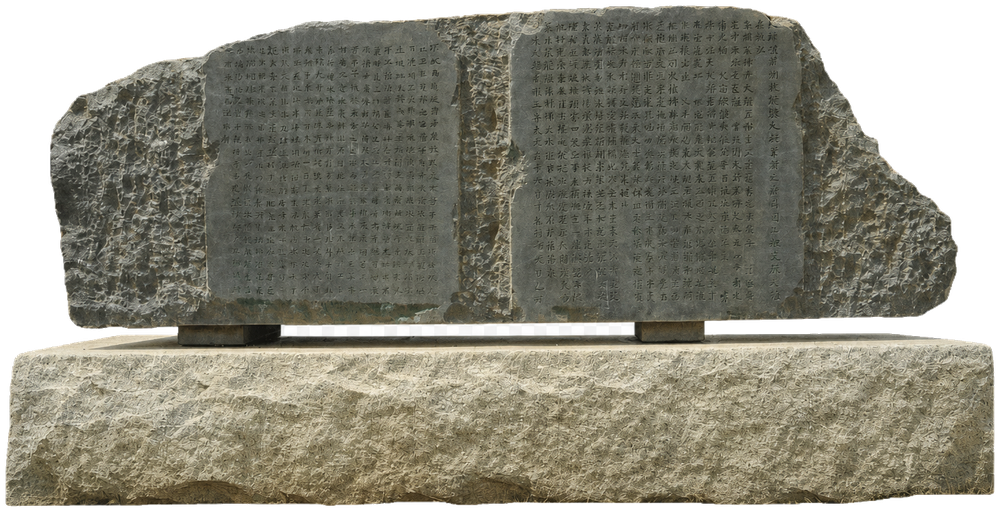
The Preface to the Sacred Teachings at the Wild Goose Pagoda is also known as the Preface to the Sacred Teachings at Ci'en Temple. It was erected in the fourth year of the Yonghui reign of the Tang dynasty (653 CE). The work consists of two stones, both located on the ground level of the Giant Wild Goose Pagoda at Ci'en Temple in Xi'an, Shaanxi, placed respectively in the eastern and western niches of the pagoda gate. The front stone contains the preface, fully titled Preface to the Sacred Teachings of the Great Tang Tripitaka, written by Emperor Taizong Li Shimin. The rear stone contains the record, fully titled Record of the Great Tang Emperor on the Tripitaka's Sacred Teachings, written by Emperor Gaozong Li Zhi. Chu Suiliang was one of the important figures who led the new style of Tang regular script. This work was written when Chu Suiliang was fifty-eight years old and is one of the best representatives of his regular script style.

The Mu Liang Epitaph

Regular script

The Mu Liang Epitaph

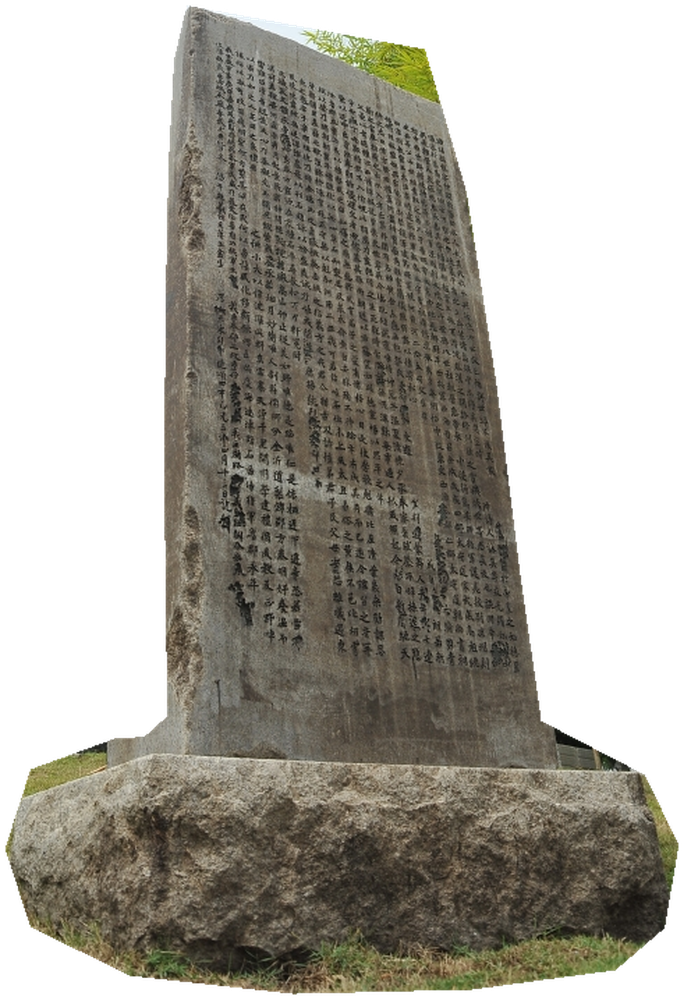
The Mu Liang Epitaph was carved in the third year of the Jingming reign of Emperor Xuanwu of the Northern Wei dynasty (502 CE). It was unearthed in 1925 at Xishan, northeast of Luoyang in Henan. Its calligraphy has a rigorous structure, handsome and upright energy, and a strong, weighty presence. The edges are distinct without being sharp, and the strokes are full while retaining inner strength. It represents the heavy and expansive style of early Northern Wei epitaph calligraphy, and its style is relatively close to the famous Wei stele The Zhang Menglong Stele. The inscription records that Mu Liang was the son of the Second Princess of Changle of Northern Wei. He campaigned in Hexi, defeated Tuyuhun, subdued Liyang, guarded the Luoyang capital region, and achieved distinguished political accomplishments.《穆亮墓志》刻于北魏宣武帝景明三年(公元502年),1925年在河南洛阳城东北西山出土,书法结构严谨,俊美挺劲,遒茂沉厚,棱角分明而不锋利,笔画丰腴而筋骨内含,是北魏墓志前期厚重盛大书风的一种表现,风格与著名魏碑《张猛龙碑》较为接近。内容表述穆亮是北魏长乐二公主之子,曾征治河西,击败吐谷浑,讨收醴阳,镇守洛都,政绩彪炳。

The Zhang Heinu Epitaph

Regular script

The Zhang Heinu Epitaph

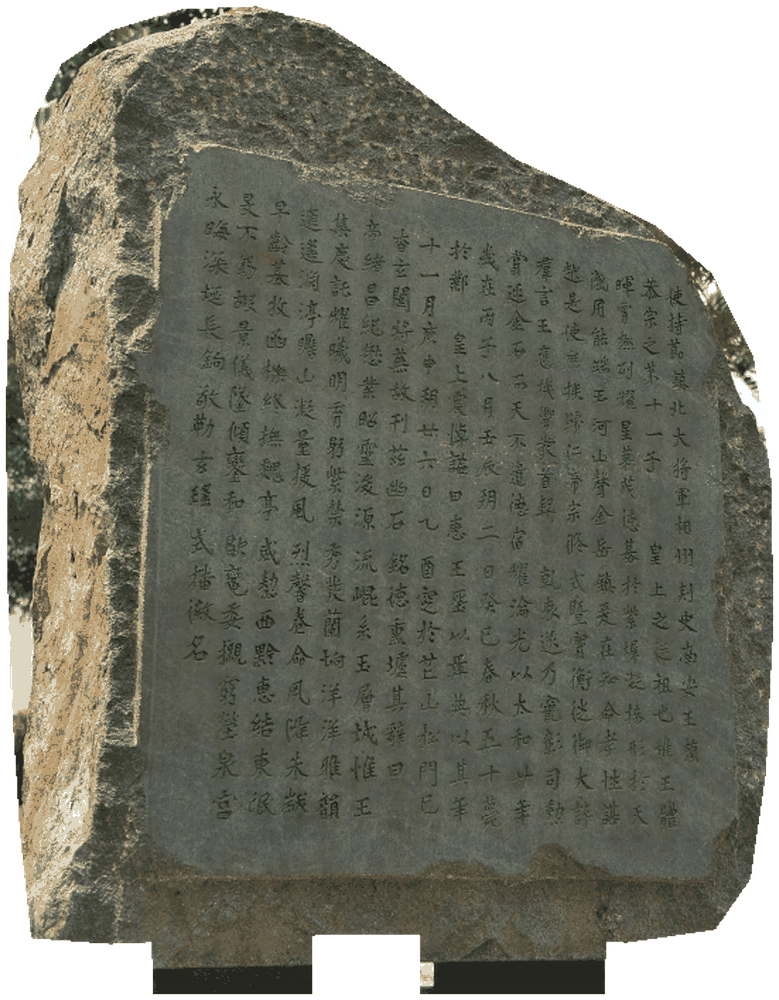
The Zhang Heinu Epitaph, fully titled Epitaph of the Late Zhang Xuan, Governor of Nanyang of Wei, is also known as the Zhang Xuan Epitaph. It was carved in the tenth month of the first year of the Putai reign of Emperor Jiemin of the Northern Wei dynasty (531 CE). Its place of excavation is unknown, and the original stone has long been lost. The surviving version is a rubbing formerly collected by He Zizhen of the Qing dynasty. The epitaph is written in regular script, with twenty lines and twenty characters per line, totaling 367 characters. Its writing and carving are both refined, with precise strokes, mainly angular brushwork combined with rounded turns, giving the work a gentle and elegant quality. The characters are slightly flattened, dignified and compact in structure, sharp yet steady, preserving elegance within unusual movement and richness within open spacing.《张黑女墓志》全称魏故南阳太守张玄墓志,又称张玄墓志。此碑刻于北魏节闵帝普泰元年(公元531年)十月,出土地无考,原石早已亡佚,现存者乃清何子贞旧藏之拓本。此墓志楷书文体,共二十行,每行二十字,计三百六十七字。此志文法精美,文写镌刻皆为高手,可谓字字珠玑,行行玉润,点画精到,以方笔为主,兼以圆转,给人以温雅之感。结字微扁,体势端庄而紧密,峻利而沉着,于奇宕中不失雅正,疏朗中不失茂密。

The Zhang Menglong Stele

Regular script

The Zhang Menglong Stele

The Zhang Menglong Stele, fully titled Stele of Praise for Lord Zhang, Governor of Lu Commandery of Wei, is written in regular script with twenty-six lines and forty-six characters per line. It is one of the fine later works of Wei stele calligraphy. The stele was erected in the third year of the Zhengguang reign of Emperor Xiaoming of the Northern Wei dynasty (522 CE), and is now located in the Confucius Temple in Qufu, Shandong. The inscription records and praises the achievements of Zhang Menglong, Governor of Lu Commandery, in establishing schools. Earlier critics said that its calligraphy opened the gateway to Ouyang Xun and Yu Shinan, and it has been highly esteemed by renowned calligraphers through the ages.

The Yuan Zhen Epitaph

Regular script

The Yuan Zhen Epitaph

The Yuan Zhen Epitaph was carved in the twentieth year of the Taihe reign of Emperor Xiaowen of Wei, in the eleventh month of 496 CE. Each line contains eighteen characters, with seventeen lines in total. It was unearthed in 1926 at Gaogou Village, northwest of Luoyang, and is now preserved in the Xi'an Beilin Museum. The size of the strokes varies naturally according to the number of strokes in each character, creating a harmonious and balanced effect. The structure of individual characters expands and contracts appropriately, with careful spacing and mutual accommodation. The forms are gathered inward yet open outward, giving a sense of ease and generosity. The brushwork is primarily square, while also incorporating rounded strokes. Its movements of lifting, pressing, pausing, and turning are clearly defined. Many strokes contain three turns within a single line, with both downward and upward tendencies, producing the effect of a light entry and a heavy finish. Among the many Northern Wei epitaphs, this stone may be regarded as an outstanding work.

The Yi He Ming (excerpt)

Regular script

The Yi He Ming (excerpt)

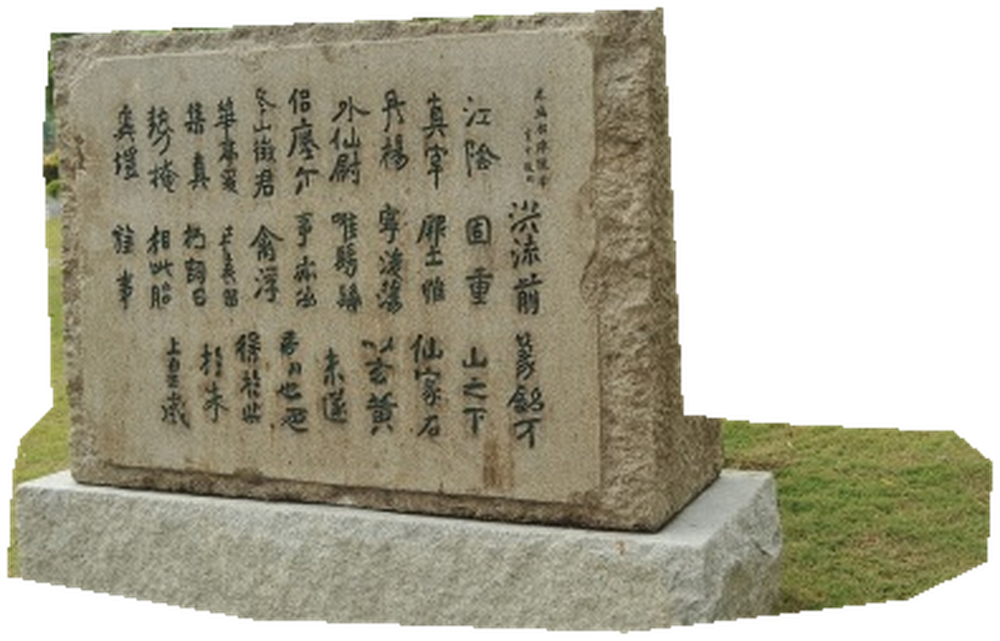
The Yi He Ming was originally carved on a cliff face at the western foot of Jiaoshan in Zhenjiang, a place long known as a “mountain of calligraphy.” It later collapsed into the Yangtze River after being struck by lightning. During the Chunxi period of the Southern Song dynasty, it first emerged from the water and was recovered and re-erected at its original site, but several decades later it fell into the river again. It was not retrieved until the fifty-second year of the Kangxi reign in the Qing dynasty (1713 CE). More than ninety characters survived, and the inscription was later moved to Guanyin Nunnery on Jiaoshan. Its calligraphy is broad and spacious, with traces of ancient clerical script. Although the strokes and edges are weathered, its brilliance remains clear. The writing is crisp in movement and expansive in spirit, with brushwork subtly connected to seal-script structure. Its lines are strong, weighty, and filled with a deep rhythmic quality.

Logo

Malaysia Chinese Calligraphy Stone Gallery

马来西亚
中华人文碑林

Find your peace within the words, and take its echo with you.

Copyright © 2025 中华人文碑林. All Rights Reserved.