Logo

Malaysia Chinese Calligraphy Stone Gallery

马来西亚
中华人文碑林

Home
About
ForewordCommitteeDiscover BeilinEvolution of Chinese CharactersCalligraphy AppreciationVisitor Feedback
GalleryDynastyEvents & DownloadsContact UsReservation
English
简体中文
English
繁體中文
日本語
Bahasa

Curated Collection

Curated Stillness

Let these collections be more than a display—let them be a wandering, a quiet gaze. Here, every stroke is a whisper of time, leading you into the boundless river of the written word.
Oracle Bone Script
Wei Stele Script
Regular Script with Semi-Cursive
Semi-Cursive Script
Li Shu, Kai Shu
Regular and cursive scripts
Cursive Script
Running script
Regular script
Big seal script
Xiaozhuan
Clerical script
Bronze Inscription
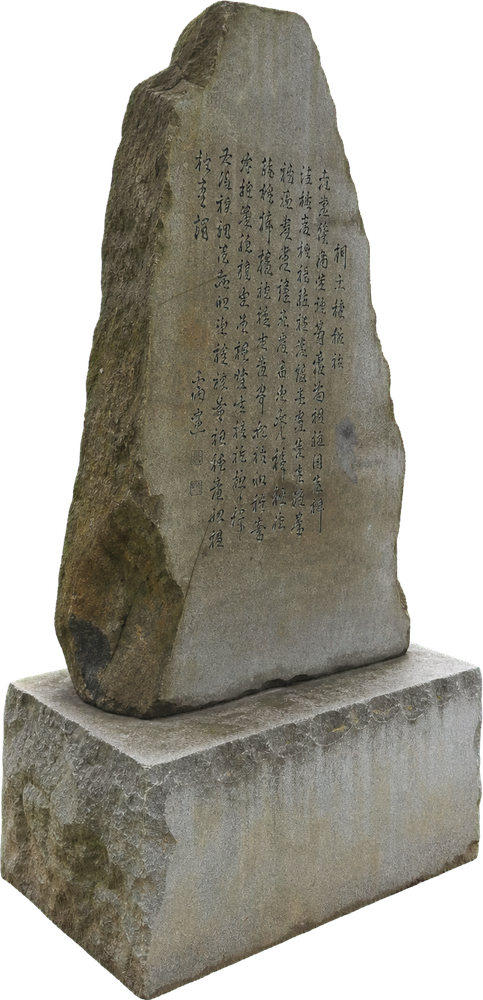
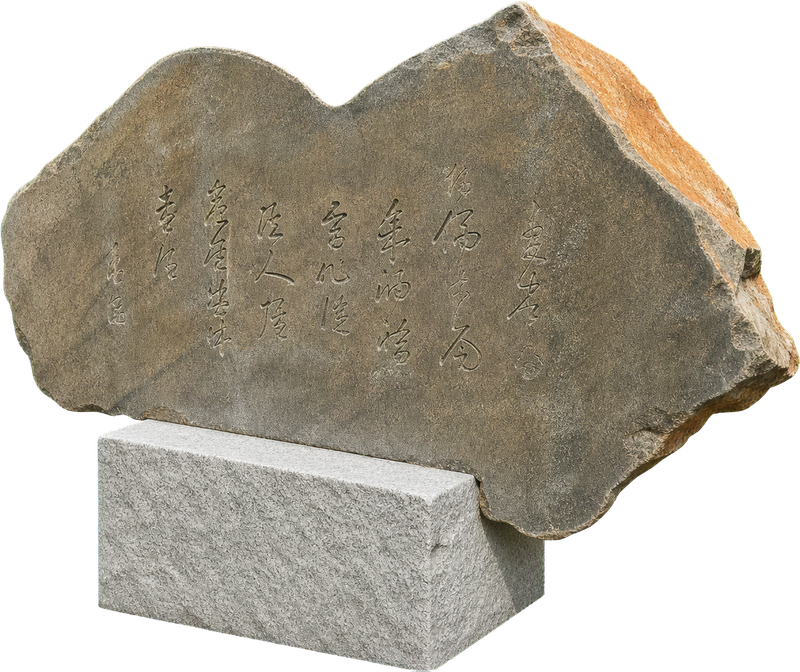
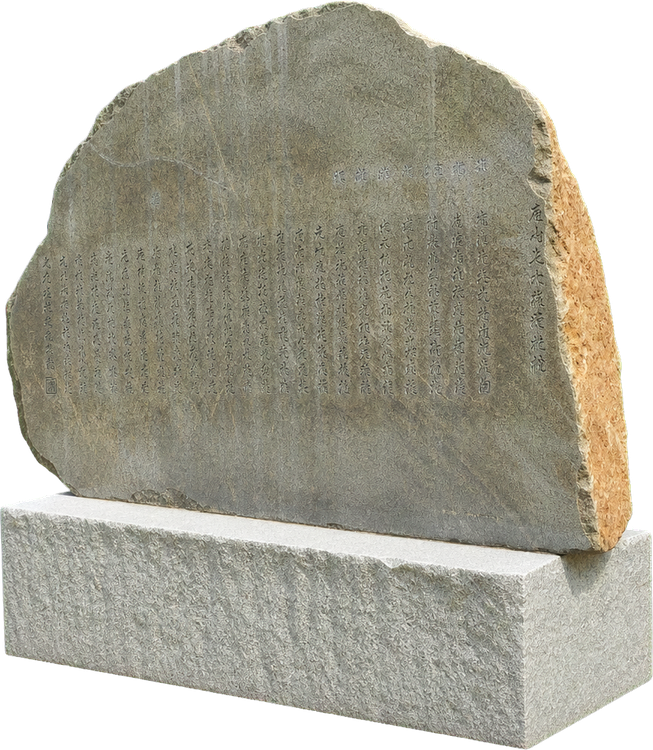
Zhao Mengfu: Tian Guan Mountain Poems, Moon Rock

Cursive Script

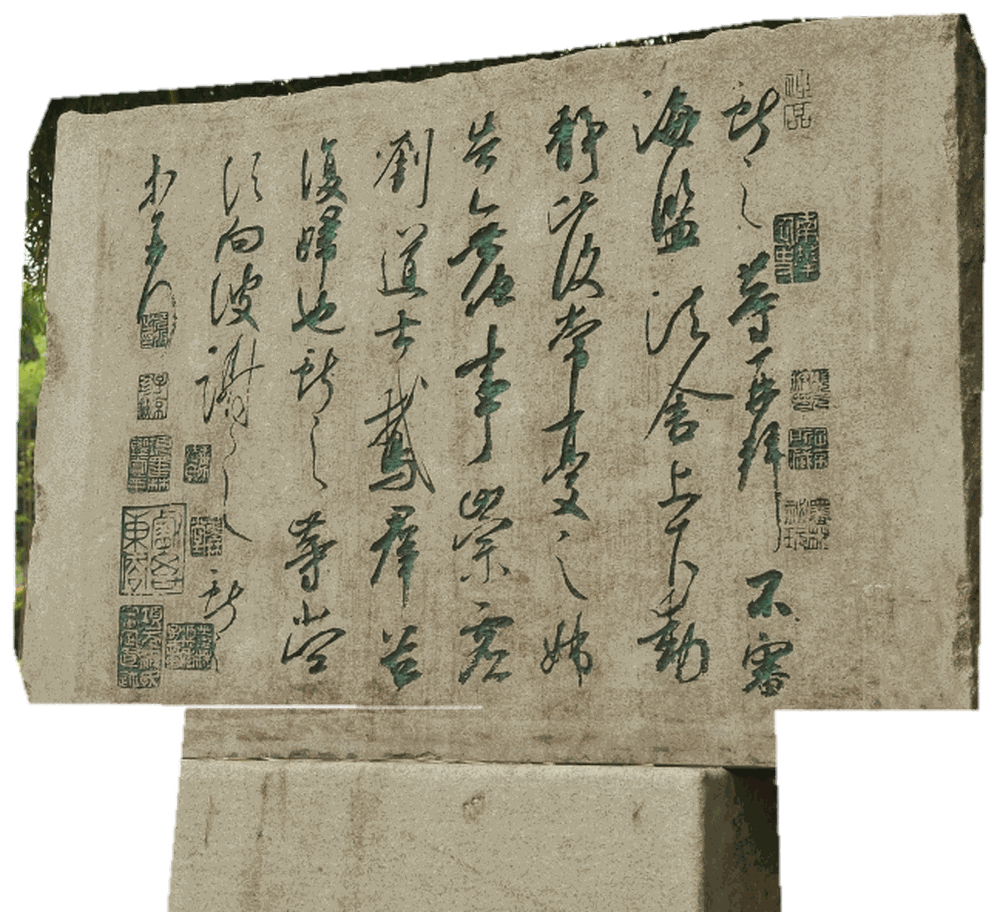
Zhao Mengfu: Tian Guan Mountain Poems, Moon Rock

Tian Guan Mountain is located about one kilometer south of Guixi City in Jiangxi Province. Because three peaks stand there in formation, it is also known as Sanfeng Mountain, or Three Peaks Mountain. Zhao Mengfu once erected a stele there and composed and wrote the text himself. This horizontal work in running-cursive script moves freely, with a strong musical rhythm and a broad, flowing energy that reveals the unrestrained spirit of the writer at the moment of creation. This piece, Moon Rock, is one of the twenty-four scenic subjects of Tian Guan Mountain.

Preface to the Muji Collection

Cursive Script

Preface to the Muji Collection

Preface to the Muji Collection is a small cursive work on paper. It was written by Wen Tianxiang as the preface to a poetry collection by his fellow townsman and close friend Zhang Jiang. According to tradition, it was Wen Tianxiang?s final major work before he set aside the brush and joined the military at the age of thirty-eight. Its composition closely follows Wang Xizhi, while its brushwork draws strength from Huaisu. The writing is natural and unrestrained, clear and open, upright in spirit, and graceful in its distant, restrained elegance.

Yue Fei: Man Jiang Hong

Cursive Script

Yue Fei: Man Jiang Hong

According to tradition, in the sixth year of the Shaoxing reign, 1136 CE, Yue Fei led his army north to recover lost territory and appeared close to reclaiming the Central Plains. Emperor Gaozong of Song, however, was intent on negotiating peace and ordered Yue Fei to return to court. Deeply pained that the humiliation of the Jingkang Incident could not be avenged, Yue Fei wrote the stirring poem Man Jiang Hong amid intense emotion. Yue Fei was skilled in both literary composition and calligraphy, using them to express his ideals and loyalties. His writing drew from Tang masters such as Yan Zhenqing and the monk Huaisu, while gradually forming a personal style of bold, soaring energy. The brushwork is firm, vigorous, mature, and highly controlled, with lines that move freely and powerfully across the surface. In the history of Song calligraphy, besides the Four Great Masters Su, Huang, Mi, and Cai, Yue Fei also stands as an independent and distinguished calligrapher. Kang Youwei of the Qing dynasty praised the strength and depth of Yue Fei?s writing.

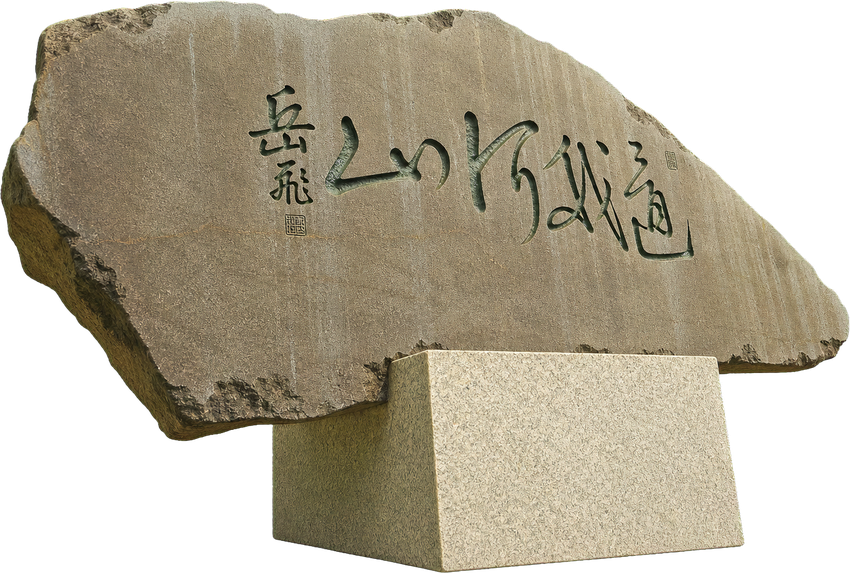
Yue Fei: Return My Rivers and Mountains

Cursive Script

Yue Fei: Return My Rivers and Mountains

Although the four characters ?Return My Rivers and Mountains? are commonly regarded as Yue Fei?s handwriting, reports suggest that they were not written directly by Yue Fei himself. After the September 18 Incident in 1931 and the fall of Northeast China, Zhou Chengzhong, a philologist from Jiading, Jiangsu, is said to have assembled the characters from a rubbing of Li Hua?s Lament for an Ancient Battlefield, traditionally attributed to Yue Fei?s hand. The brushwork combines awkwardness and skill, with the awkward quality prevailing over deliberate polish. Its arrangement feels natural, with spacing that shifts freely between openness and density. The strokes turn and coil like cursive script while retaining a disciplined regularity. Each character seems governed by method, yet also beyond method, using rules freely and personally. The result is expansive, spirited, and full of the bearing of a Confucian general.

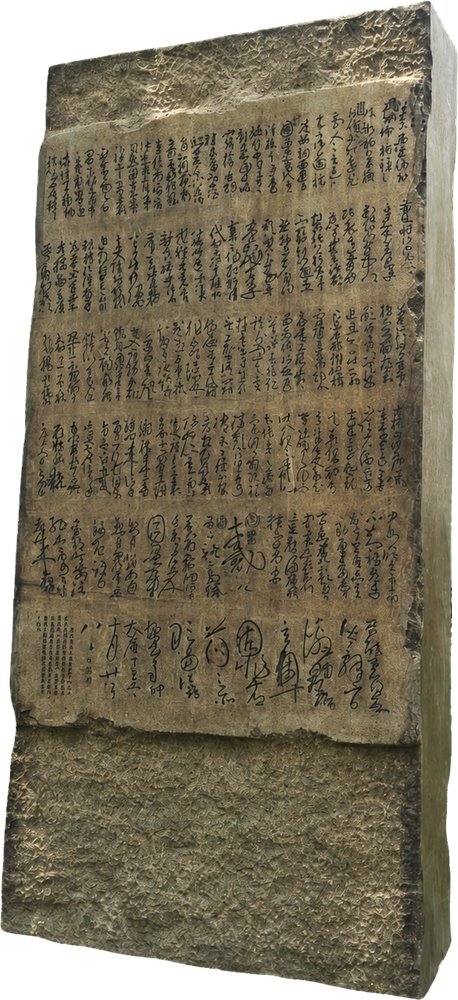
Huaisu: Autobiography

Cursive Script

Huaisu: Autobiography

Autobiography is an ink-on-paper handscroll written by Huaisu in 777 CE, the twelfth year of the Dali reign of the Tang dynasty. It is a monumental work of wild cursive script. The scroll contains 126 lines and 698 characters. The first six lines were damaged early and were later supplemented by Su Shunqin of the Song dynasty. The text is Huaisu?s own account of the main events of his life. Huaisu created a new form of cursive script known as ?wild cursive.? He boldly broke away from the earlier methods of spacing and regular balance associated with Wang Xianzhi and his predecessors. In character structure and page composition, the characters and lines rise and fall, shift left and right, and vary in size, moving beyond the restrictions of ?broken-style script? into a more liberated form. Huaisu?s wild cursive expresses a wide range of human emotion and natural vitality, raising the expressive power of cursive script to a new artistic stage.

Sun Guoting: Treatise on Calligraphy

Cursive Script

Sun Guoting: Treatise on Calligraphy

Sun Guoting?s Treatise on Calligraphy is divided into two volumes. It is generally understood that the first volume serves as the preface, while the second forms the treatise itself. The beginning is inscribed ?Treatise on Calligraphy, Volume One. Written by Sun Guoting of Wu Commandery,? and the end records that it was written in the third year of the Chuigong reign. The work is now held in the National Palace Museum in Taipei. Its content focuses on calligraphic experience, the principles behind the writing of the treatise, and basic approaches to learning calligraphy. It is both an elegantly written theory of calligraphy and an ideal model of cursive script. Sun Guoting studied Wang Xizhi?s cursive script deeply; his brushwork is refined and fluent, capturing its spirit and essence.

Zhang Xu: Four Ancient Poems

Cursive Script

Zhang Xu: Four Ancient Poems

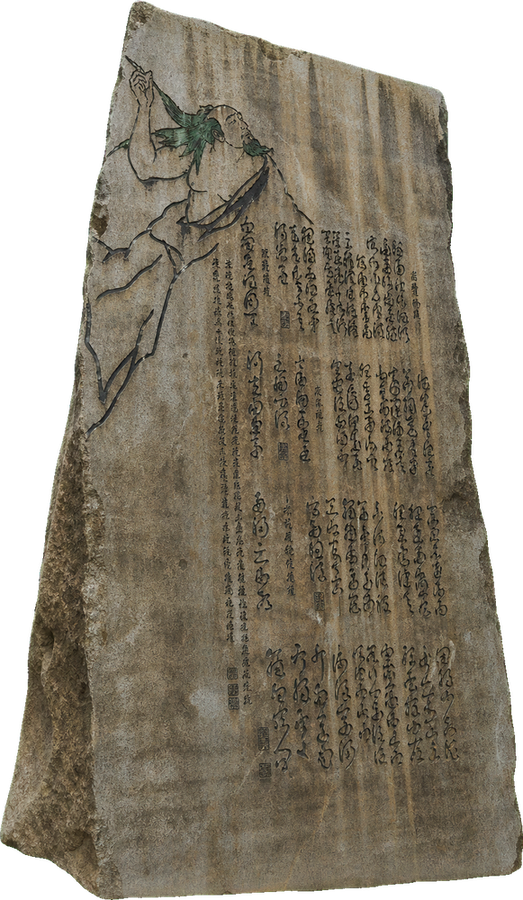
Four Ancient Poems is an ink manuscript traditionally attributed to Zhang Xu of the Tang dynasty. The text records four poetic works: the first two are selections from Yu Xin’s Daoist Walking in the Void Lyrics from the Northern and Southern Dynasties, while the latter two are Xie Lingyun’s Praise of Wang Zijin and Praise of an Old Man and Four or Five Youths Beneath the Cliff. The work features full, powerful brushstrokes, a rhythm that rises and falls dramatically, and a composition that moves between openness and control. Its brushwork is rounded and free, restrained yet unrestrained, with strict structure and majestic movement. The whole piece appears like clouds and mist flowing across the paper, making it one of the finest masterpieces of cursive script.

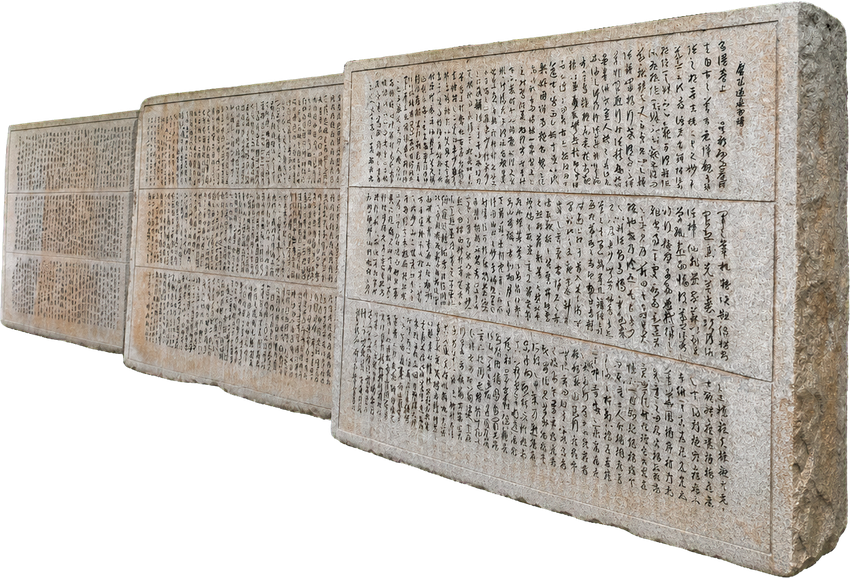
Wu Zetian's Stele of Crown Prince Shengxian

Cursive Script

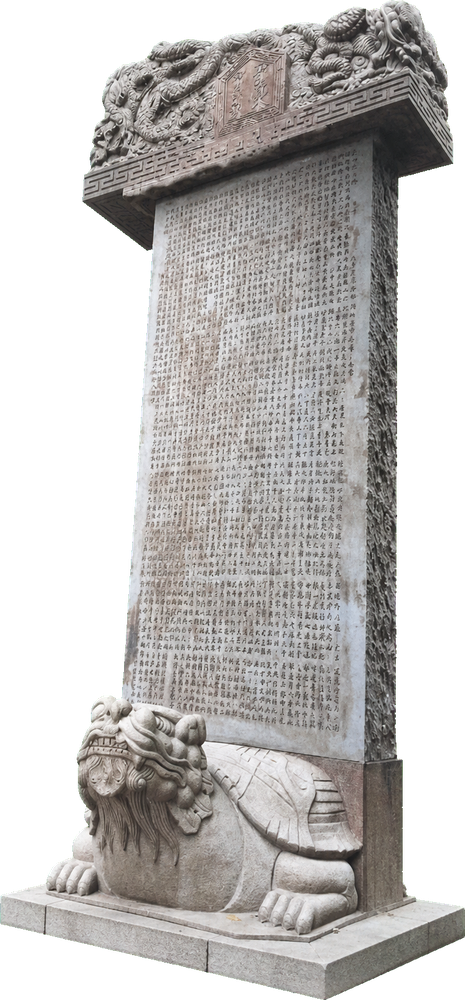
Wu Zetian's Stele of Crown Prince Shengxian

This stele was erected in June of the second year of the Shengli era of the Wu Zhou period, 699 CE. It was written by Wu Zetian, with thirty-four lines and sixty-six characters per line. The stele title, “Stele of Crown Prince Shengxian,” is written in six characters of flying-white script shaped like birds, reflecting a style fashionable in the Tang dynasty. The original stone is preserved at Xianjun Temple on Mount Gou in Yanshi, Henan. Wu Zetian was the empress of Emperor Gaozong of Tang. In the first year of the Hongdao era she became empress dowager and ruled from behind the court; after the first year of the Tianshou era she declared herself emperor and changed the state name to Zhou. Her calligraphy holds an important place among women calligraphers of ancient China, making her another renowned female calligrapher after Lady Wei of the Eastern Jin. Her cursive style came from the Two Wangs and was also influenced by Sun Guoting. Historical records say that she obtained authentic works by twenty-eight members of the Wang family from Wang Fangqing, a tenth-generation descendant of Wang Dao, and studied them closely, steadily improving her cursive script. This stele brings running-cursive writing into stone inscription: the strokes turn smoothly, vary well in thickness, follow disciplined cursive methods, and form strict structures with an open composition. Each character stands independently, somewhat like the method of clerical cursive. From time to time unusual characters appear, namely the dozen or so so-called “new characters of Wu Zhou” created by Wu Zetian herself. Apart from these, the stele is written in orthodox cursive script. It is an important Tang dynasty cursive work and calligraphic source.

Wang Xianzhi's E Qun Tie

Cursive Script

Wang Xianzhi's E Qun Tie

The E Qun Tie is traditionally attributed to Wang Xianzhi. The original work has not survived, and the versions known today are Tang and Song dynasty copies. Some accounts identify it as a copy by Mi Fu, while others suggest it was a later Southern Dynasties fabrication inspired by the story of Wang Xizhi writing the Dao De Jing in exchange for geese. Studies also regard the Chunhua Ge Tie version of E Qun Tie as a forgery. Its calligraphy is described as forceful and unrestrained, lacking the refined spirit usually associated with Jin dynasty writing. Even so, because E Qun Tie is so beautifully written, questions of authenticity have not stopped it from being passed down through the generations.

Logo

Malaysia Chinese Calligraphy Stone Gallery

马来西亚
中华人文碑林

Find your peace within the words, and take its echo with you.

Copyright © 2025 中华人文碑林. All Rights Reserved.