Logo

Malaysia Chinese Calligraphy Stone Gallery

马来西亚
中华人文碑林

Home
About
ForewordCommitteeDiscover BeilinEvolution of Chinese CharactersCalligraphy AppreciationVisitor Feedback
GalleryDynastyEvents & DownloadsContact UsReservation
English
简体中文
English
繁體中文
日本語
Bahasa

Curated Collection

Curated Stillness

Let these collections be more than a display—let them be a wandering, a quiet gaze. Here, every stroke is a whisper of time, leading you into the boundless river of the written word.
Oracle Bone Script
Wei Stele Script
Regular Script with Semi-Cursive
Semi-Cursive Script
Li Shu, Kai Shu
Regular and cursive scripts
Cursive Script
Running script
Regular script
Big seal script
Xiaozhuan
Clerical script
Bronze Inscription
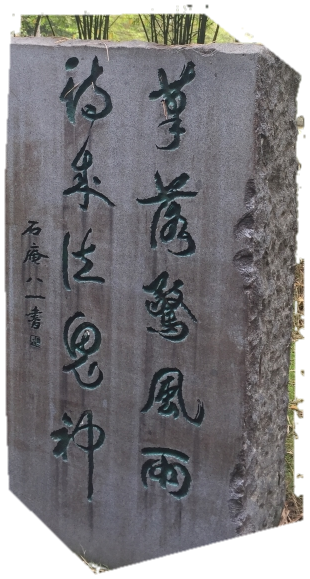
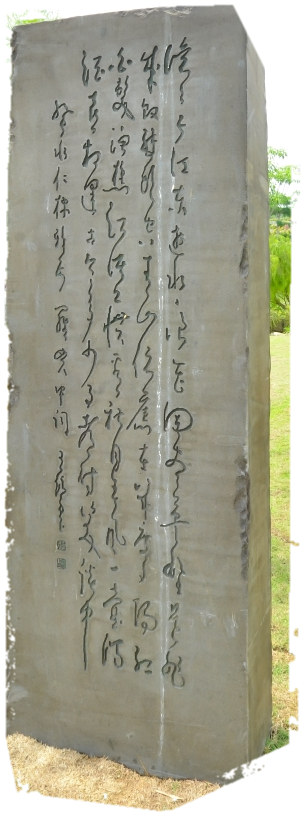
Pan Huang: Cao Shu Banner

Cursive Script

Pan Huang: Cao Shu Banner

Pan Huang, originally from Kaifeng, Henan, courtesy name Xingruo, taught at Sibu Chung Cheng Secondary School and served as principal of Kai Wen Secondary School in Bintangor and Jian Xing Secondary School in Sibu. He published Collected Calligraphy of Pan Huang. He studied calligraphy under Fu Juanfu and Sun Qifeng, striving to make his lines rounded and to contain the brush force within them. Like clouds moving and rain falling, his brushwork flows without slipping, with grand momentum and lingering resonance.

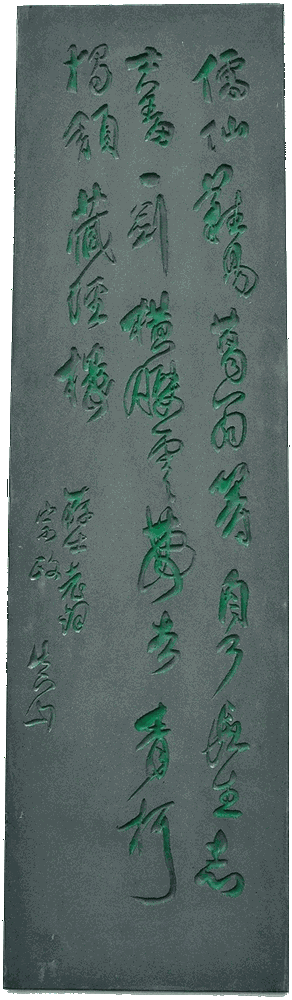
Wang Rui Bi: Cao Shu Scroll

Cursive Script

Wang Rui Bi: Cao Shu Scroll

Wang Rui Bi hailed from An Xi, Fu Jian. He was once the Director for Public Affairs, Divisional Head and Principal at Li Zhong High School in An Xi, Fu Jian for a duration of 16 years. He later became the principal of Kluang Chong Hwa High School (Johor) and Kuala Lumpur Chung Hwa Independent School after migrating to Malaya. Wang was an adept calligrapher who favoured Cao Shu and Kai Shu calligraphy. He published a significant four-topic book on calligraphy that delves into “Rui Bi Han Mo” (ink), “Rui Bi Zhi Shu” (calligraphy styles), “Rui Bi Bi Yi” (calligraphy brushes) and “Zhi Mo Di Er Ji” (The ‘Second Volume’ on Calligraphy). Wang’s calligraphy is driven by the Cao Shu style (cursive/ grass script). It features no dramatic drags and curves, yet, delights with a balanced ‘tights’ and ‘looses’. Overall, his calligraphy aims to take away the travesty of messiness. It presents a fluid and elegant profile through a well-composed simplicity and naturalness with affection and spontaneity at ease.

Huang Shi An: Cao Shu Couplet

Cursive Script

Huang Shi An: Cao Shu Couplet

Huang Shi An was born by the names of ‘Zi Zhen’ and ‘Shi An’. He was a Hakka descent from Guang Dong. The distinguished literary figure was the chief editor for Ma Hua Ribao, a prominent judge for the national calligraphy contest and one of the founding members and consultant to Persatuan Seni Tulis Malaysia. Huang’s art exhibitions took to the international stage in Singapore and China (Research Institute of Traditional Chinese Painting in Beijing), for example. Huang’s notable publications include “The Calligraphy of Huang Shi An” (1988) and “The Calligraphy Exhibitions of Huang Shi An” (2005). Huang devoted his life to promoting calligraphy and therefore earned a great deal of respect from the community. He started his calligraphy journey with Northern Wei Dynasty’s tablet inscriptions, followed by other forms of stone-calligraphy. He was inspired by Qing Dynasty’s He Shao Ji, who was a renowned calligrapher, poet and scholar himself. Huang further enriched his calligraphy with Kang You Wei’s attributes. Overall, Huang’s calligraphy presents a classic, vintage profile filled with robust, graceful strokes. He was one of Malaysia’s top-notch calligraphy icons of the modern era. Xu Bei Hong, another remarkable calligrapher, regarded Huang’s calligraphy as something typical of Southeast Asia’s that shares a common spirit between them.

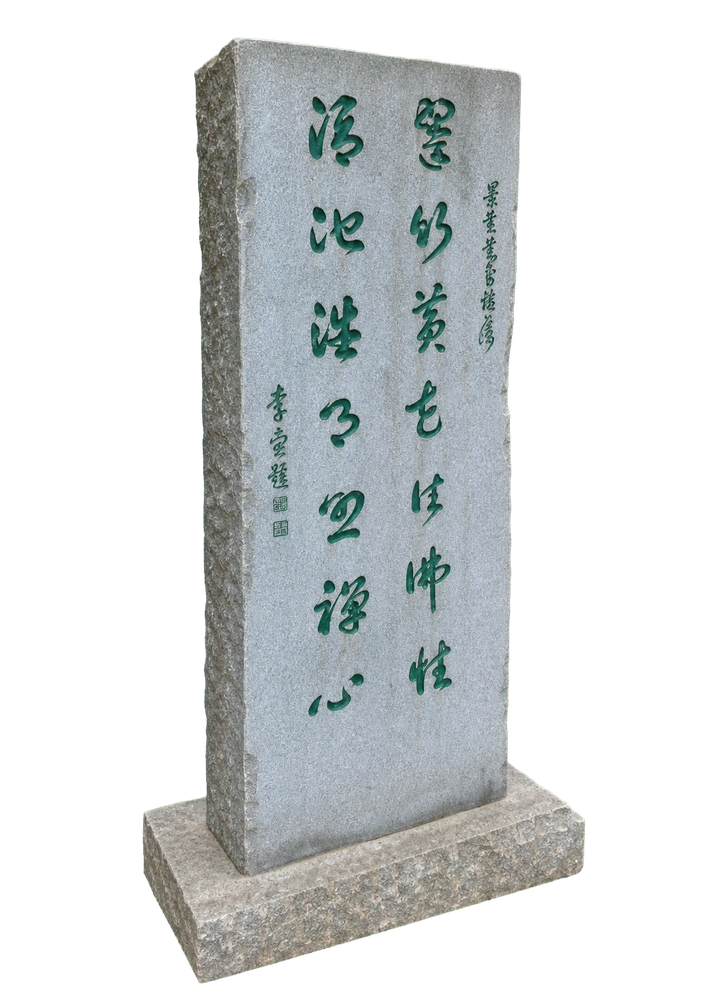
Li Jia Yao: Cao Shu Couplet

Cursive Script

Li Jia Yao: Cao Shu Couplet

Li Jia Yao hailed from Yong Chun, Fu Jian. He graduated from Shanghai Art College in 1922. Li sailed to Singapore in 1926 and migrated to Kuala Lumpur in 1929, dedicating himself to education. His famous publications include “Jia Yao Calligraphy and Painting Compilation”, “Ju Mei Tang Calligraphy and Painting Compilation” and “Ruo Ye Tang Calligraphy and Painting Compilation”. Li’s calligraphy demonstrates a well-cultured personality, befitting his status as a respected calligrapher of the modern era. The well-learned Li took pride in inheriting the rich Chinese tradition as evidenced through his Shanghai-styled calligraphy. His gorgeous calligraphy manifests the elements of the ancient stone-carving driven calligraphy.

Lin Sanzhi: Cursive Script Couplet

Cursive Script

Lin Sanzhi: Cursive Script Couplet

Lin San Zhi thrived under the tutelage of Huang Bin Hong, in his quest for becoming an accomplished painter.  He had the advantage of acquiring the knowledge of landscape painting since his younger days. Lin benefited from the tutelage of the legendary masters in landscape painting throughout his life. His calligraphy competence stole the limelight in 1972, in a Chinese-Japanese calligraphy get-together session. He magically transformed Wang Duo’s ‘Cao Shu’ calligraphy into his very own ‘Lin San Zhi – Grass/ Cursive Script’, driven by his in-depth calligraphy knowledge of ‘Han’ and ‘Li’ styles. His ‘transformed’ calligraphy works are able to communicate different arrangements of idea, mixing a mature context with a novice perspective, coupled with awkwardness and finesse at the same time. Lin succeeded Wang Duo and Fu Shan as the master of ‘Cao Shu’ (Grass/ Cursive Script) calligraphy in the modern era. His ‘Cao Shu’ places great emphasis on the literary aspect with a leisure ambience in mind. Lin’s bold and creative thoughts crowned him the ‘Virtuoso of Cao Shu’ in his era.

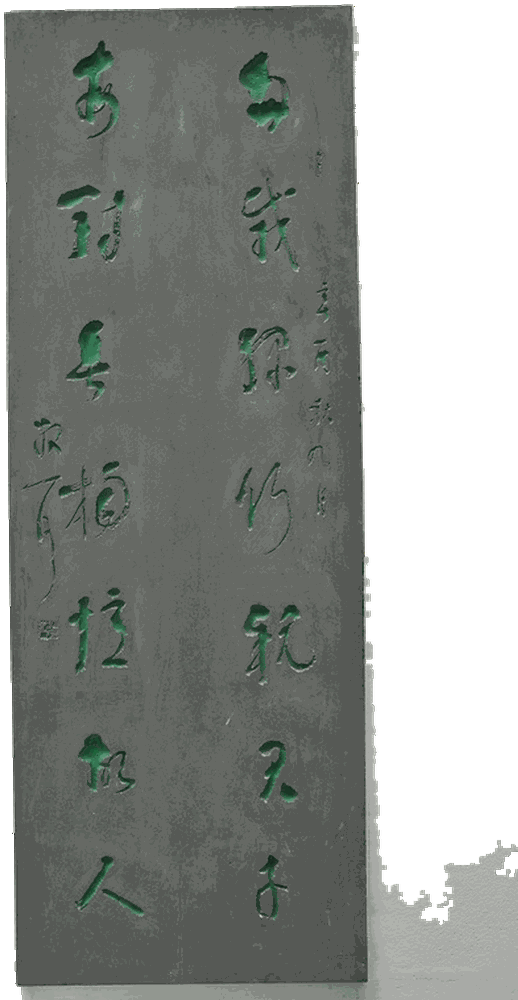
Yu Youren: Cursive Script Couplet

Cursive Script

Yu Youren: Cursive Script Couplet

Yu You Ren carried on the rich tradition of ancient calligraphy while spiced it up with his very own ingenuity, hence setting a new benchmark. He matured his calligraphy by drawing on Zhao Meng Fu’s paragon, followed by the mastery of incised calligraphy inspired by Wei Dynasty’s stone inscriptions, even though they were already in an incomplete form.  It was because of that, Yu learned about the importance of incorporating the coarse elements in art to project the beauty of his works. He adopted a paradigm shift in his calligraphy during his middle age, sharpening his skills in ‘Cao Shu’ calligraphy and Wei Dynasty inspired stone inscriptions (incised calligraphy driven). By fusing the best of both worlds, he established a new benchmark for ‘Cao Shu’ calligraphy called ‘the Yu Form’. These four pairs of 5-word sequence couplets do not seem to correspond to each other, but they exude a distinct spirit of artistic seamlessness. Such cleverness just lingers in your memory.

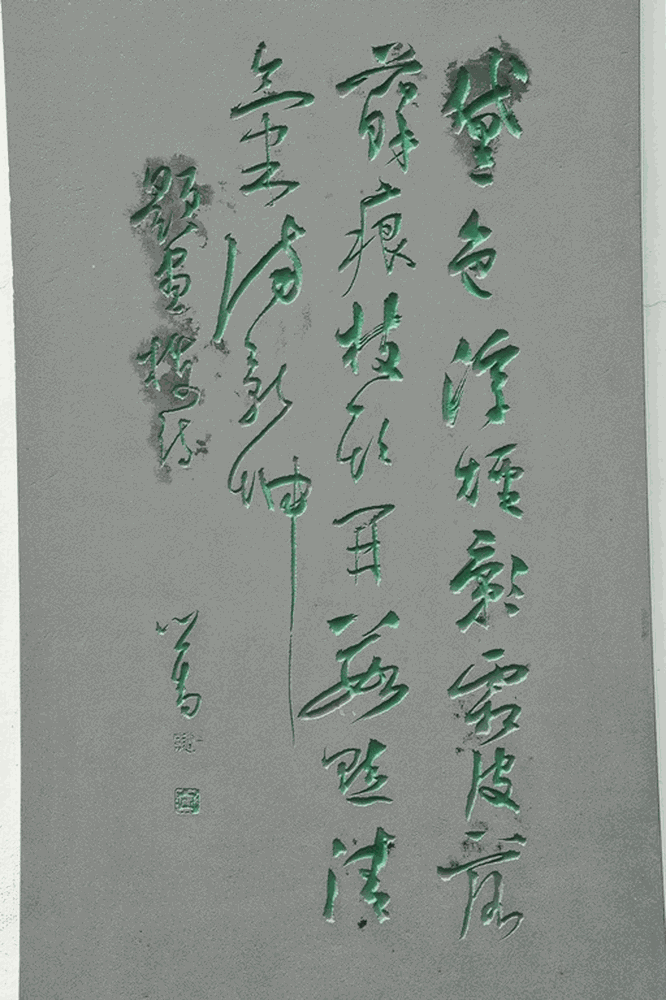
Pu Xinyu: Cursive Script Banner

Cursive Script

Pu Xinyu: Cursive Script Banner

Pu Xin Yu was the great-grandchild of Emperor Dao Guang of the Qing Dynasty, who belonged to the Aisin Gioro clan. He adopted the name of Pu Xin Yu after the fall of the Qing Dynasty. Pu was shaped to be a well-learned person from a tender age, having immersed himself in the study of the four key knowledge fields, namely Confucian classics, history, philosophy and literature. Into his 30s, he devoted himself to the pursuit of art and painting. His favourite painting subjects revolved around landscape, human figures and flora. Pu was an ardent follower of Confucian classics and history throughout his life. He enriched his literary engagement with poetry, calligraphy and painting. The robust character of his calligraphy took inspiration from Liu Gong Quan, which won the heart of the calligraphy fraternity subsequently. The composition of Pu’s calligraphy is aesthetically striking. His ‘Xing Cao’ (cursive) calligraphy exudes the calligraphy soul typical of Tang Dynasty, with a natural and unrestrained flow. The strokes are well-disciplined and wholesome, as seen in his vertical, horizontal, push, pull, branching and scripting techniques. Pu’s calligraphy amazes with a rhythmical profile regardless of the calligraphy styles. From inking to punches, notches, presses, thick-and-thin stroking and points of contact, Pu’s calligraphy resonates with harmonious contours and vibrant attributes.

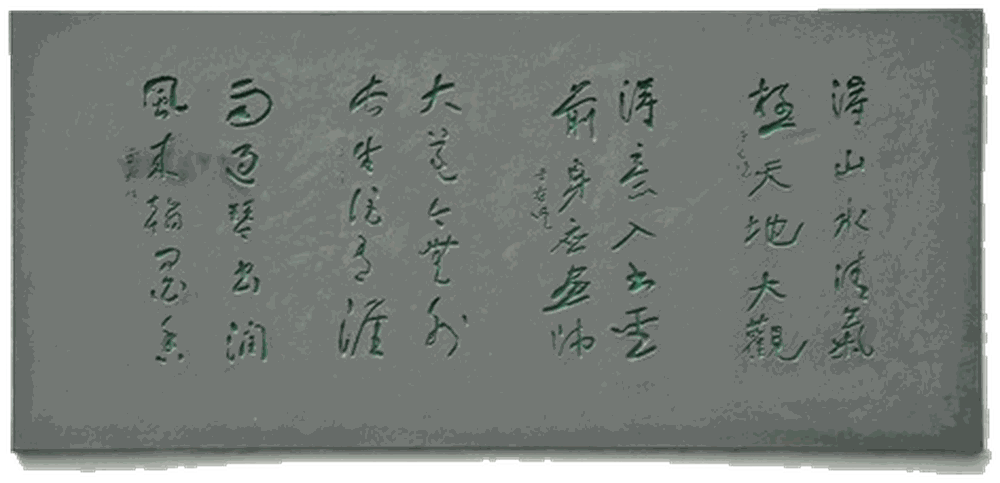
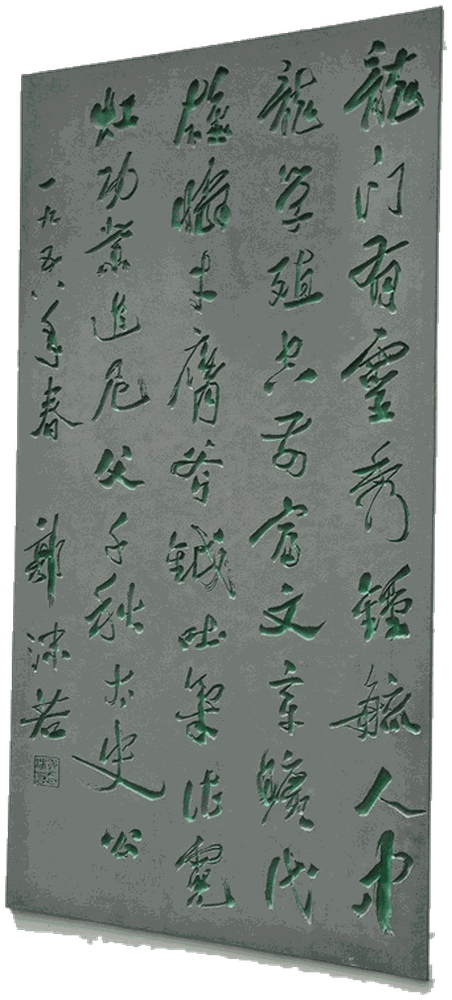
Guo Moruo: Cursive Script Hall Scroll

Cursive Script

Guo Moruo: Cursive Script Hall Scroll

Guo Mo Ruo admired the calligraphy works of Yan Zhen Qing. He enriched his scholastic achievements with oracle bone script, Chinese history and archaeology studies in later stages. The famous scholar is renowned for his literati works that make people ponder over the brilliant composition of poetry. His poetry driven calligraphy works demonstrate his natural flair and artistic elegance. This 5-word sequence ‘Cao Shu’ masterpiece was authored in commemoration of the greatness of historian Si Ma Qian in 1958.

Fu Shan: Seven-Character Quatrain in Cursive Script

Cursive Script

Fu Shan: Seven-Character Quatrain in Cursive Script

Fu Shan was a noted scholar, painter, calligrapher, and physician of the late Ming and early Qing periods. Although the early Qing authorities repeatedly tried to recruit him, he firmly refused office and lived in retirement. His calligraphy was rooted in Yan Zhenqing, and both his regular and cursive script show powerful effort and a theory he summarized as preferring awkwardness to cleverness, plainness to prettiness, ruggedness to slickness, and directness to arrangement. This banner is a representative example of late Ming wild cursive: free, elegant, forceful, rich in change, seemingly effortless, yet internally rhythmic and full of natural beauty. It is now in the Shanghai Museum.

Zhang Ruitu: Dreaming of Mount Tianmu, Written on Parting

Cursive Script

Zhang Ruitu: Dreaming of Mount Tianmu, Written on Parting

Zhang Ruitu was a representative late Ming calligrapher and was known as one of the Four Great Masters of the late Ming. His regular script followed Zhong Yao and carried a clerical-script flavor, without a sense of over-carving. His running script developed more freely and naturally from regular script, while his greatest achievement was in cursive script, marked by forceful strokes, striking structures, and a vigorous, unrestrained spirit that strongly influenced later generations. He was also skilled in poetry, prose, landscapes, and Buddhist figures. This running-cursive scroll has sharp, forceful brushwork, firm and energetic strokes, and richly expressive ink. The text, Dreaming of Mount Tianmu, Written on Parting, is one of Li Bai's representative poems; Zhang's writing matches Li Bai's bold, unrestrained temperament with an equally powerful calligraphic presence.

Xu Wei: Cursive Poetry Scroll

Cursive Script

Xu Wei: Cursive Poetry Scroll

Xu Wei excelled in running and cursive script. His dots and strokes scatter with force, and his compositions unfold like an unfurled mat, filling the page with an arresting atmosphere. His work is broad in spirit, using intention as the brush and emotion as the writing, rarely constrained by tradition or fashion. Xu's turbulent feelings and frustrated state of mind are carved into his calligraphy. This work is a representative example of late Ming wild cursive and is now held by the Shanghai Museum.

Zhu Yunming: Rhapsody on the Luo River Goddess

Cursive Script

Zhu Yunming: Rhapsody on the Luo River Goddess

Zhu Yunming was known as one of the Four Talents of Wuzhong, together with Tang Yin, Wen Zhengming, and Xu Zhenqing. Exceptionally gifted, he could write large characters at the age of five and compose essays at nine. His small regular script followed Zhong Yao and Wang Xizhi, with disciplined structure and steady brush strength; his cursive script studied Huaisu and Huang Tingjian, and in his later years became especially vigorous, free, and elegant. This cursive Rhapsody on the Luo River Goddess is regarded as a work from around the age of forty. Its cursive writing is brilliant and spirited, with rich contrasts of size, density, continuity, pause, solidity, and emptiness.

Logo

Malaysia Chinese Calligraphy Stone Gallery

马来西亚
中华人文碑林

Find your peace within the words, and take its echo with you.

Copyright © 2025 中华人文碑林. All Rights Reserved.