Malaysia Chinese Calligraphy Stone Gallery
Curated Collection
让典藏不只是一种展示,也成为一种漫游与凝视。在这里,每一道刻痕都是时间的低语,带您走入汉字演变的浩瀚长河。
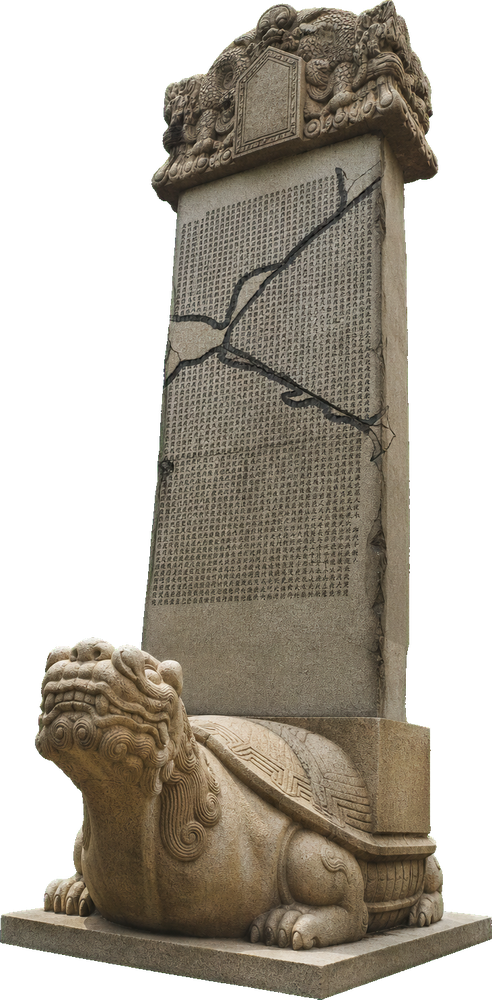
Yu Shinan
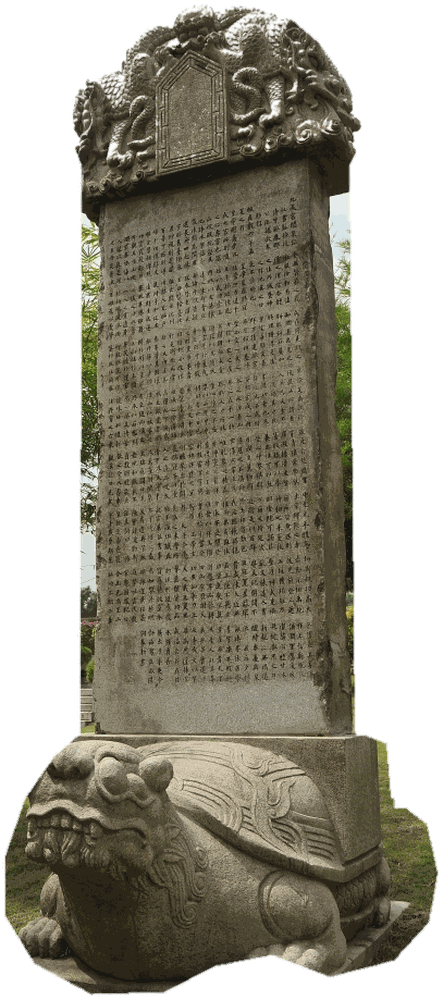
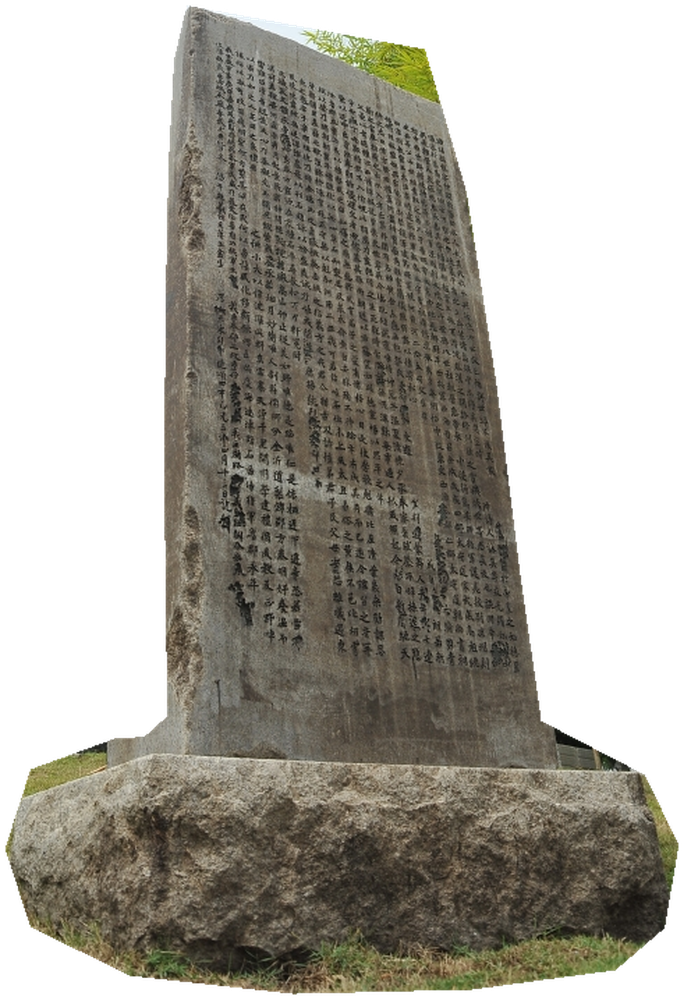
The Confucius Temple Stele was written by Yu Shinan. It records Emperor Gaozu of Tang’s conferment of the title Marquis Baosheng on Kong Delun, a descendant of Confucius, in the ninth year of the Wude era, 626 CE, as well as the restoration of the Confucius Temple. The calligraphy is warm, rounded, and refined, with strength held within the brushwork. Its structure is dignified, balanced, and upright, and its style is calm, elegant, and graceful. It is one of Yu Shinan’s representative regular-script works. Yu Shinan inherited the tradition of the Two Wangs while developing his own character; his strokes are subtle yet firm, and his discipline is strict without losing ease. This stele has long been regarded as a masterpiece of Tang dynasty regular script and an important model for studying Yu Shinan’s calligraphy.
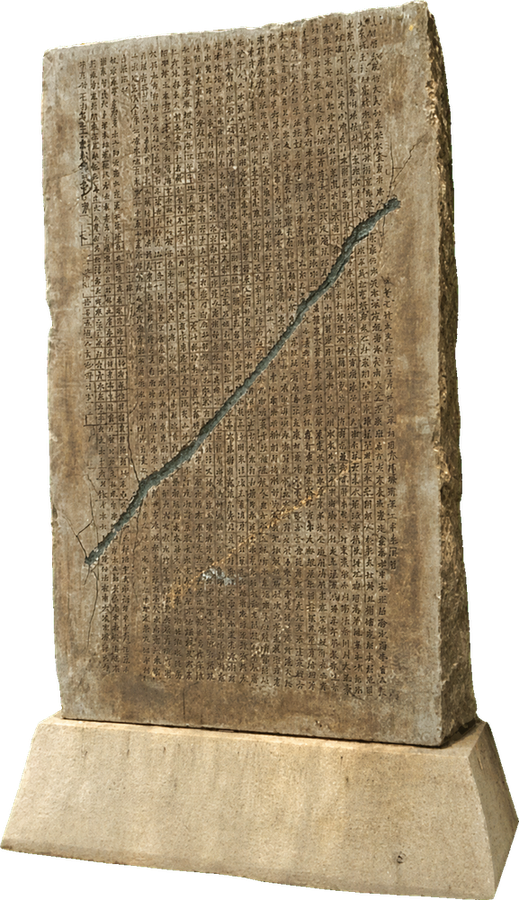
Ouyang Xun
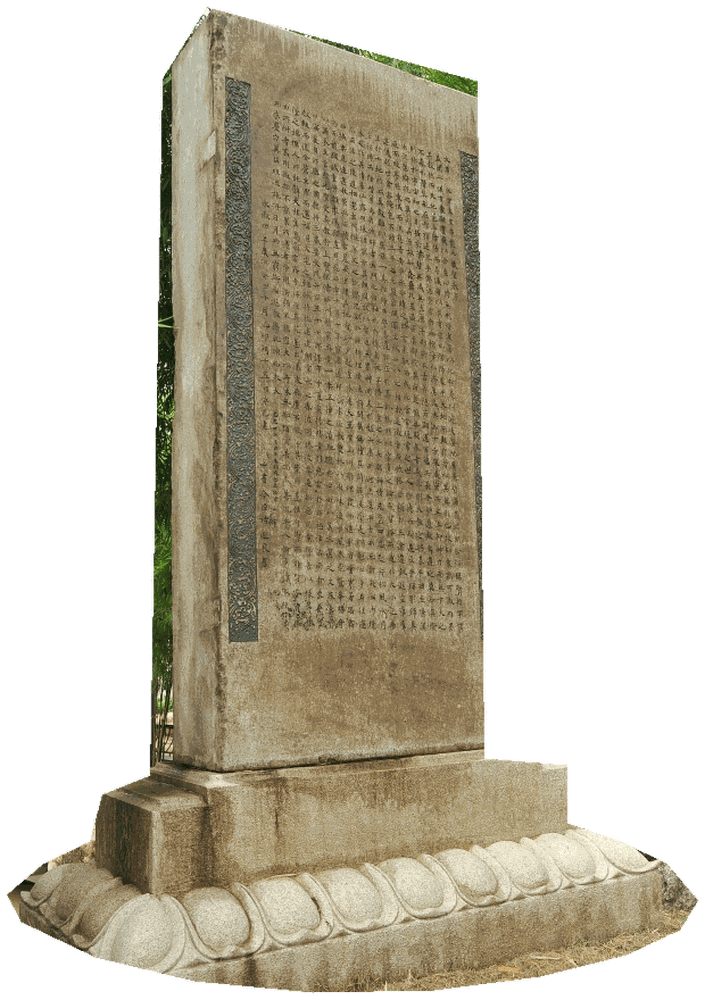
The Huangfu Dan Stele, formally titled Stele of Lord Huangfu, Duke Hongyi Ming, Left Guanglu Grand Master and Pillar of State of the Sui, is also known as the Huangfu Jun Stele. Written by Ouyang Xun, it records the life and deeds of the Sui dynasty official Huangfu Dan. Huangfu Dan, courtesy name Xuanxian, was from Chaona in Anding. He served as Vice Minister of War and Left Assistant Director of the Department of State Affairs in the Sui dynasty, and was later killed after remonstrating against Prince Yang Liang’s rebellion. This stele is one of Ouyang Xun’s representative regular-script works. Its structure is strict and powerful, its strokes are slender, firm, and upright, and its rules are highly disciplined. It fully shows the qualities of the “Ou style”: balanced yet dramatic, clear, vigorous, and sharply elegant. It is an important model for studying Ouyang Xun’s regular script.
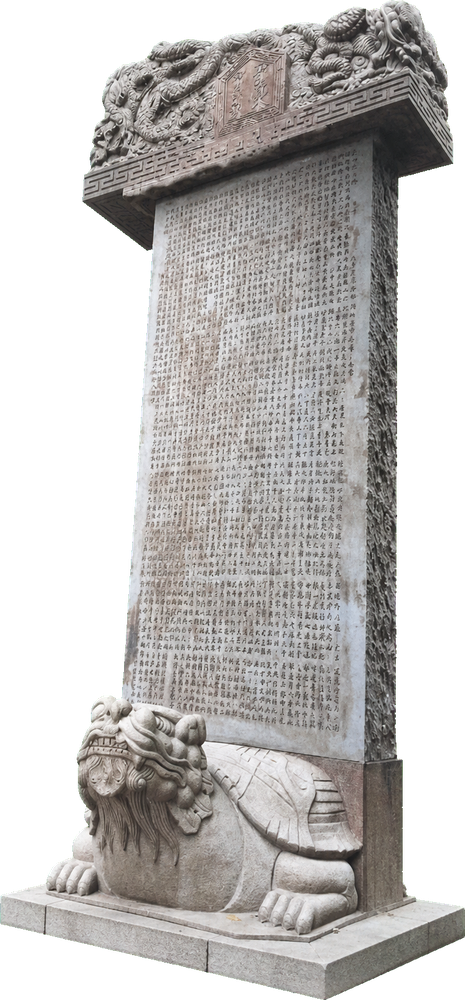
Wu Zetian
This stele was erected in June of the second year of the Shengli era of the Wu Zhou period, 699 CE. It was written by Wu Zetian, with thirty-four lines and sixty-six characters per line. The stele title, “Stele of Crown Prince Shengxian,” is written in six characters of flying-white script shaped like birds, reflecting a style fashionable in the Tang dynasty. The original stone is preserved at Xianjun Temple on Mount Gou in Yanshi, Henan. Wu Zetian was the empress of Emperor Gaozong of Tang. In the first year of the Hongdao era she became empress dowager and ruled from behind the court; after the first year of the Tianshou era she declared herself emperor and changed the state name to Zhou. Her calligraphy holds an important place among women calligraphers of ancient China, making her another renowned female calligrapher after Lady Wei of the Eastern Jin. Her cursive style came from the Two Wangs and was also influenced by Sun Guoting. Historical records say that she obtained authentic works by twenty-eight members of the Wang family from Wang Fangqing, a tenth-generation descendant of Wang Dao, and studied them closely, steadily improving her cursive script. This stele brings running-cursive writing into stone inscription: the strokes turn smoothly, vary well in thickness, follow disciplined cursive methods, and form strict structures with an open composition. Each character stands independently, somewhat like the method of clerical cursive. From time to time unusual characters appear, namely the dozen or so so-called “new characters of Wu Zhou” created by Wu Zetian herself. Apart from these, the stele is written in orthodox cursive script. It is an important Tang dynasty cursive work and calligraphic source.
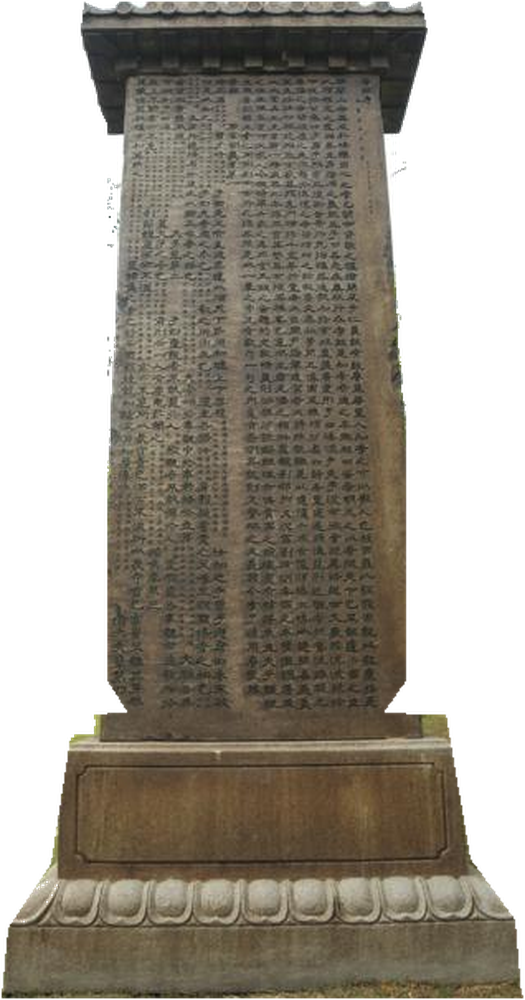
Li Longji
The inscription on this stele is the Classic of Filial Piety, a record of Confucius’ teachings on filial duty and fraternal respect as transmitted by his disciple Zeng Shen. Emperor Xuanzong of Tang, Li Longji, personally wrote the preface and annotations, and transcribed the text in clerical script. It was carved in the fourth year of the Tianbao era of Emperor Xuanzong, 745 CE. The text reflects the Tang dynasty ideal of “governing the realm through filial piety.” Few examples of Emperor Xuanzong’s handwriting survive. Besides its large scale and distinctive form, this stele is also influential in the history of Chinese calligraphy and is now one of the famous steles in the Xi’an Forest of Steles.
Emperor Taizong Li Shimin
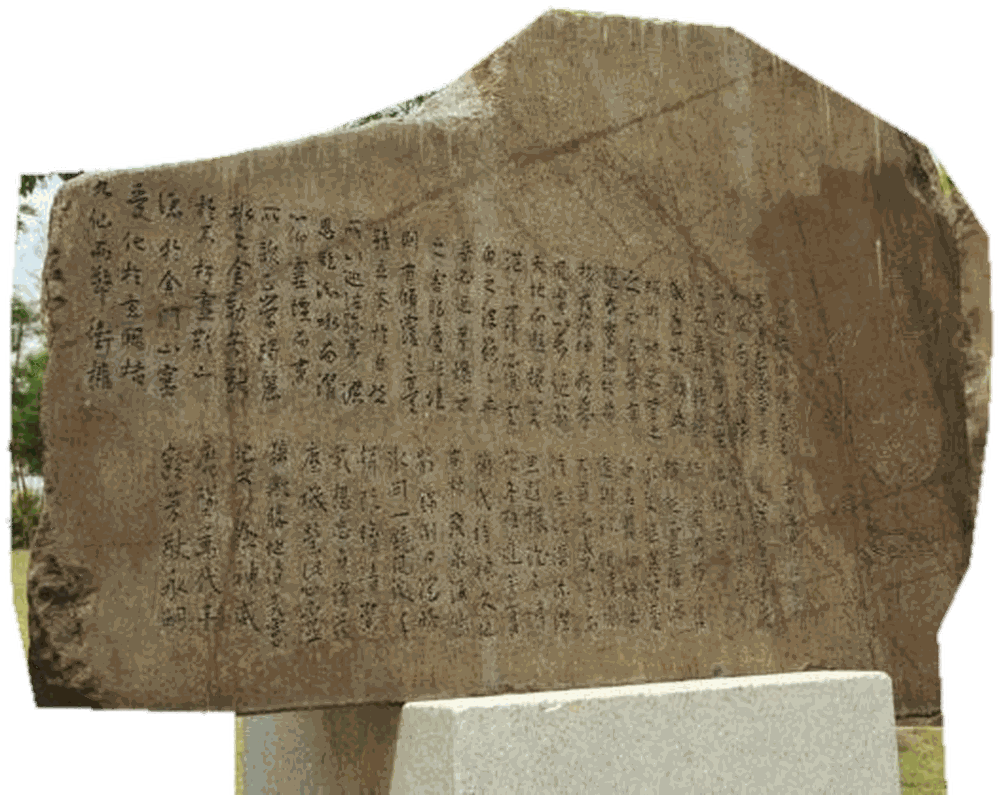
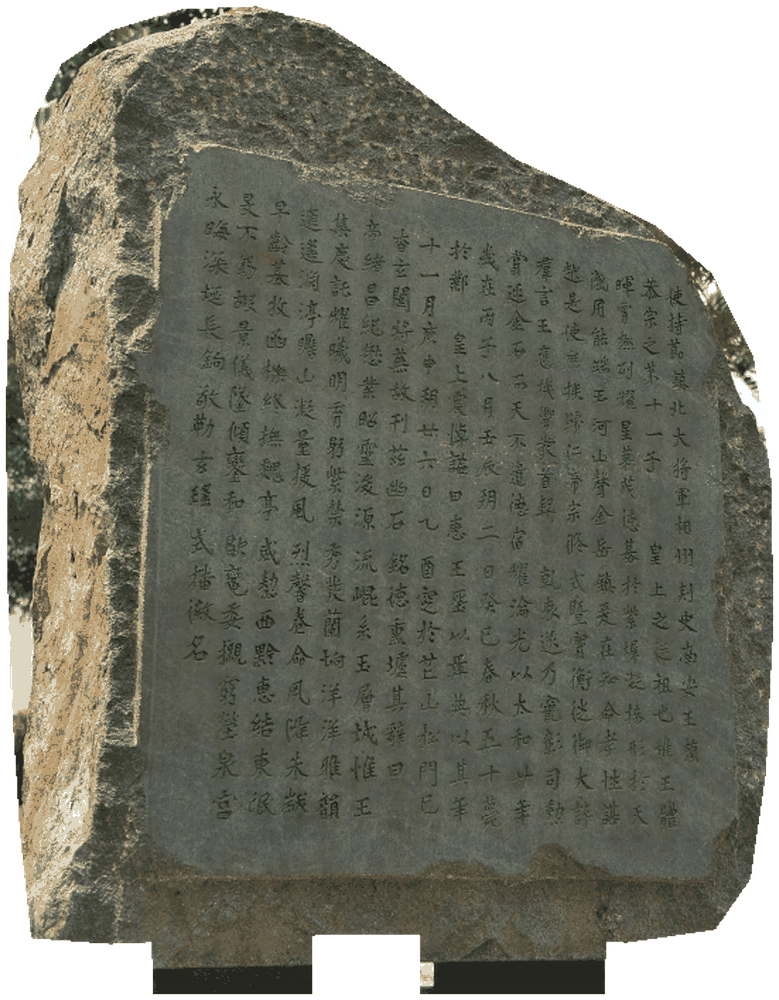
The Inscription at Jinci Temple stands in the Zhenguan Baohan Pavilion at Jinci Temple in Taiyuan, Shanxi. It was composed and written by Emperor Taizong Li Shimin of the Tang dynasty. Each line contains between forty-four and fifty characters, with twenty-eight lines in total. The text recounts how Li Yuan and his son Li Shimin raised an army in Taiyuan, and after founding the Tang dynasty, came here to express gratitude for the divine grace of Shu Yu. The inscription praises the political harmony of the Zhou tradition and Tang Shuyu's strategy for founding a state, promotes the civil and military achievements of the Tang dynasty, and presents the political ideals of the Zhenguan reign, including governing through virtue as the foundation for building and strengthening the state. The calligraphy is vigorous, elegant, upright, free, and unrestrained. It is a masterpiece among the calligraphic works of Chinese emperors and is also the first running-script stele in the history of Chinese calligraphy.
C31
Chu Suiliang
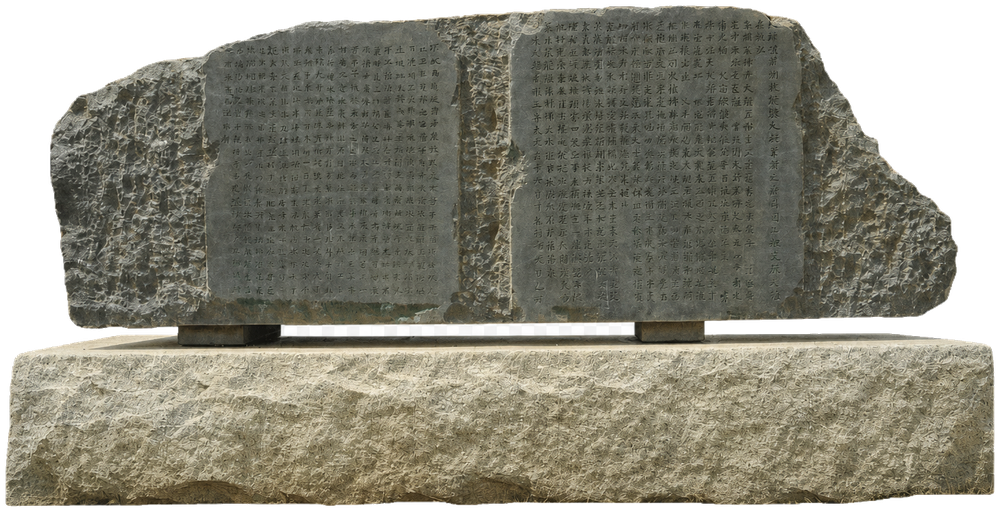
The Preface to the Sacred Teachings at the Wild Goose Pagoda is also known as the Preface to the Sacred Teachings at Ci'en Temple. It was erected in the fourth year of the Yonghui reign of the Tang dynasty (653 CE). The work consists of two stones, both located on the ground level of the Giant Wild Goose Pagoda at Ci'en Temple in Xi'an, Shaanxi, placed respectively in the eastern and western niches of the pagoda gate. The front stone contains the preface, fully titled Preface to the Sacred Teachings of the Great Tang Tripitaka, written by Emperor Taizong Li Shimin. The rear stone contains the record, fully titled Record of the Great Tang Emperor on the Tripitaka's Sacred Teachings, written by Emperor Gaozong Li Zhi. Chu Suiliang was one of the important figures who led the new style of Tang regular script. This work was written when Chu Suiliang was fifty-eight years old and is one of the best representatives of his regular script style.
Zhiyong
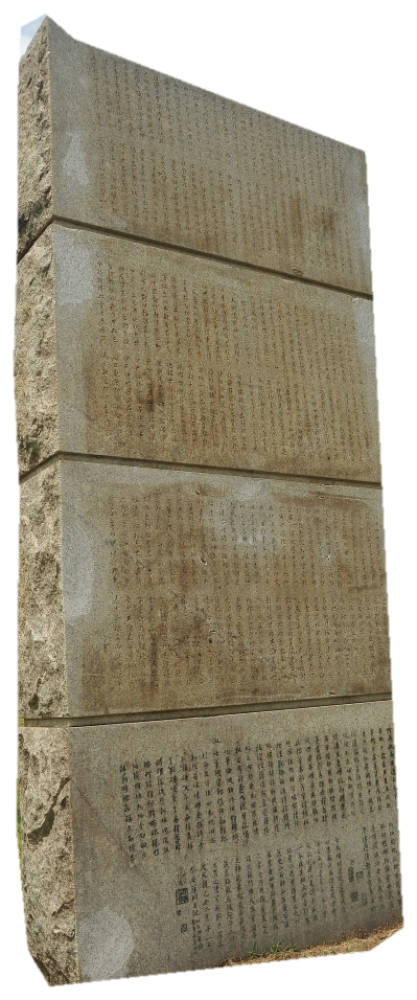
Zhiyong's Thousand Character Classic in Regular and Cursive Scripts has ten characters per line and 202 lines in total. Zhiyong was a seventh-generation descendant of Wang Xizhi. He is said to have practiced calligraphy behind closed doors for thirty years, writing more than eight hundred copies of the Thousand Character Classic and distributing them to temples in Zhejiang. This work presents regular script and cursive script side by side, achieving an organic combination of the two. Its regular script strengthens elements of freedom and liveliness within stability and rigor, while its cursive script, like regular script, uses slightly flattened and angled brushwork. It does not connect strokes arbitrarily, but often breaks within continuity and keeps the outer shapes of the characters relatively balanced, creating varied postures of the unusual and the upright. The regular script can be seen as the embryo of cursive script, while the cursive script is the refinement of regular script, giving the work a stable, spacious, open, and elegant aesthetic quality.
Unknown
The Mu Liang Epitaph was carved in the third year of the Jingming reign of Emperor Xuanwu of the Northern Wei dynasty (502 CE). It was unearthed in 1925 at Xishan, northeast of Luoyang in Henan. Its calligraphy has a rigorous structure, handsome and upright energy, and a strong, weighty presence. The edges are distinct without being sharp, and the strokes are full while retaining inner strength. It represents the heavy and expansive style of early Northern Wei epitaph calligraphy, and its style is relatively close to the famous Wei stele The Zhang Menglong Stele. The inscription records that Mu Liang was the son of the Second Princess of Changle of Northern Wei. He campaigned in Hexi, defeated Tuyuhun, subdued Liyang, guarded the Luoyang capital region, and achieved distinguished political accomplishments.《穆亮墓志》刻于北魏宣武帝景明三年(公元502年),1925年在河南洛阳城东北西山出土,书法结构严谨,俊美挺劲,遒茂沉厚,棱角分明而不锋利,笔画丰腴而筋骨内含,是北魏墓志前期厚重盛大书风的一种表现,风格与著名魏碑《张猛龙碑》较为接近。内容表述穆亮是北魏长乐二公主之子,曾征治河西,击败吐谷浑,讨收醴阳,镇守洛都,政绩彪炳。
The Zhang Heinu Epitaph, fully titled Epitaph of the Late Zhang Xuan, Governor of Nanyang of Wei, is also known as the Zhang Xuan Epitaph. It was carved in the tenth month of the first year of the Putai reign of Emperor Jiemin of the Northern Wei dynasty (531 CE). Its place of excavation is unknown, and the original stone has long been lost. The surviving version is a rubbing formerly collected by He Zizhen of the Qing dynasty. The epitaph is written in regular script, with twenty lines and twenty characters per line, totaling 367 characters. Its writing and carving are both refined, with precise strokes, mainly angular brushwork combined with rounded turns, giving the work a gentle and elegant quality. The characters are slightly flattened, dignified and compact in structure, sharp yet steady, preserving elegance within unusual movement and richness within open spacing.《张黑女墓志》全称魏故南阳太守张玄墓志,又称张玄墓志。此碑刻于北魏节闵帝普泰元年(公元531年)十月,出土地无考,原石早已亡佚,现存者乃清何子贞旧藏之拓本。此墓志楷书文体,共二十行,每行二十字,计三百六十七字。此志文法精美,文写镌刻皆为高手,可谓字字珠玑,行行玉润,点画精到,以方笔为主,兼以圆转,给人以温雅之感。结字微扁,体势端庄而紧密,峻利而沉着,于奇宕中不失雅正,疏朗中不失茂密。
The Zhang Menglong Stele, fully titled Stele of Praise for Lord Zhang, Governor of Lu Commandery of Wei, is written in regular script with twenty-six lines and forty-six characters per line. It is one of the fine later works of Wei stele calligraphy. The stele was erected in the third year of the Zhengguang reign of Emperor Xiaoming of the Northern Wei dynasty (522 CE), and is now located in the Confucius Temple in Qufu, Shandong. The inscription records and praises the achievements of Zhang Menglong, Governor of Lu Commandery, in establishing schools. Earlier critics said that its calligraphy opened the gateway to Ouyang Xun and Yu Shinan, and it has been highly esteemed by renowned calligraphers through the ages.
The Yuan Zhen Epitaph was carved in the twentieth year of the Taihe reign of Emperor Xiaowen of Wei, in the eleventh month of 496 CE. Each line contains eighteen characters, with seventeen lines in total. It was unearthed in 1926 at Gaogou Village, northwest of Luoyang, and is now preserved in the Xi'an Beilin Museum. The size of the strokes varies naturally according to the number of strokes in each character, creating a harmonious and balanced effect. The structure of individual characters expands and contracts appropriately, with careful spacing and mutual accommodation. The forms are gathered inward yet open outward, giving a sense of ease and generosity. The brushwork is primarily square, while also incorporating rounded strokes. Its movements of lifting, pressing, pausing, and turning are clearly defined. Many strokes contain three turns within a single line, with both downward and upward tendencies, producing the effect of a light entry and a heavy finish. Among the many Northern Wei epitaphs, this stone may be regarded as an outstanding work.