Malaysia Chinese Calligraphy Stone Gallery
Curated Collection
让典藏不只是一种展示,也成为一种漫游与凝视。在这里,每一道刻痕都是时间的低语,带您走入汉字演变的浩瀚长河。
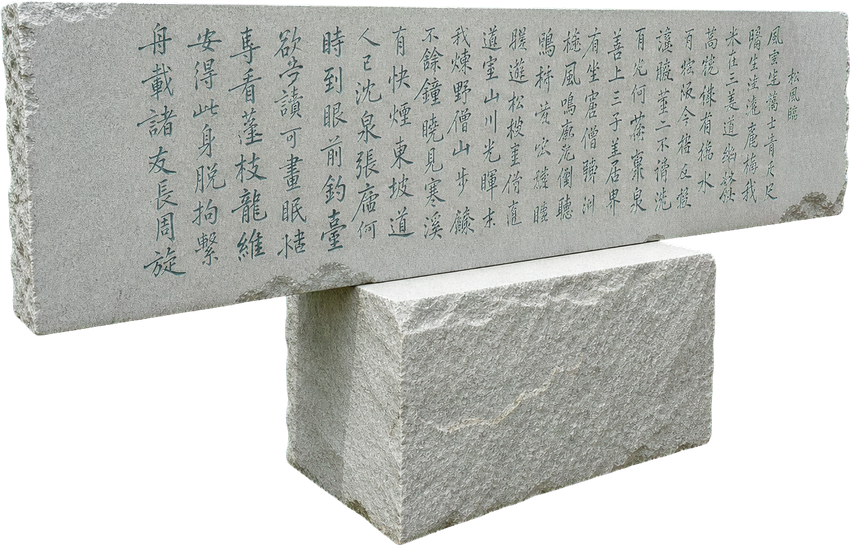
Huang Tingjian
Songfeng Pavilion is associated with Huang Tingjian, one of the Four Great Masters of Song calligraphy. Huang?s calligraphy is known for its elongated structure, forceful turns, and distinctive rhythm. The characters in this work stretch and gather with strong internal energy, creating a sense of height, movement, and tension. Its brushwork is elegant yet powerful, showing Huang Tingjian?s highly personal approach to structure and line.
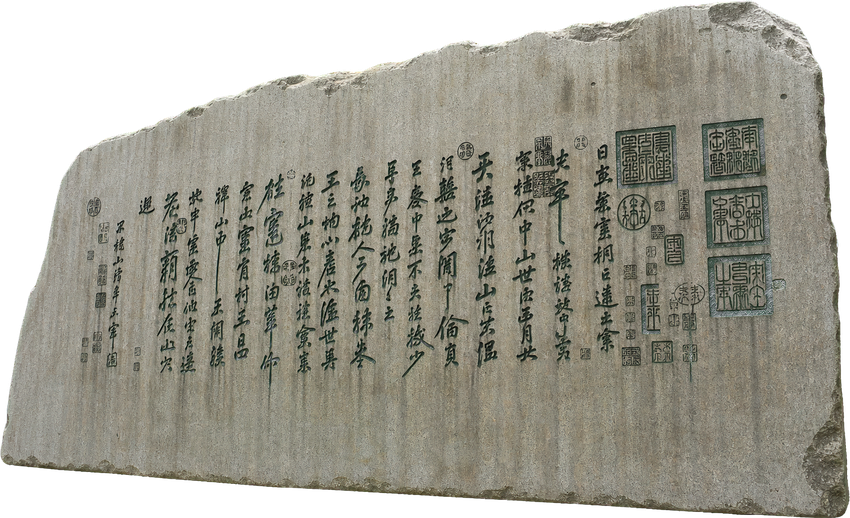
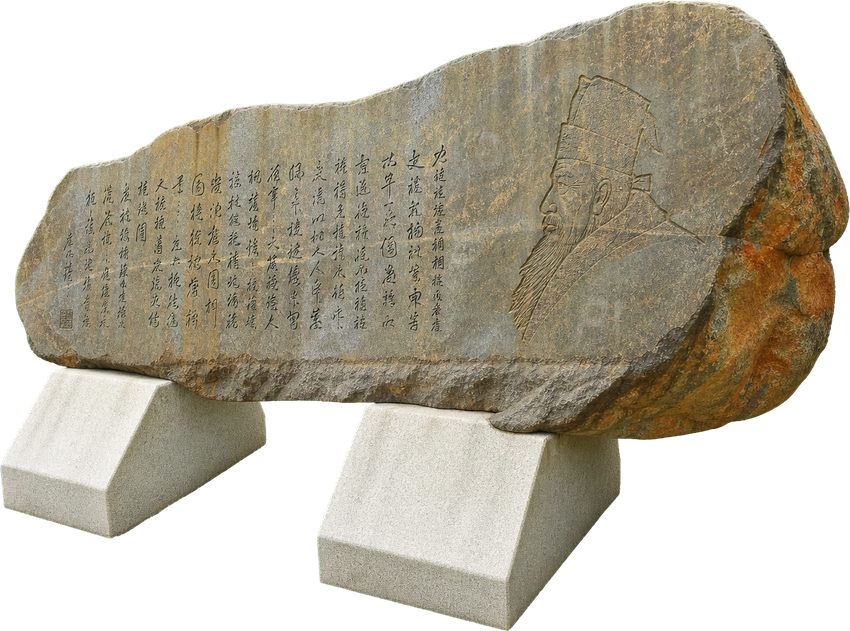
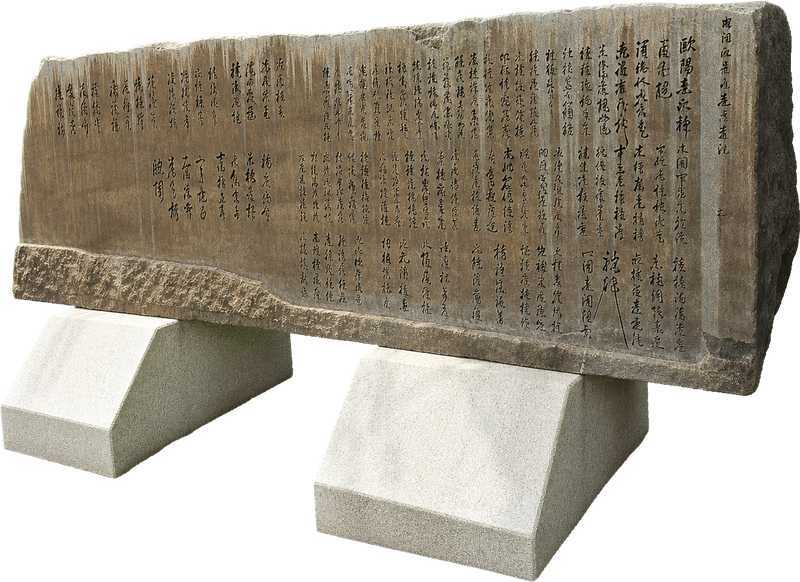
Su Shi
Cold Food Observance is one of Su Shi?s most admired calligraphic works. Written during his exile in Huangzhou, it records the emotions of hardship, reflection, and resilience. The brushwork shifts between restraint and release, with lines that are sometimes heavy and condensed, sometimes flowing and free. The composition has a strong emotional pulse, making it a landmark example of Song dynasty running script and one of the great masterpieces in the history of Chinese calligraphy.
Remembering Red Cliff is based on Su Shi?s famous ci poem, one of the best-known literary works of the Northern Song. The stele combines poetry, calligraphy, and carved stone into a single visual tribute to Su Shi?s artistic world. Its brushwork is steady and dignified, with a strong sense of rhythm and weight. The composition reflects the grandeur of the poem, evoking history, landscape, and the emotional depth of Su Shi?s writing.
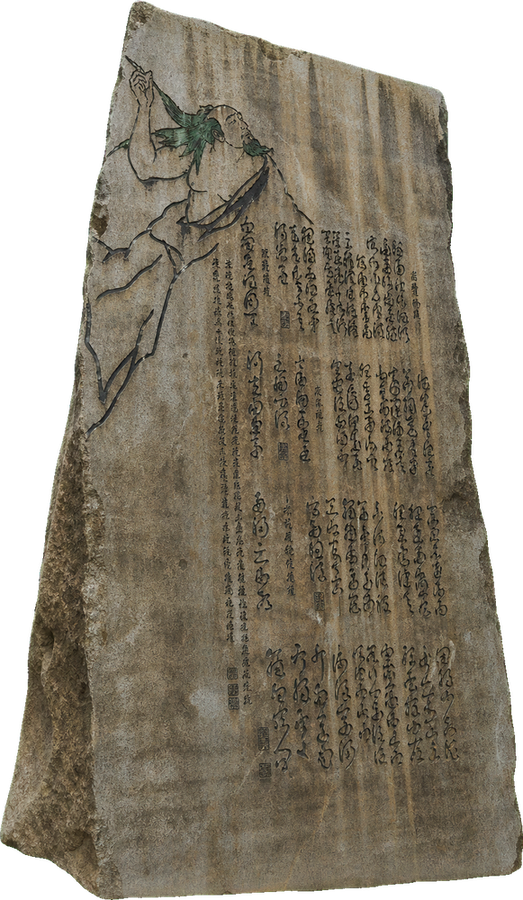
Record of the Old Drunkard Pavilion written by Su Shi presents the celebrated prose text of Ouyang Xiu in Su Shi?s calligraphic style. Su Shi was one of the Four Great Masters of Song calligraphy, and his writing is known for its broad structure, strong spirit, and natural ease. The brushwork in this stele is open and vigorous, moving with a relaxed but powerful rhythm. It conveys both literary elegance and the expansive personality of Su Shi?s running script.
Cai Xiang
Self-Written Poems is a handscroll written by Cai Xiang of the Northern Song dynasty. Cai Xiang was one of the Four Great Masters of Song calligraphy. His running script is refined, upright, and elegant, combining a disciplined structure with a gentle, fluent rhythm. This work shows his steady brush control and graceful movement, with characters that are calm, balanced, and richly expressive. It reflects the Song literati taste for clarity, restraint, and cultivated personal expression.
Huaisu
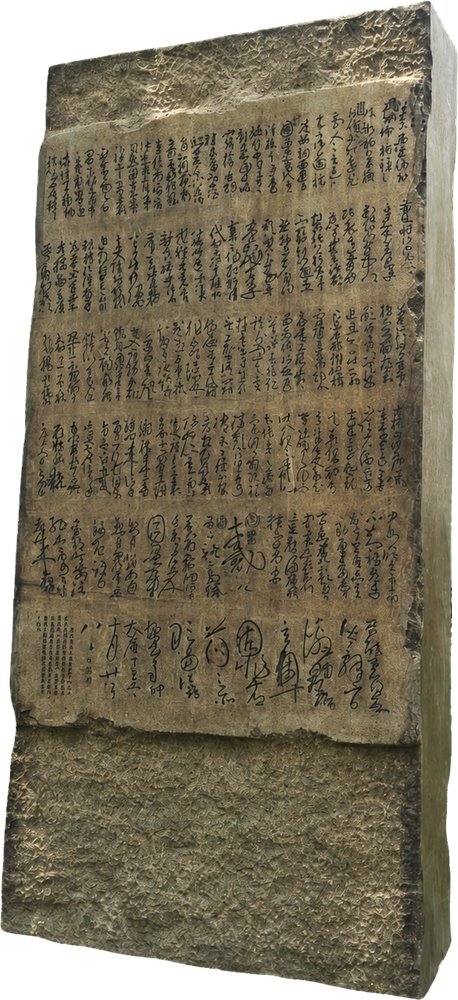
Autobiography is an ink-on-paper handscroll written by Huaisu in 777 CE, the twelfth year of the Dali reign of the Tang dynasty. It is a monumental work of wild cursive script. The scroll contains 126 lines and 698 characters. The first six lines were damaged early and were later supplemented by Su Shunqin of the Song dynasty. The text is Huaisu?s own account of the main events of his life. Huaisu created a new form of cursive script known as ?wild cursive.? He boldly broke away from the earlier methods of spacing and regular balance associated with Wang Xianzhi and his predecessors. In character structure and page composition, the characters and lines rise and fall, shift left and right, and vary in size, moving beyond the restrictions of ?broken-style script? into a more liberated form. Huaisu?s wild cursive expresses a wide range of human emotion and natural vitality, raising the expressive power of cursive script to a new artistic stage.
Sun Guoting
Sun Guoting?s Treatise on Calligraphy is divided into two volumes. It is generally understood that the first volume serves as the preface, while the second forms the treatise itself. The beginning is inscribed ?Treatise on Calligraphy, Volume One. Written by Sun Guoting of Wu Commandery,? and the end records that it was written in the third year of the Chuigong reign. The work is now held in the National Palace Museum in Taipei. Its content focuses on calligraphic experience, the principles behind the writing of the treatise, and basic approaches to learning calligraphy. It is both an elegantly written theory of calligraphy and an ideal model of cursive script. Sun Guoting studied Wang Xizhi?s cursive script deeply; his brushwork is refined and fluent, capturing its spirit and essence.
Zhang Xu
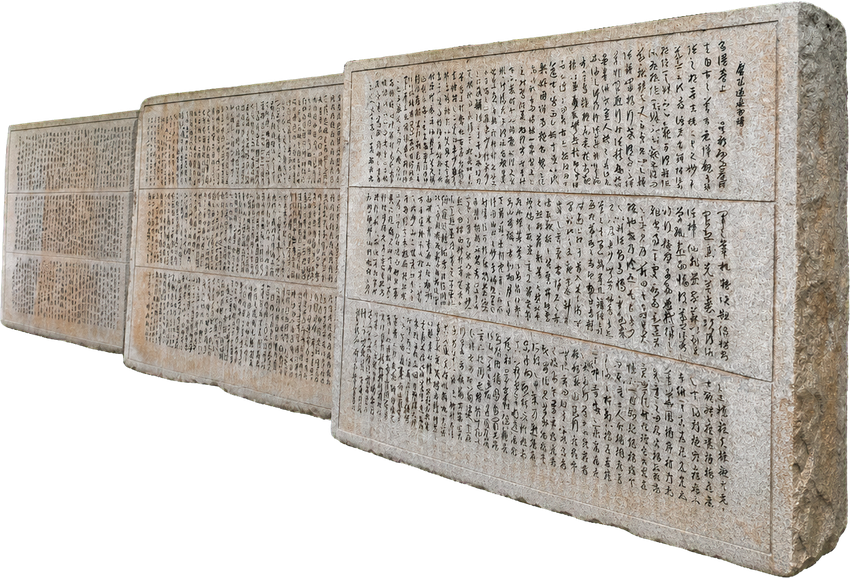
Four Ancient Poems is an ink manuscript traditionally attributed to Zhang Xu of the Tang dynasty. The text records four poetic works: the first two are selections from Yu Xin’s Daoist Walking in the Void Lyrics from the Northern and Southern Dynasties, while the latter two are Xie Lingyun’s Praise of Wang Zijin and Praise of an Old Man and Four or Five Youths Beneath the Cliff. The work features full, powerful brushstrokes, a rhythm that rises and falls dramatically, and a composition that moves between openness and control. Its brushwork is rounded and free, restrained yet unrestrained, with strict structure and majestic movement. The whole piece appears like clouds and mist flowing across the paper, making it one of the finest masterpieces of cursive script.
Liu Gongquan
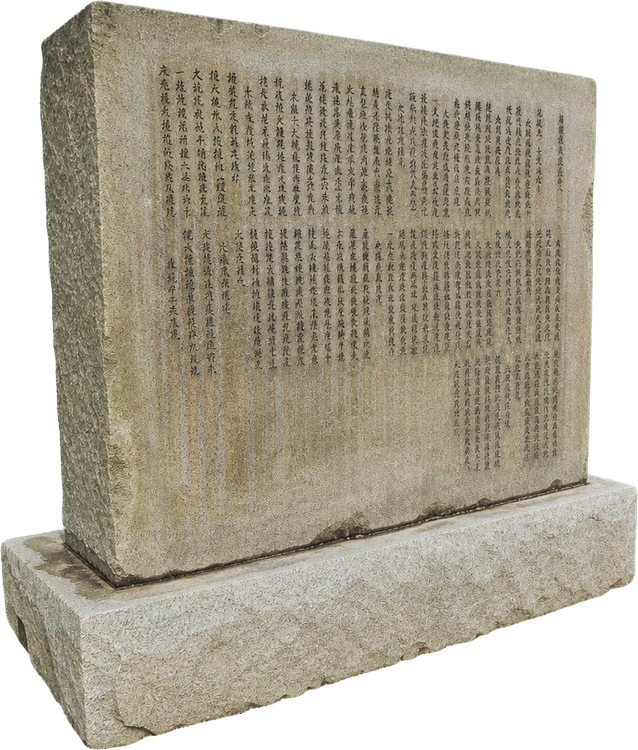
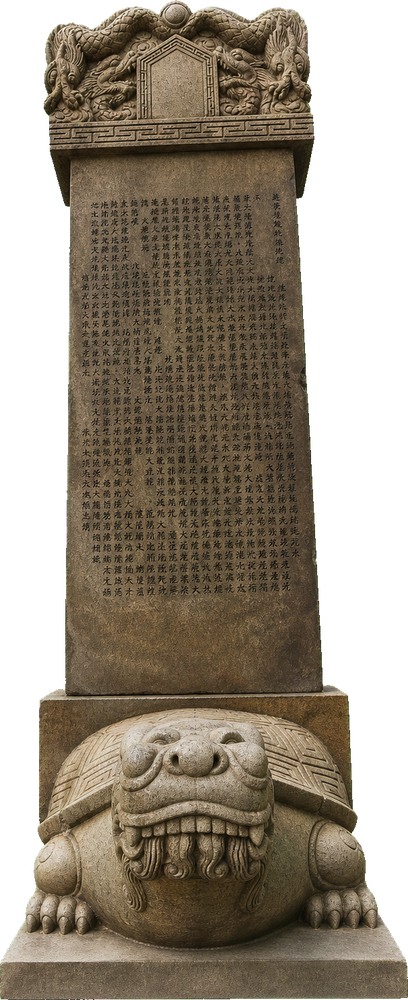
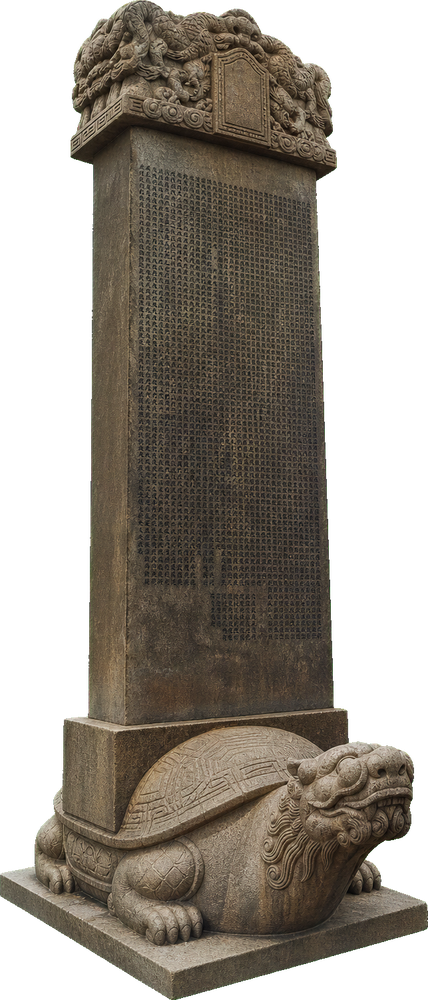
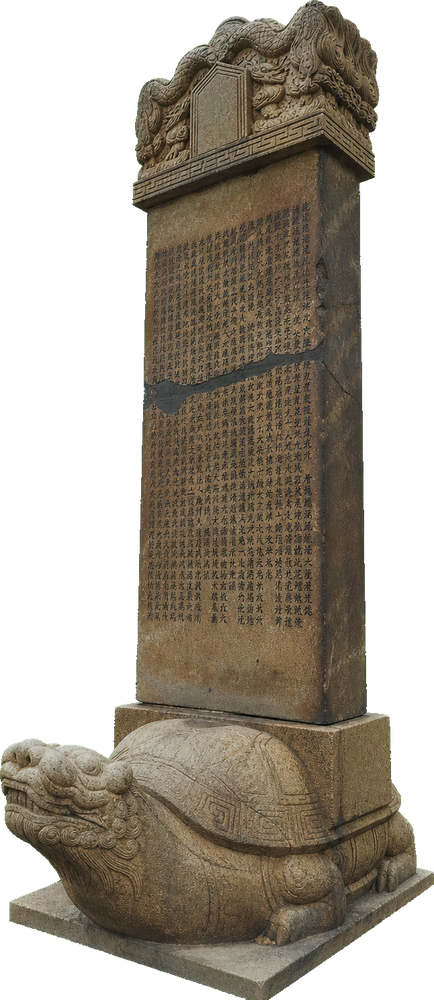
The Xuanmi Pagoda Stele was composed by Pei Xiu of the Tang dynasty, written and seal-script titled by Liu Gongquan, and erected in December of the first year of Emperor Wuzong’s Huichang era, 841 CE. It is now preserved in the Xi’an Forest of Steles. Written in regular script, it has twenty-eight lines with fifty-four characters per line. This stele commemorates the renowned Tang Buddhist monk Master Dada, recording his deeds for later generations and passing on his spirit. Liu Gongquan wrote it at the age of sixty-four. The brushwork is strong and vigorous; the script studies Yan Zhenqing while emerging from the tradition of Ouyang Xun, forming a fresh structure. Its character construction is mainly inwardly restrained and outwardly expansive, with firm, extended, clean, and decisive strokes. The writing is complete and well-considered on all sides, showing Liu Gongquan’s distinctive style. It is considered one of the peak works of his calligraphy.
Yan Zhenqing
The opening title of this stele is Inscription on the Miraculous Response of the Duobao Buddha Pagoda at Qianfu Temple in the Western Capital of the Great Tang. It is written in regular script, with thirty-four lines and sixty-six characters per line. Originally located at Qianfu Temple in Anding Ward, Chang’an during the Tang dynasty, it was moved into the Xi’an Forest of Steles in the Song dynasty. The text was composed by Cen Xun, written by Yan Zhenqing, and carved by Shi Hua. It was created when Yan Zhenqing was forty-four years old. The writing is respectful and sincere, directly inheriting the legacy of the Two Wangs, Ouyang Xun, Yu Shinan, and Chu Suiliang. Construction at Qianfu Temple was selected and begun in the first year of the Tianbao era, and completed in the fourth year. Every stroke conceals and returns the brush tip; the structure is evenly balanced in density, and the overall style is rigorous and solemn.
The Yan Qinli Stele, formally titled Spirit Path Stele of the Late Lord Yan, Senior Guardian, Chief Clerk of the Kuizhou Area Command, and Editorial Official of the Secretariat Library of the Tang, contains thirty-eight characters per line and forty-four lines in total. It was unearthed in Xi’an in 1922 and is now housed in the Xi’an Forest of Steles. Yan Zhenqing wrote and erected this stele for his grandfather Yan Qinli when he was seventy-one years old. The brushwork is vigorous and crisp, making it one of Yan’s representative works from his later years. The inner strokes of each character avoid one another and leave open space, giving the writing a clear and spacious feeling, while the outer strokes are more regular and stable. The character structures are often compact above and expansive below, creating a distinctive balance of inner looseness with outer tightness, and lower looseness with upper tightness. The brush strength is deep and reserved, with concealed tips; starting strokes are often rounded, and turns tend to be square within and round without. Yan transformed earlier methods and formed his own school, known as the Yan style, which had a profound influence on later generations.
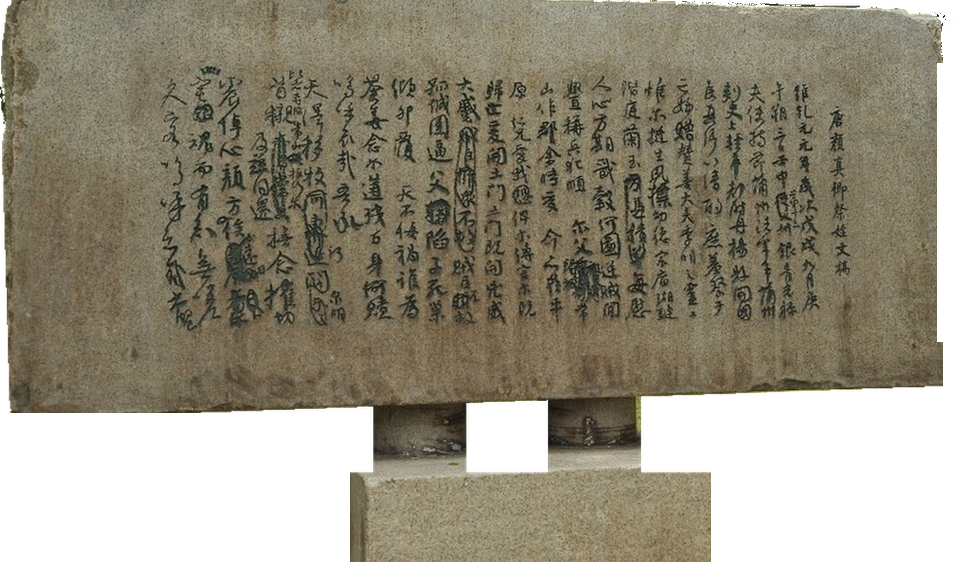
The Draft of a Requiem to My Nephew was written in the first year of the Qianyuan era of the Tang dynasty, 758 CE, when Yan Zhenqing was about fifty years old. It was a draft written in mourning for his nephew Yan Jiming. The text recounts how Yan Gaoqing, Governor of Changshan, and his family stood up during the An Lushan Rebellion and resisted with determination, resulting in the tragedy of “the father captured and the son killed, the nest overturned and the eggs broken,” sacrificing themselves for righteousness. The brushwork surges with emotion and flows in one breath, often reaching dry-brush passages that appear even more vigorous and fluid. It is a masterpiece nourished by sincere feeling, a resonance of the heart, a voice of extreme grief and indignation, and an immortal work condensed from blood and tears. It is known as “the second-best running script under heaven.”