Malaysia Chinese Calligraphy Stone Gallery
Curated Collection
让典藏不只是一种展示,也成为一种漫游与凝视。在这里,每一道刻痕都是时间的低语,带您走入汉字演变的浩瀚长河。
Lin Zexu
Lin Zexu was not only a far-sighted statesman but also a skilled calligrapher. Grounded in the calligraphy of Ouyang Xun, his writing does not seek charm through slanting strokes; instead it is dignified, calm, and orderly, with subtle variation inside its regularity and a natural ease in the places where intention is most visible. Although this piece is less marked by the deep hidden strength and archaic simplicity often associated with Lin Zexu, its text still carries a strong moral and educational force.
Chen Hongshou
Chen Hongshou was a highly accomplished artist and one of the famous ?Eight Masters of Xiling.? His seal carving drew upon Qin and Han models, while his clerical script became especially celebrated for its lean vigor, free composition, and inventive interweaving of forms. This work shows clear, slender, ancient-looking brushwork, relaxed elegance, and a reclusive scholarly spirit. Though the structure may appear casual at first glance, it is in fact carefully and ingeniously arranged.
Liu Yong
Liu Yong served as a grand councillor under both the Qianlong and Jiaqing emperors. Beginning from Yan Zhenqing and later absorbing many other masters, he developed a calligraphic manner known for heavy, rich ink and sturdy inner structure. He pursued the fullness of ?black? while also creating atmosphere through the subtle management of ?white,? producing a powerful balance of density and openness. Because of this distinctive style, he became widely known as the ?thick-ink premier.?
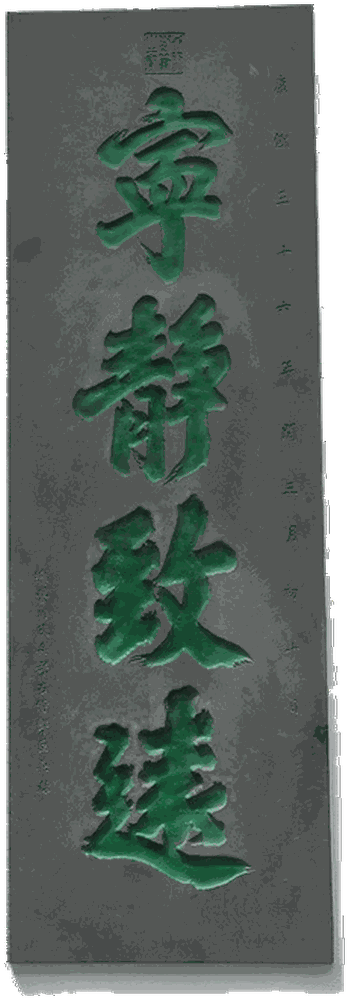
Emperor Kangxi
The ?Tranquility Leads to Great Vision? stele preserves four large regular-script characters written by the Kangxi Emperor in 1679 for Wu He, then Governor-General of Shaanxi and Sichuan. The composition is rigorous and dignified, the brushwork full and rounded, and the overall effect steady yet luminous. Very little of Kangxi's surviving ink writing remains, so this piece is considered especially precious.
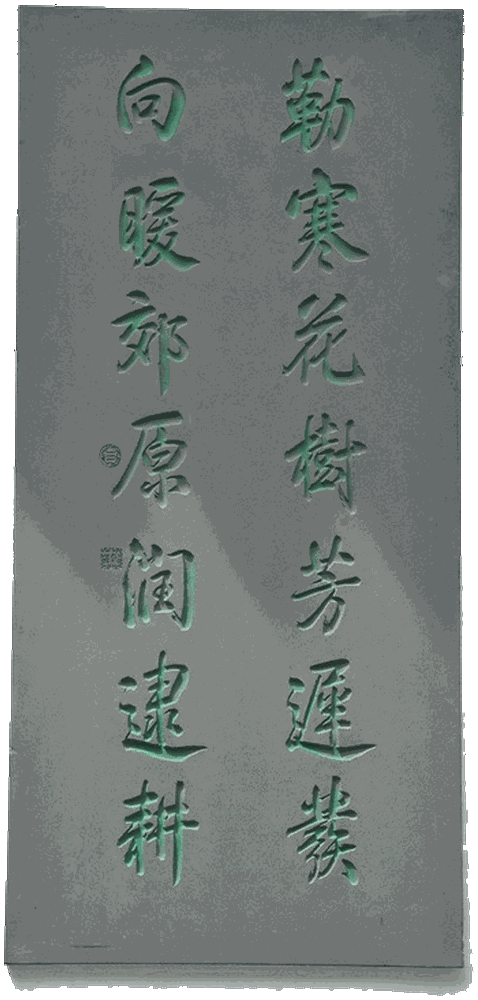
Emperor Qianlong
This couplet, ?Cold weather delays the flowering trees; warmth moistens the fields for ploughing,? was written by the Qianlong Emperor for the Sui'an Room at the Daxinzhuang traveling palace in Sanhe. Qianlong visited the Yanjiao palace area many times and left behind numerous poems and couplets there. This inscription expresses the idea that cold weather hinders the growth of flowers and trees, while a warm climate benefits agricultural development.
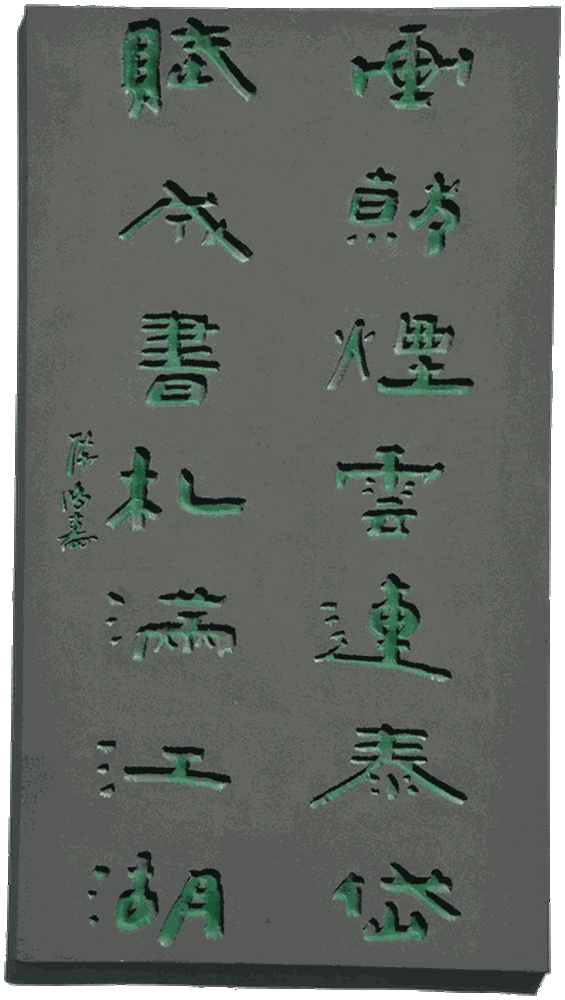
Deng Shiru
Deng Shiru was one of the great Qing masters of calligraphy, epigraphy, and classical learning. This seal-script rendering of excerpts from ?Disciple Duties? was written in the year before his death, when he was sixty-two. It is widely regarded as his most mature work, showing complete command in brush movement, character structure, and the seasoned unity of man and writing. It is also considered one of the works with which Deng himself was most satisfied.
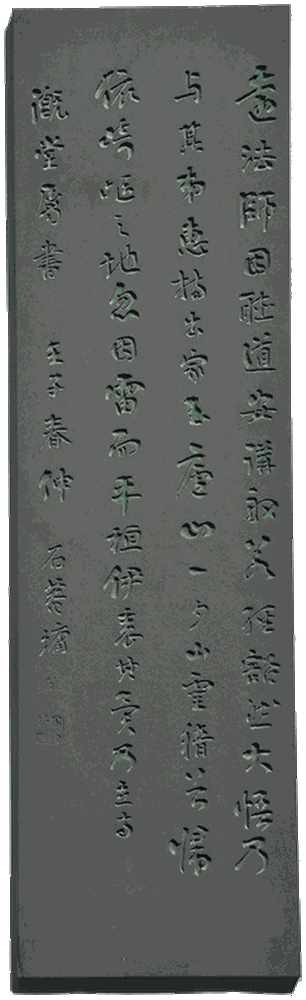
Zheng Banqiao
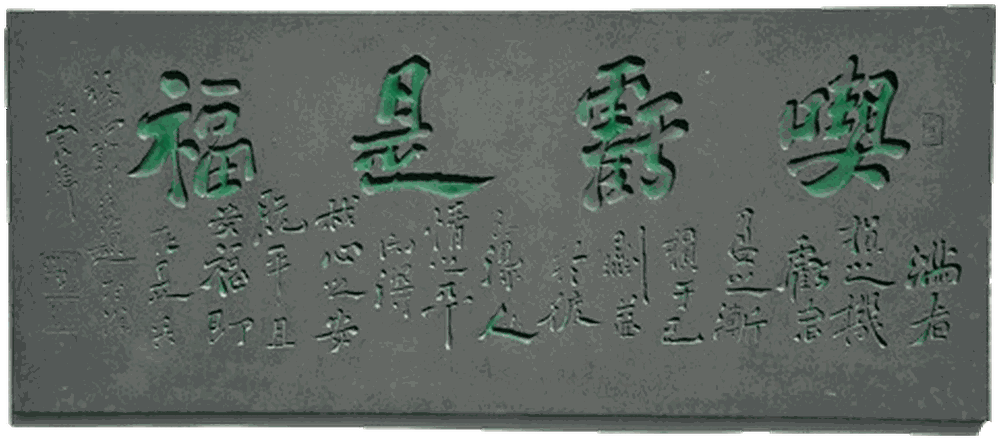
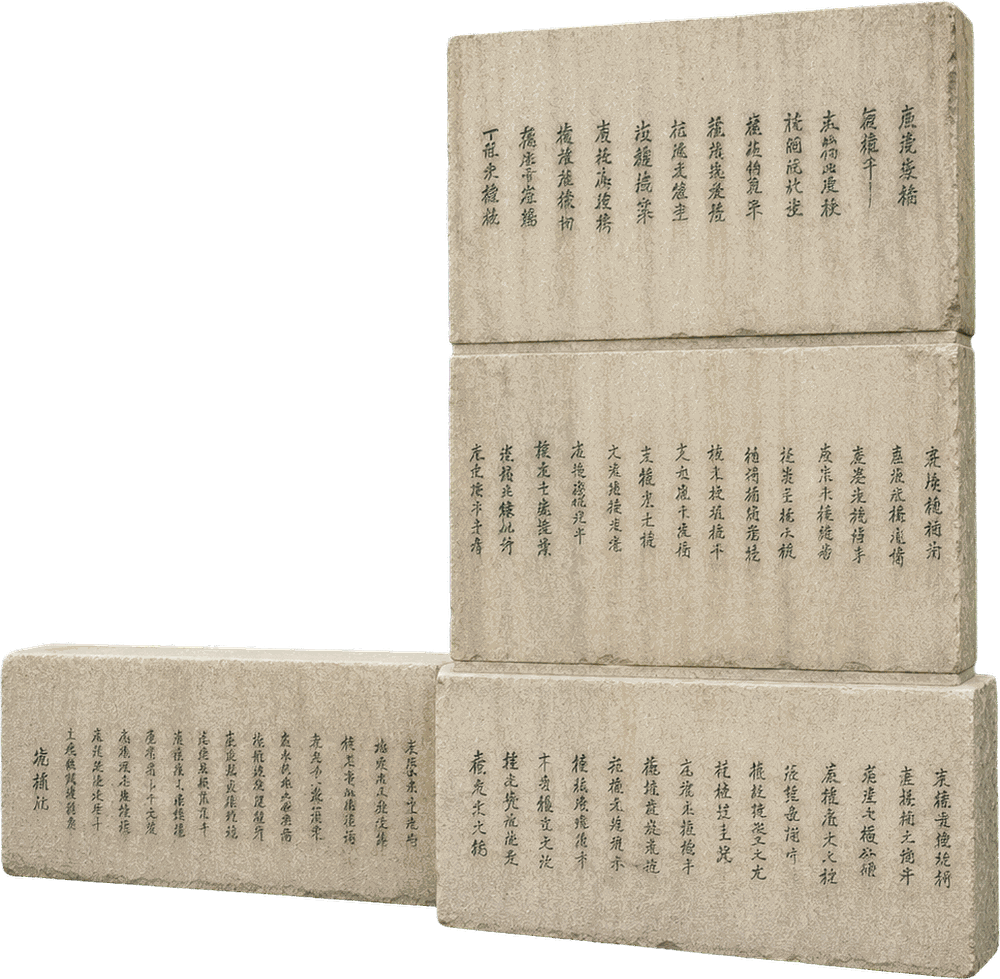
?Accepting Loss Is a Blessing? was written by Zheng Banqiao for a distant relative, Zheng Xuan. After Zheng Xuan suffered a devastating loss when timber prices collapsed, he poured out his distress to Zheng Banqiao, who wrote this encouraging inscription to calm him. Later, on a subsequent voyage, timber prices surged and Zheng Xuan unexpectedly made a fortune. Reflecting on Zheng Banqiao's words, he came to understand their deeper meaning and adopted the piece as a family maxim, carving it on the high wall of his house for future generations. Zheng Banqiao's handwriting here mixes clerical and regular script, combining spare, hard strength with painterly touches.
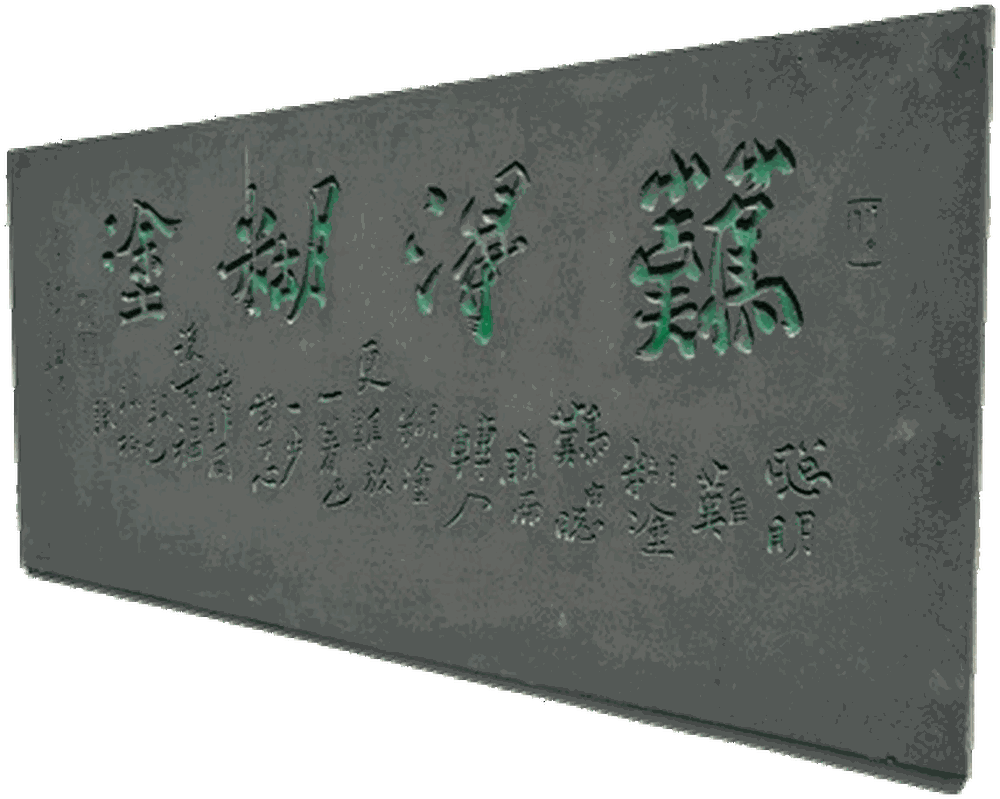
Zheng Banqiao's ?Hard to Be Truly Confused? is tied to a well-known anecdote. While visiting Yunfeng Mountain in Laizhou to see the Zheng Gong Stele, he stayed with an old man who called himself a ?confused old man.? The man owned an enormous treasured inkstone and asked Zheng to inscribe it. Zheng wrote the four characters ?Nan De Hu Tu? and sealed them with his famous signature line. The old man then added his own inscription, revealing himself to be no ordinary person but likely a cultivated retired official, which earned Zheng's deep admiration. Zheng responded with another reflection about the difficulty of moving from cleverness into a higher state of generous simplicity. The exchange later became famous. Zheng Banqiao's calligraphy blends regular, cursive, seal, and clerical elements into what he called ?six-and-a-half script,? a highly original style unlike anything seen before.
Fu Shan
Fu Shan was a noted scholar, painter, calligrapher, and physician of the late Ming and early Qing periods. Although the early Qing authorities repeatedly tried to recruit him, he firmly refused office and lived in retirement. His calligraphy was rooted in Yan Zhenqing, and both his regular and cursive script show powerful effort and a theory he summarized as preferring awkwardness to cleverness, plainness to prettiness, ruggedness to slickness, and directness to arrangement. This banner is a representative example of late Ming wild cursive: free, elegant, forceful, rich in change, seemingly effortless, yet internally rhythmic and full of natural beauty. It is now in the Shanghai Museum.
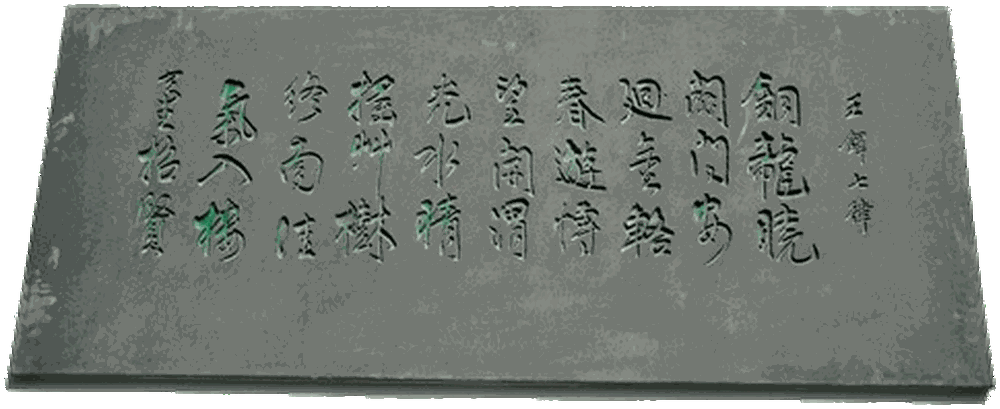
Wang Duo
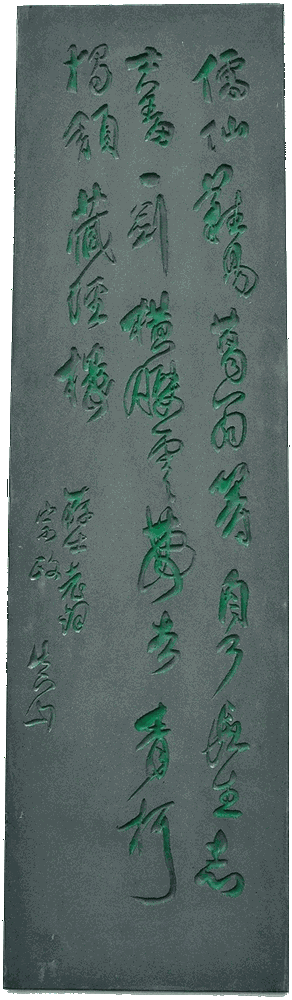
Wang Duo was a leading calligrapher of the late Ming and early Qing periods, celebrated for regular, running, and cursive script, with his greatest achievement in running-cursive writing. This running-script seven-regulated-verse piece comes from Gu Zeng's ?Feng He Chun Ri Chu Yuan Zhu Mu Ying Ling? and is regarded as one of Wang Duo's representative works. Rooted in the Wei and Jin tradition, drawing running-cursive strength from the Two Wangs, regular-script structure from Zhong Yao, and further nourishment from Yan Zhenqing and Mi Fu, the work shows the breadth of his study. Wang Duo famously argued that unless one truly penetrates ancient steles, one's method can never become genuinely classical.
Zhang Ruitu
Zhang Ruitu was a representative late Ming calligrapher and was known as one of the Four Great Masters of the late Ming. His regular script followed Zhong Yao and carried a clerical-script flavor, without a sense of over-carving. His running script developed more freely and naturally from regular script, while his greatest achievement was in cursive script, marked by forceful strokes, striking structures, and a vigorous, unrestrained spirit that strongly influenced later generations. He was also skilled in poetry, prose, landscapes, and Buddhist figures. This running-cursive scroll has sharp, forceful brushwork, firm and energetic strokes, and richly expressive ink. The text, Dreaming of Mount Tianmu, Written on Parting, is one of Li Bai's representative poems; Zhang's writing matches Li Bai's bold, unrestrained temperament with an equally powerful calligraphic presence.
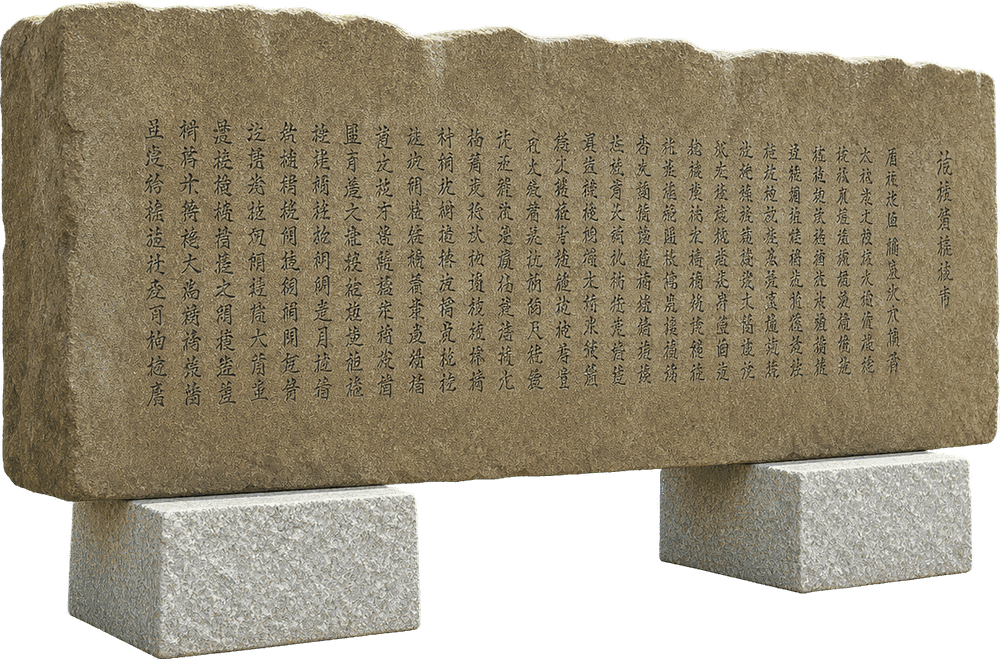
Dong Qichang
Song of the Pipa is a seven-character ancient-style poem written by Bai Juyi in 816 CE, during the Yuanhe reign of Emperor Xianzong of Tang. After being accused of exceeding his office in memorializing the throne, Bai was demoted to Jiangzhou, and later to the post of Sima there. The following year, while seeing off a guest at Penpu, he encountered a pipa player and, moved by her story and his own fate, composed this famous poem. Dong Qichang was also a master connoisseur of painting and calligraphy, and his theory of the Northern and Southern schools deeply influenced painting after the late Ming. His calligraphy sought the ancients without becoming rigidly antiquarian. This running-script Song of the Pipa, in sixty lines, is one of his representative works and is now in the collection of the Beijing Museum.