Malaysia Chinese Calligraphy Stone Gallery

马来西亚
中华人文碑林

Home
About
ForewordCommitteeDiscover BeilinEvolution of Chinese CharactersCalligraphy AppreciationVisitor Feedback
GalleryDynastyEvents & DownloadsContact UsReservation
English
简体中文
English
繁體中文
日本語

秦朝

Qin Dynasty

After Qin unified the six states, it promoted a shared written standard, and small seal script became an institutionalized form of writing. Its slender, balanced, rounded lines mark a key step from diverse regional scripts toward unified Chinese characters.
Shang Dynasty
Western Zhou
Spring and Autumn Period
Qin Dynasty
Western Han Dynasty
Eastern Han Dynasty
Three Kingdoms Period
Eastern Jin Dynasty
Northern and Southern Dynasties
Sui Dynasty
Tang Dynasty
Northern Song Dynasty
Southern Song Dynasty
Yuan Dynasty
Ming Dynasty
Qing Dynasty
Modern Era
Showing items
1
to
12
of
136

Qin Dynasty

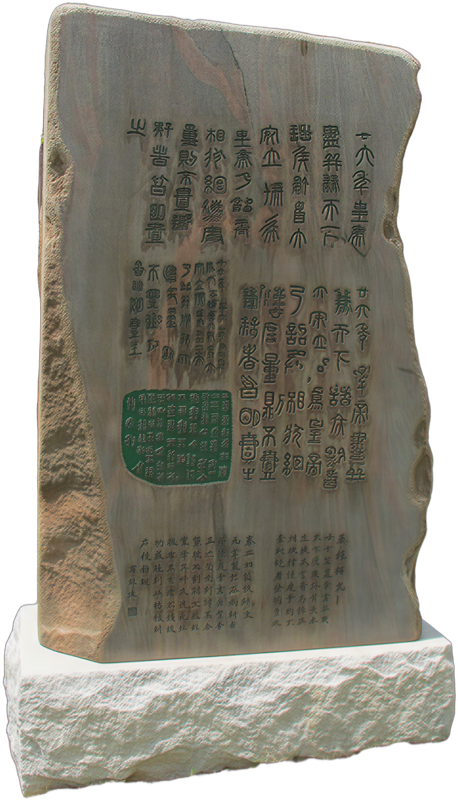
Mount Yi Stele

It is believed that the characters on the stele are the handwriting of Li Si,who was then the premier of Qin Shi Huang. The text is an edict of Qin Shi Huang and Qin Er Shi, the second emperor of the Qin Dynasty.

Qin Dynasty

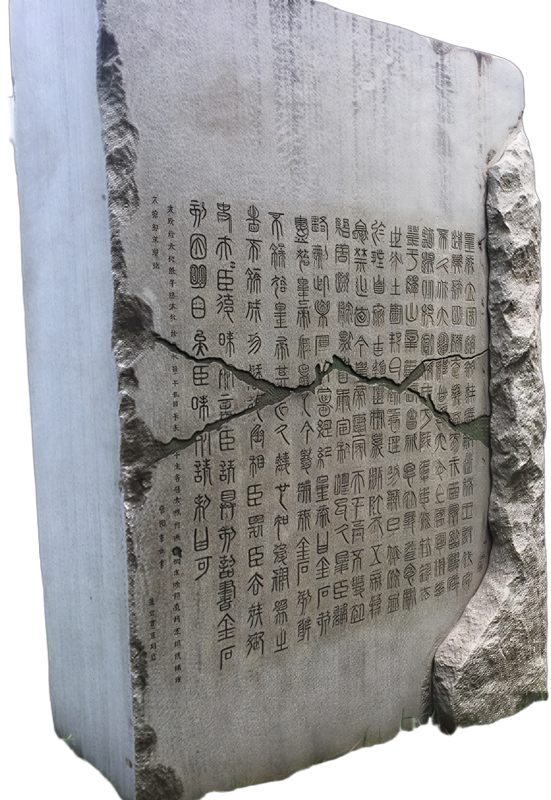
Mount Langya Stele

Qin Shi Huang made a trip to Mount Langya in the 28th year of his reign and the inscribed stone was erected to eulogize his achievements. It is said that the characters were Li Si’s handwriting. The stele was originally located at Langya Terrace in Zhucheng, Shandong. It is now kept at the National Museum of China.

Qin Dynasty

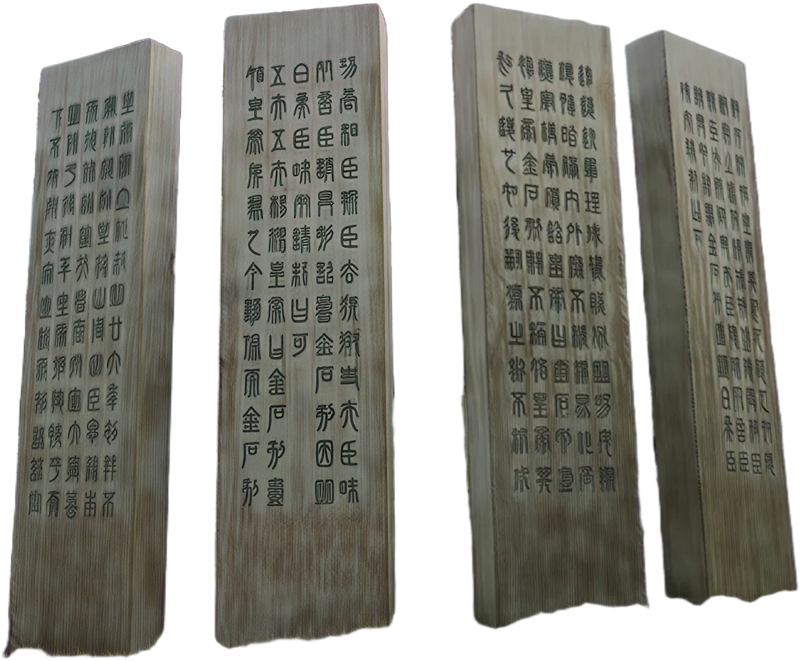
Standard Measurement Units

In BC221, Qin Shi Huang became the first emperor of the unified China. In an effort to unite the country, he ordered his officials to make Edict Plates with standardised measurement units. The materials used to make these plates include bronze, wood and clay. It is believed that the earlier batches of plates were written by Li Si, the premier of the Qin.

Text Link

Malaysia Chinese Calligraphy Stone Gallery

马来西亚
中华人文碑林

Find your peace within the words, and take its echo with you.

Copyright © 2025 中华人文碑林. All Rights Reserved.