Malaysia Chinese Calligraphy Stone Gallery
Curated Collection
让典藏不只是一种展示,也成为一种漫游与凝视。在这里,每一道刻痕都是时间的低语,带您走入汉字演变的浩瀚长河。
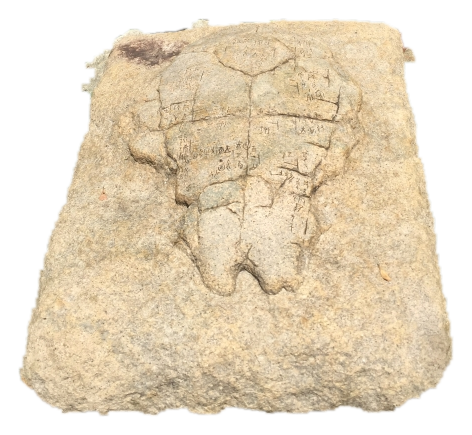
Oracle bone script refers to ancient Chinese characters found on turtle shells and animal bones used as oracle divination in the Shang Dynasty. The Oracle bones were found in the Ruins of Yin in Henan in AD1899. So far, about 160,000 oracle bone fragments have been unearthed. Modern Chinese script is evolved from the oracle bone script.
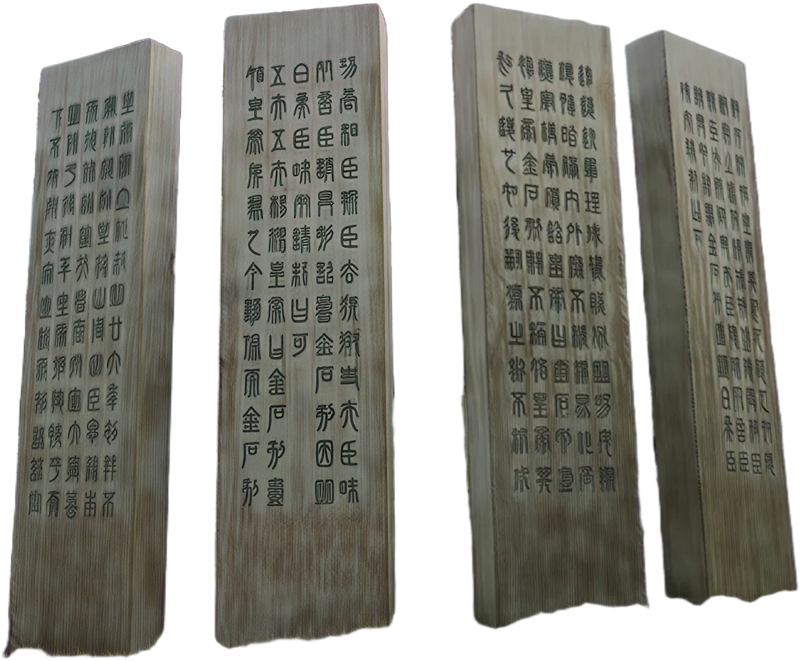
These bamboo slips were discovered in Juyan country in Gansu. The text were written by court officials and soldiers stationed in Juyan, the border area. They record events about politics, military activities and life at the border.
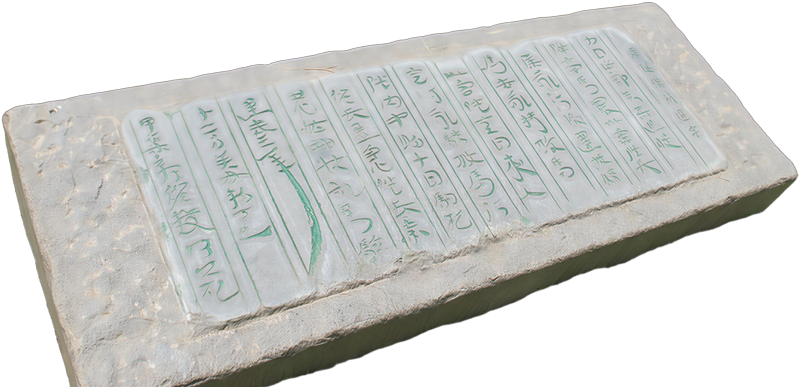
“Wuwei Han Bamboo Slips” were unearthed from a tomb of the Han Dynasty in Wuwei, Gansu. The contents are about different rites, edicts and medical text. These slips are valuable calligraphy works that are important to historical research. They are dated to the transition period between the Western and Eastern Han Dynasties.
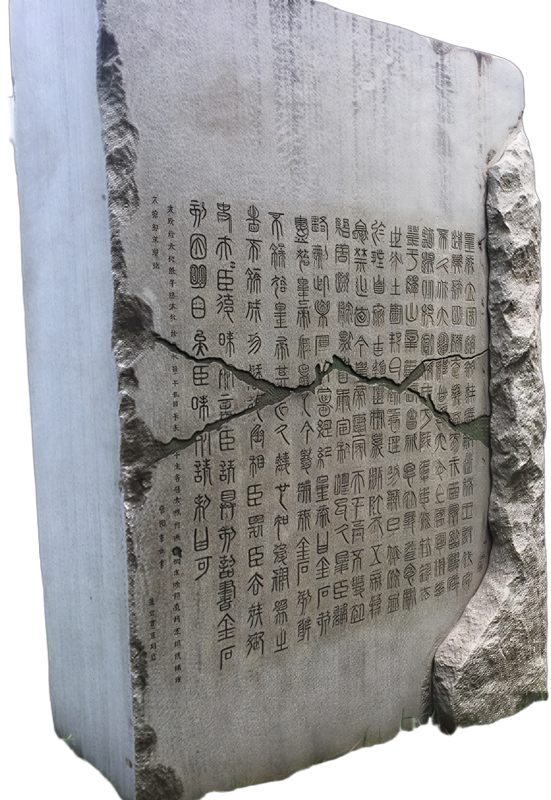
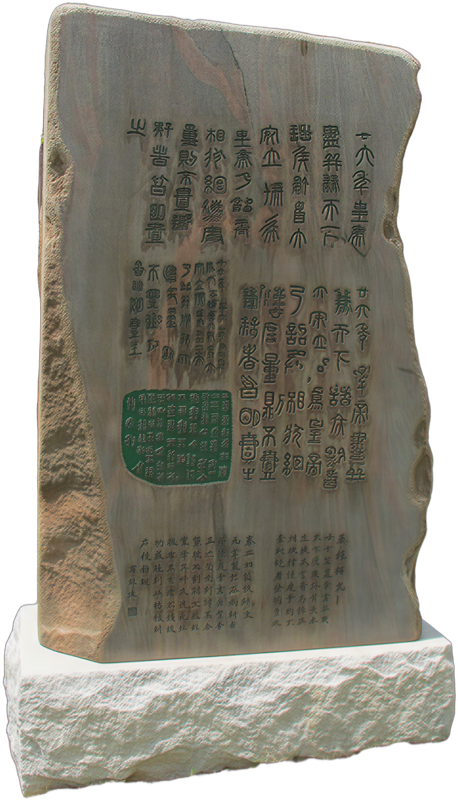
It is believed that the characters on the stele are the handwriting of Li Si,who was then the premier of Qin Shi Huang. The text is an edict of Qin Shi Huang and Qin Er Shi, the second emperor of the Qin Dynasty.
Qin Shi Huang made a trip to Mount Langya in the 28th year of his reign and the inscribed stone was erected to eulogize his achievements. It is said that the characters were Li Si’s handwriting. The stele was originally located at Langya Terrace in Zhucheng, Shandong. It is now kept at the National Museum of China.
In BC221, Qin Shi Huang became the first emperor of the unified China. In an effort to unite the country, he ordered his officials to make Edict Plates with standardised measurement units. The materials used to make these plates include bronze, wood and clay. It is believed that the earlier batches of plates were written by Li Si, the premier of the Qin.
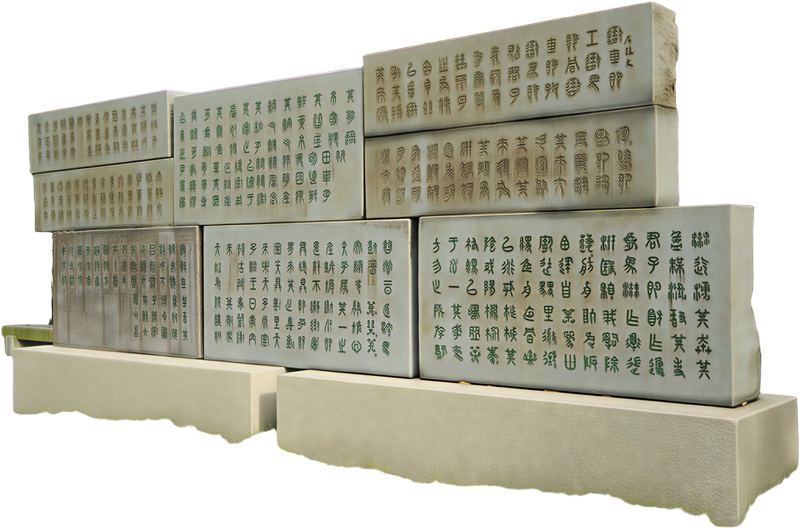
These inscriptions were engraved on 10 stone blocks that were unearthed in Qizhou, Shaanxi during the early years of the Tang Dynasty. These stones, which look like drums, are now kept in the Palace Museum in Beijing. The inscriptions describe a king’s hunting activities in a four-character stanza.
This bronze vessel has the longest inscription among those that have been discovered. It was excavated in Qishan, Shaanxi during the Daoguang Period, Qing Dynasty and it is now kept in the National Palace Museum in Taiwan. The inscriptions are about political affairs that King Xuan of Zhou entrusted Duke Mao to conduct
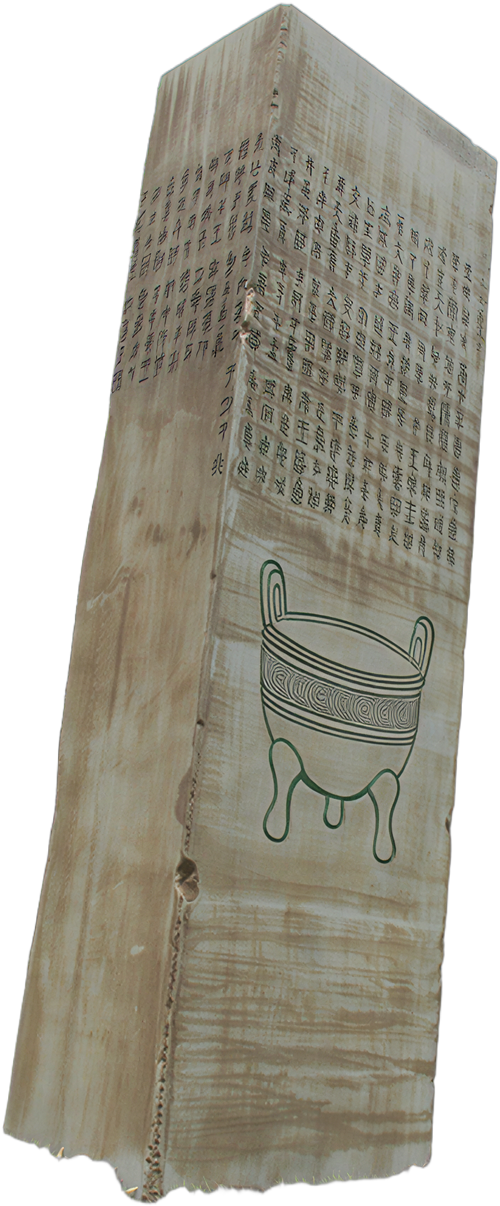
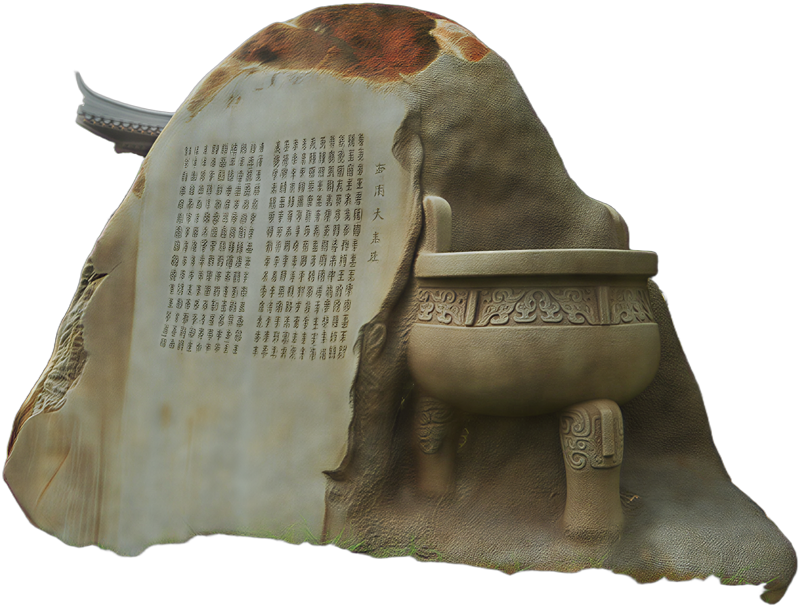
The Yu Cauldron, which is kept in the National Museum of China, is a bronze ceremonial vessel of the Western Zhou period. It was unearthed in Meixian, Shannxi during the Daoguang Period, Qing Dynasty. The inscriptions are about King Kang’s narration of the founding of the Zhou Kingdom and the fall of the Shang Dynasty. The writing is highly artistic and it is the model of Bronze Inscription.
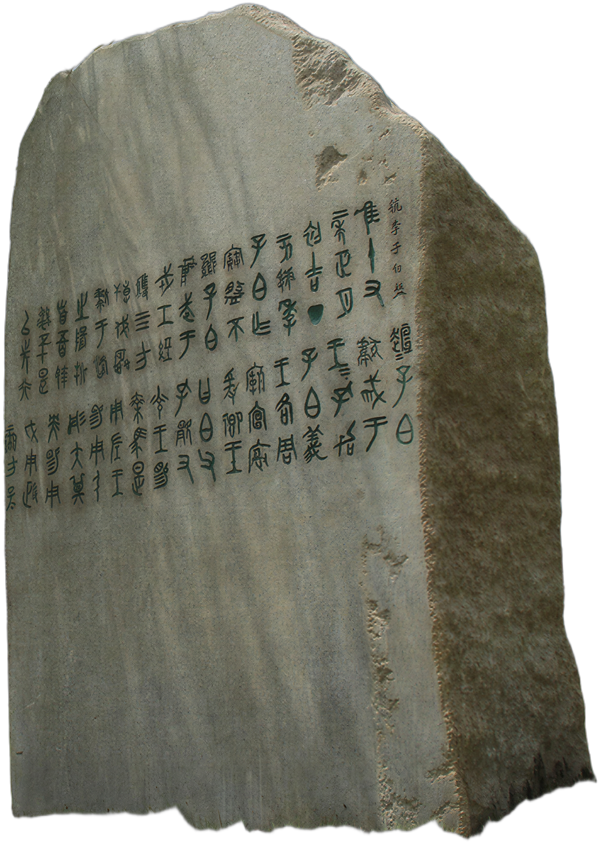
This inscription typifies bronze script calligraphy. The basin, which was excavated in Baoji, Shaanxi during the Daoguang Period, Qing Dynasty, is now kept in the National Museum of China. The basin was made to commemorate Guojizibo’s victory in a battle.
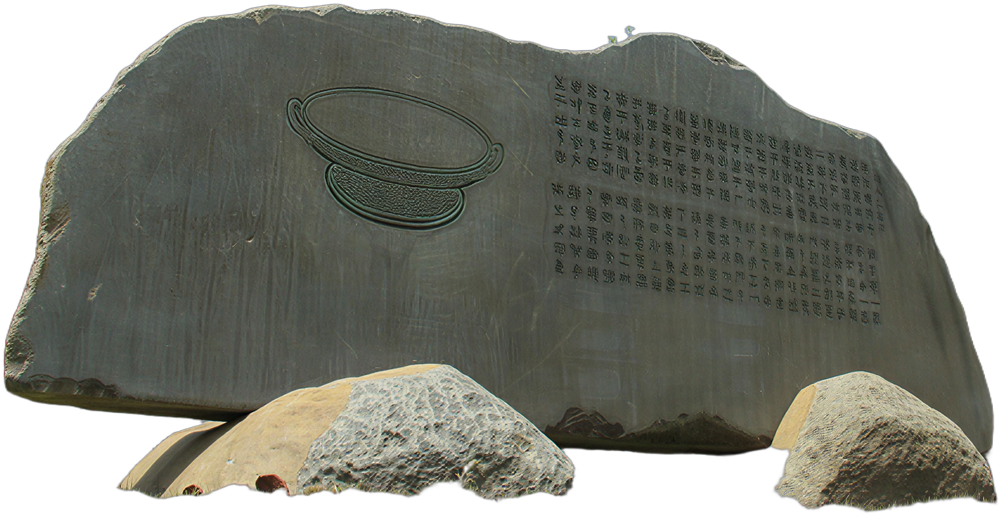
San-Shi Treaty Pan was unearthed in Fengxiang, Shaanxi during the Qianlong Period, Qing Dynasty, and it is now kept in the National Palace Museum in Taiwan. A peace treaty is inscribed on it. These characters are square in shape, while the mainstream calligraphic style of that period was in favour of narrow and rectangular-shaped characters.