Malaysia Chinese Calligraphy Stone Gallery
Curated Collection
让典藏不只是一种展示,也成为一种漫游与凝视。在这里,每一道刻痕都是时间的低语,带您走入汉字演变的浩瀚长河。
Qi Gong
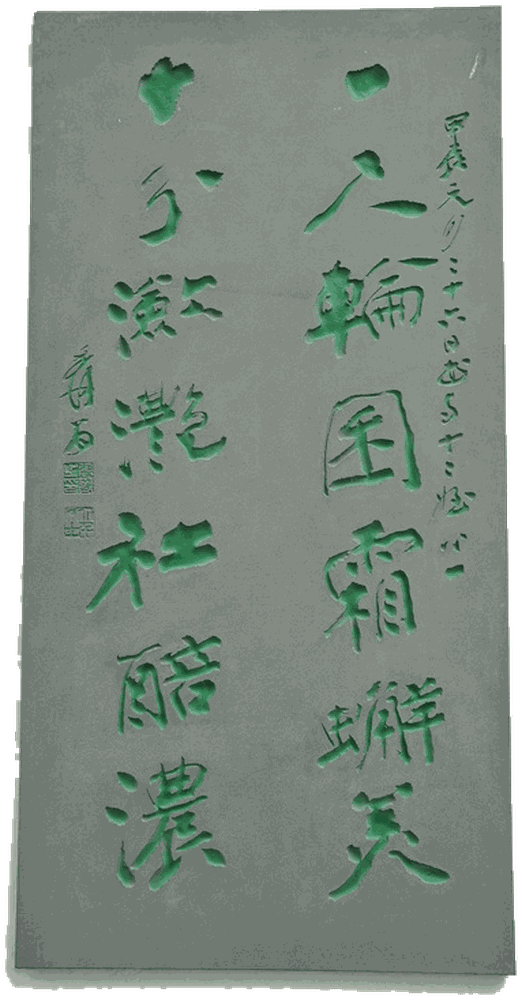
Qi Gong belonged to the Manchu family clan of Aisin Gioro, of the Yong Zheng emperor’s lineage started from the fifth son of the emperor, Hong Zhou. He was the eighth-generation great-grandson of the Hong Zhou. The ‘Cao Shu’ Calligraphy on ‘Qian Zi Wen’ (The One-Thousand-Word Cursive/ Grass Script) was authored by him in 1977 at the request of Jin Yu, an ardent literary arts collector. Qi Gong’s calligraphy mastery was sparked off by the prominence of Ouyang Xun, followed by that of Yan Zhen Qing, Dong Qi Chang, Zhi Yong and Liu Gong Quan. His calligraphy works manifest the calligraphy styles of the legendary Wang Xi Zhi and his son Wang Xian Zhi with influence from Yan and Liu’s schools of thought. His ‘Xing Shu’ calligraphy, however, bears a great deal of his very own characteristics. Qi Gong’s calligraphy works are mostly ‘Xing Shu’ driven. His ‘Cao Shu’ calligraphy works are very limited in circulation, therefore this particular exhibit is highly treasured and considered as one of the most famous ‘Cao Shu’ works by him.
Sha Menghai
Sha Meng Hai was a top-notch calligrapher and literary figure in his era. The well-learned scholar is renowned for his in-depth knowledge of linguistics, literature history, archaeology, calligraphy and seal carving. His calligraphy was influenced by the ancient Han and Wei dynasties, followed by the Song and Ming dynasties. Sha cleverly fused the ancient and modern calligraphy to form a distinct calligraphy personality synonymous with him. He was adept at ‘Zhuan’, ‘Li’, ‘Xing’, ‘Cao’ and ‘Kai’ calligraphy. His calligraphy exudes the elements of vigour and grandeur. This special calligraphy mention on “Sun Guo Ting’s Calligraphy Theories” was authored by Sha at the age of 90. The work displays a very special appeal with tightly knit strokes and in fine feather, befitting the calligraphy personality of Sha.
Lin Sanzhi
Lin San Zhi thrived under the tutelage of Huang Bin Hong, in his quest for becoming an accomplished painter. He had the advantage of acquiring the knowledge of landscape painting since his younger days. Lin benefited from the tutelage of the legendary masters in landscape painting throughout his life. His calligraphy competence stole the limelight in 1972, in a Chinese-Japanese calligraphy get-together session. He magically transformed Wang Duo’s ‘Cao Shu’ calligraphy into his very own ‘Lin San Zhi – Grass/ Cursive Script’, driven by his in-depth calligraphy knowledge of ‘Han’ and ‘Li’ styles. His ‘transformed’ calligraphy works are able to communicate different arrangements of idea, mixing a mature context with a novice perspective, coupled with awkwardness and finesse at the same time. Lin succeeded Wang Duo and Fu Shan as the master of ‘Cao Shu’ (Grass/ Cursive Script) calligraphy in the modern era. His ‘Cao Shu’ places great emphasis on the literary aspect with a leisure ambience in mind. Lin’s bold and creative thoughts crowned him the ‘Virtuoso of Cao Shu’ in his era.
Qi Baishi
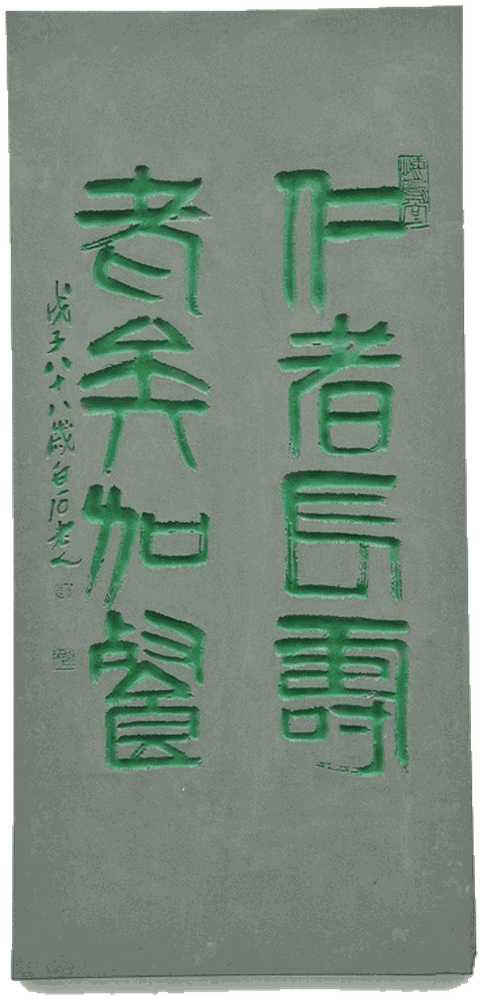
History credited Qi Bai Shi as one of the most accomplished painters, calligraphers and seal carving experts in China of the 20th century. He was an eminent figure in paintings, seal-carvings, book and poetry writings. From his point of view, the unsurpassed beauty of a piece of art lies in its ‘reality’ and ‘surrealism’. Qi’s paintings drew inspirations from Xu Wei, Zhu Da, Shi Tao and Wu Chang Shuo. He cleverly weaved the quintessential features of his seniors into his works so that they would look even more distinguished, as seen in his ‘relaxing and enjoyable’ ink-wash paintings. One of his trademark distinctions is the painting of red flowers alongside black leaves. Qi seemed to be unstoppable even though in his 80s. He shocked the art fraternity with his unique yet brilliant concoction of paintings of prawns as the key subject. The ‘Xing Shu’ calligraphy added another feather to his cap.
Zhang Daqian
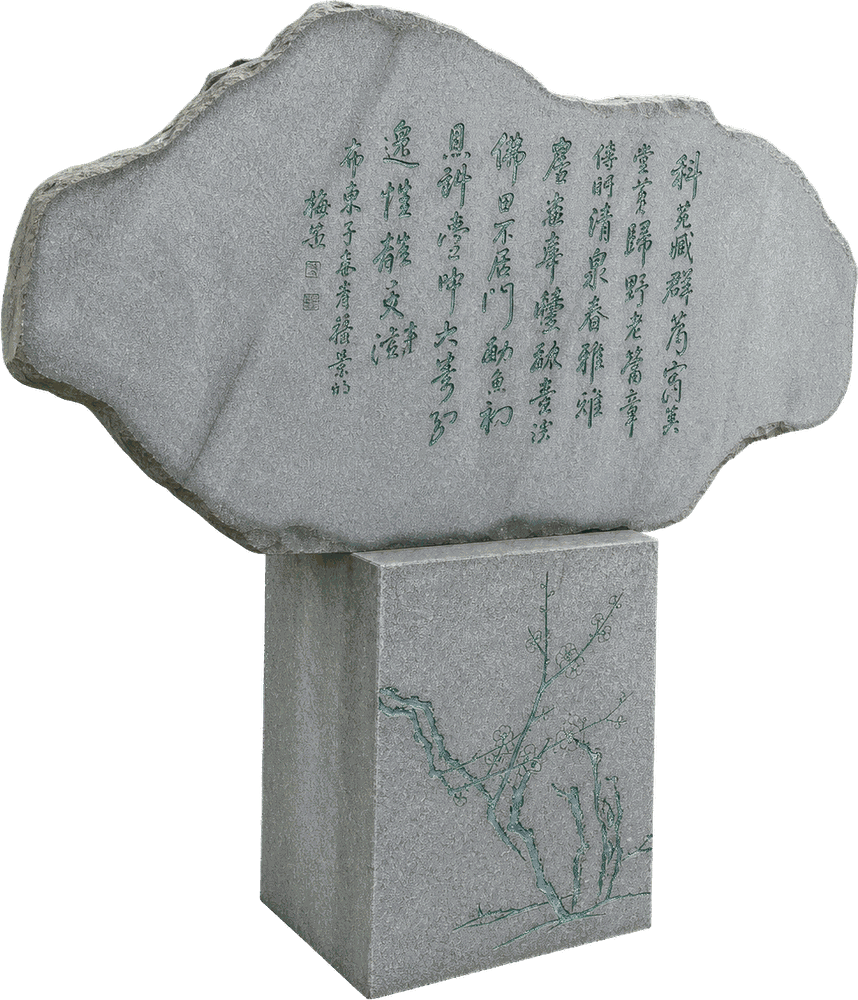
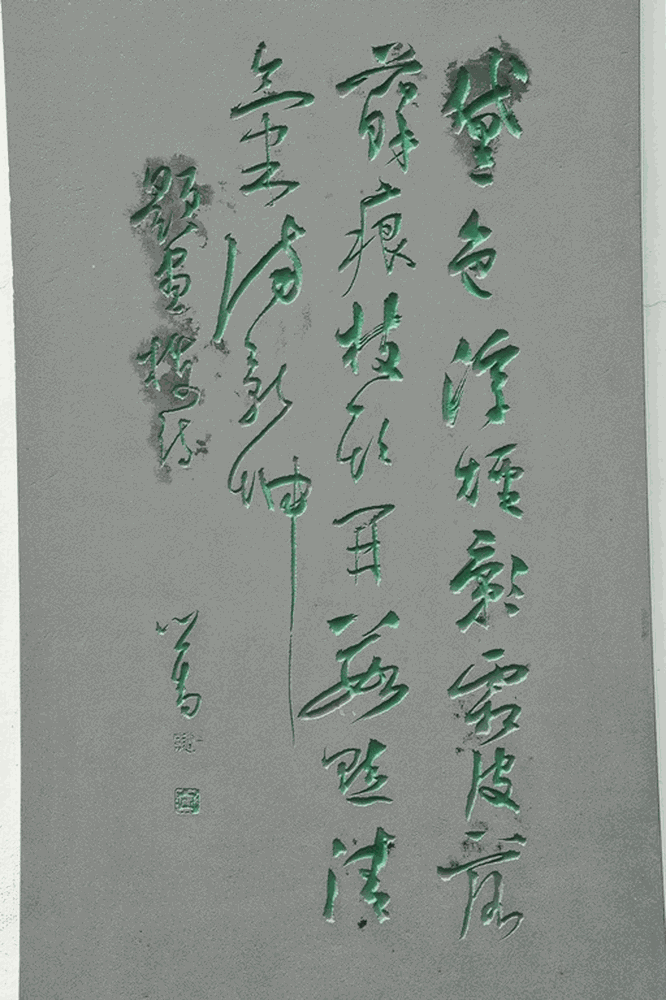
Zhang Da Qian mastered his calligraphy from Li Rui Qing and Zeng Xi. He amassed his calligraphy knowledge from a number of different sources including that of Huang Ting Jian. Zhang was particularly intrigued by Huang’s calligraphy style, which suggests unrestrained yet cultured strokes, with hints of adventurous spirit and peculiarity. Zhang’s calligraphy is perceived by scholars as very core-centric driven. Each character reaches out to all four corners with a balanced, rhythmic flow no matter how the stroke is swayed and that conjures up a mellow tone to the eyes. Zhang is best known for his ‘melancholy’ calligraphy technique on his favourite painting subject i.e. the weathered branches of a plum tree. It may look jaded at first glance, but the deeper you appreciate it, the more appealing it becomes. The overall profile of his calligraphy packs quite a punch as evidenced by the dynamism and fluid rhythm of his works. Zhang is still revered as a legendary painter until today. Nevertheless, his calligraphy bears a significant amount of fine elements of art and the artistic value associated with it, making his masterpieces much sought after.
Xu Beihong
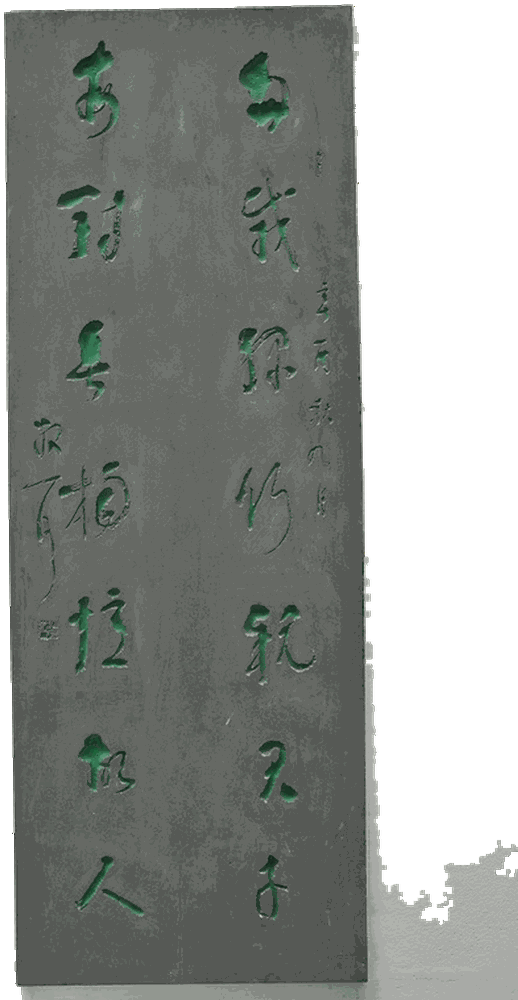
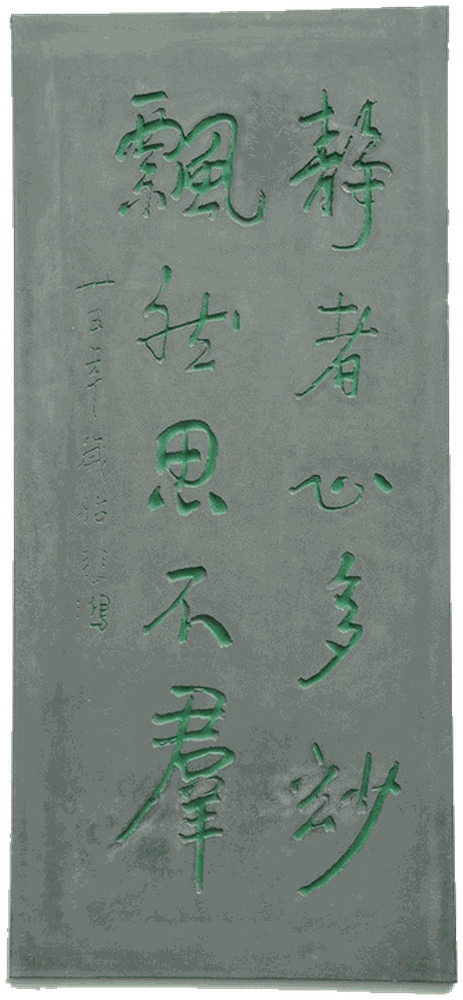
Xu Bei Hong was a master of Chinese ink paintings, oil paintings and sketch drawing. Amazingly, he was one of the most distinguished Chinese oil painters of the modern era. One of his poetry masterpieces is the 5-word-sequenced couplet written in the ‘Ben Ma Tu’ (Galloping Horses) painting, which bears the meaning of ‘a man thinks more and deeper when he is calm and quiet’. The masterpiece was produced in Chong Qing, in 1945, after the surrender of Japan. It was a present to his friend, Sun Zhi Jiao. Xu had had earlier made several trips to Malaya and Singapore during Japanese invasion, raising funds through the exhibitions of his art pieces, in the name of charity. Subsequently, many of his showpieces circulated into this region. His calligraphy bears the hallmarks of Kang You Wei. He was passionate about the incised calligraphy of the Northern Dynasties. He loved to combine the essences of brush-written calligraphy and incised calligraphy into his works, harmoniously. His calligraphy may reveal hints of coarseness yet energetic, with thick-and-thin strokes in combination; well-trained and vigorous; natural and unrestrained; fluent and untrammeled, with harmonious twists and turns alongside robust strokes and artistic charms.
Tai Jingnong
Tai Jing Nong was a critically acclaimed author and literature critic. He was a member of ‘Wei Ming She’ (transliterated as the Anonymous Association) in the early days of his uprising movement and had scholastic exchanges with the highly respected Lu Xün. Throughout his illustrious careers, Tai lectured at Fu Ren, Qi Ru, Shan Dong and Xia Men universities and Si Chuan’s Jiang Jin Teachers College. He later became a professor at National Taiwan University. Being a remarkable calligrapher and author, Tai’s calligraphy portfolio covers bronze inscriptions, stone inscriptions, tablet inscriptions and masterpieces of varied renowned calligraphers. He was a master of different calligraphy styles, from ‘Zhuan Shu’ to ‘Li Shu’, ‘Cao Shu’, ‘Xing Shu’ and ‘Kai Shu’. Tai was raised in a strict family where he had to learn the ancient poetry and calligraphy as a kid. In his quest for acquiring new knowledge beyond the literature world, Tai once felt demotivated by calligraphy and decided to halt his literary journey. During Japanese invasion, Tai retreated to a confined life. Feeling imprisoned by a strong sense of emptiness and wanting to escape the confines of the raging war, he picked up his calligraphy brush again. He polished his calligraphy with priceless guidance from Shen Yin Mo. His ‘Xing Shu’ calligraphy drew inspirations from Ni Yuan Lu and Shen Ceng Zhi. Tai also enjoyed a teacher-friend relationship with Hu Xiao Shi. Tai was a prolific literary contributor.
Liang Qichao
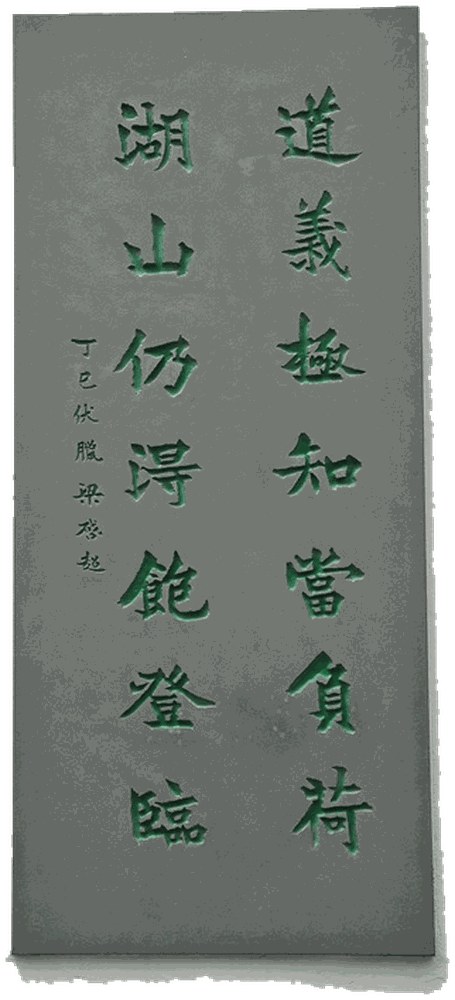
Liang Qi Chao was a student of Kang You Wei. Together with Kang, Liang took part in the 100-day Reform Movement against the absolute monarchy. The uprising movement was frustrated by the imperial forces and they had to flee to Japan. A few years prior to the 100-day Reform Movement, Liang had already teamed up with Xia Zeng You and Tan Si Tong for the Poetry Revolution, calling for contemporary poetry pieces that reflect the present affairs. This was followed by the Literature Revolution to propagate their political thoughts. Altogether, Liang was a notable political activist, socio-economic reformer, educationist, historian and litterateur in the modern history of China. He was an admirer of the Northern Dynasties’ calligraphy and was particularly fond of the ‘Zhang Hei Nü Mu Zhi’ poetry piece. His brush-strokes were generally ‘Li Shu’ driven, well-knit and dexterous, expressed in a subtle yet effective way, tightly-stroked from the core and well poised.
Yu Youren
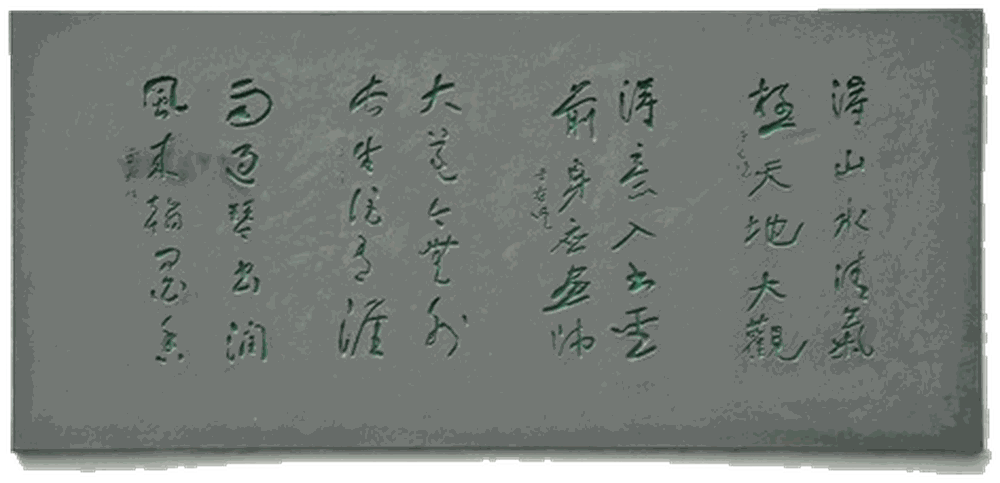
Yu You Ren carried on the rich tradition of ancient calligraphy while spiced it up with his very own ingenuity, hence setting a new benchmark. He matured his calligraphy by drawing on Zhao Meng Fu’s paragon, followed by the mastery of incised calligraphy inspired by Wei Dynasty’s stone inscriptions, even though they were already in an incomplete form. It was because of that, Yu learned about the importance of incorporating the coarse elements in art to project the beauty of his works. He adopted a paradigm shift in his calligraphy during his middle age, sharpening his skills in ‘Cao Shu’ calligraphy and Wei Dynasty inspired stone inscriptions (incised calligraphy driven). By fusing the best of both worlds, he established a new benchmark for ‘Cao Shu’ calligraphy called ‘the Yu Form’. These four pairs of 5-word sequence couplets do not seem to correspond to each other, but they exude a distinct spirit of artistic seamlessness. Such cleverness just lingers in your memory.
Shen Yinmo
Shen Yin Mo, whose original name was Yin Mo, specialized in brush-written calligraphy and incised calligraphy (eg. on stones and other objects). He was one of the most notable Chinese calligraphers of the modern era. He earned his fame through brush-written calligraphy (paper-based calligraphy), initially. He took up incised calligraphy seriously at later stage and made his presence felt consequently. His scholastic life seemed to be blossoming once more as he approached his 50s. His ‘Xing Shu’ and ‘Cao Shu’ calligraphy works which carry the magnificence of the Mi Nan Gong masterpiece, plus the ingenuity of Shi Zhi Yong, Yu Shi Nan, Chu Sui Liang, Wang Xi Zhi, Wang Xian Zhi, and some of those amazing imperial showpieces of different epochs, are real eye-openers. From there on, Shen sealed his leading and influential position in the calligraphy arena. Having established his name in this critical period, he won the hearts of many with a calligraphy style that boasts his individuality and personality. In the early founding of the Republic of China, Shen Yin Mo ruled the south while Yu You Ren took the helm in the north, with their calligraphy prowess.
Pu Xinyu
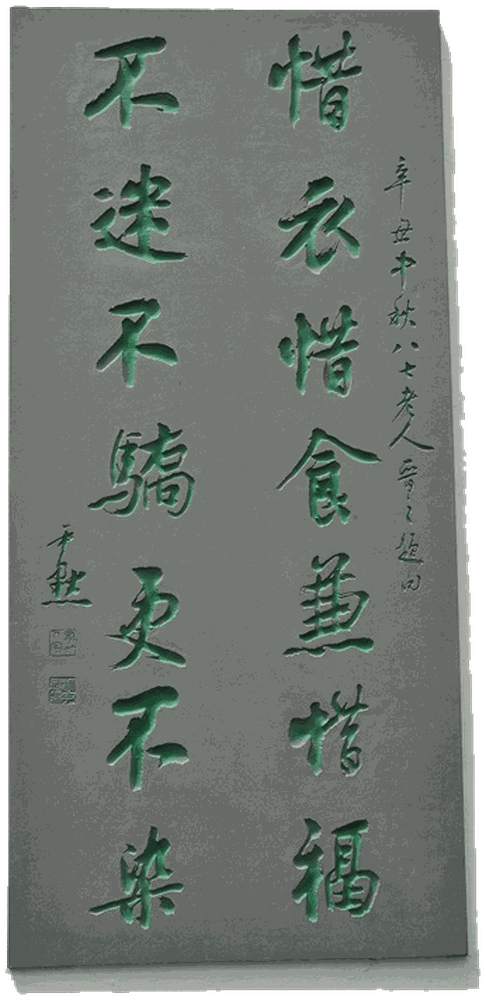
Pu Xin Yu was the great-grandchild of Emperor Dao Guang of the Qing Dynasty, who belonged to the Aisin Gioro clan. He adopted the name of Pu Xin Yu after the fall of the Qing Dynasty. Pu was shaped to be a well-learned person from a tender age, having immersed himself in the study of the four key knowledge fields, namely Confucian classics, history, philosophy and literature. Into his 30s, he devoted himself to the pursuit of art and painting. His favourite painting subjects revolved around landscape, human figures and flora. Pu was an ardent follower of Confucian classics and history throughout his life. He enriched his literary engagement with poetry, calligraphy and painting. The robust character of his calligraphy took inspiration from Liu Gong Quan, which won the heart of the calligraphy fraternity subsequently. The composition of Pu’s calligraphy is aesthetically striking. His ‘Xing Cao’ (cursive) calligraphy exudes the calligraphy soul typical of Tang Dynasty, with a natural and unrestrained flow. The strokes are well-disciplined and wholesome, as seen in his vertical, horizontal, push, pull, branching and scripting techniques. Pu’s calligraphy amazes with a rhythmical profile regardless of the calligraphy styles. From inking to punches, notches, presses, thick-and-thin stroking and points of contact, Pu’s calligraphy resonates with harmonious contours and vibrant attributes.
Guo Moruo
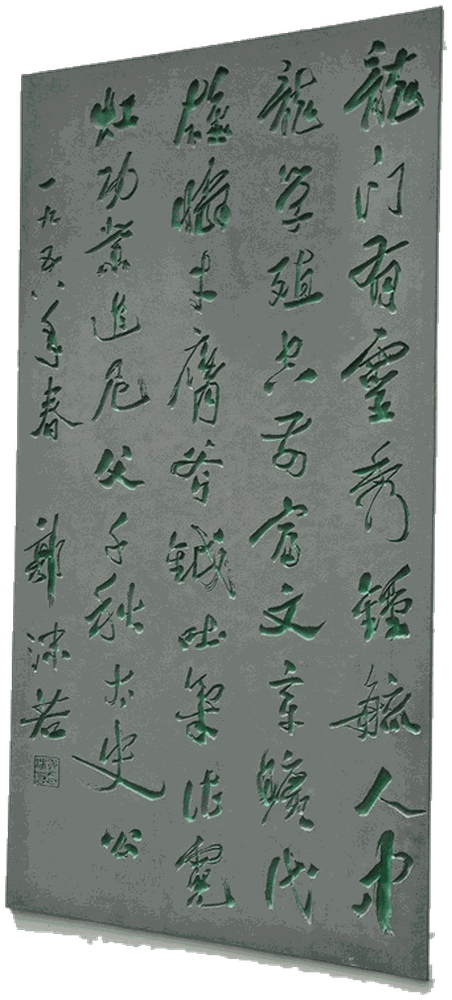
Guo Mo Ruo admired the calligraphy works of Yan Zhen Qing. He enriched his scholastic achievements with oracle bone script, Chinese history and archaeology studies in later stages. The famous scholar is renowned for his literati works that make people ponder over the brilliant composition of poetry. His poetry driven calligraphy works demonstrate his natural flair and artistic elegance. This 5-word sequence ‘Cao Shu’ masterpiece was authored in commemoration of the greatness of historian Si Ma Qian in 1958.